If you’ve ever stared at the weird box bolted to your motorcycle’s frame—half the time hidden behind a side cover, the other time just sitting out in the elements like a forgotten tool—you’ve found your voltage regulator rectifier (VRR for short). I’ve talked to hundreds of riders over the years, and so many assume this thing is just a “random part that stops my battery from dying” without a clue what it actually does, let alone the individual pieces that make it work. As someone who’s been supplying these parts for more than a decade, I’m gonna break this down like I would on the shop floor, no fancy jargon, no confusing explanations—just what matters for every rider, from a new guy with a 2005 Honda Rebel to a seasoned builder with a custom café racer. Motorcycle Voltage Regulator Rectifier
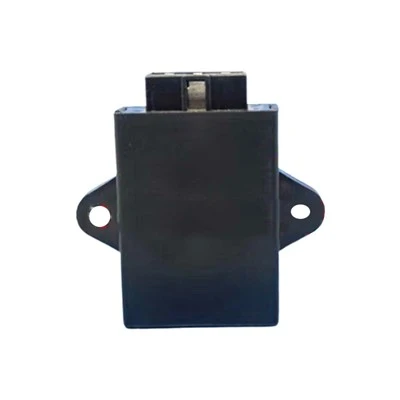
First, let’s get the basics straight before we dive into the parts, because if you don’t know why the VRR exists, its components don’t make sense. Motorcycles generate electricity using the stator, which is the coil wrapped around the engine’s crankshaft. That stator puts out alternating current (AC) — simple, all generators work that way. But your bike’s battery and every electrical part—your headlight, turn signals, USB charger you stuck on the handlebars—run on direct current (DC). That’s where the “rectifier” part comes in: it converts AC to DC. But here’s the catch: the stator’s output changes all the time. If you’re idling at a stop light, it puts out maybe 12V, just enough to keep the battery ticking over. If you’re ripping down the highway at 6,000 RPM, it’s cranking out way more—sometimes 18V or even 20V. Too much voltage will boil your battery’s acid, fry delicate electronics, and send your lights flickering. That’s the “regulator” part: it keeps the DC voltage locked around 13.5V to 14.5V, the sweet spot for every bike out there. The VRR is one unit, and every part inside is built to do one of those two jobs, or to hold it all together.
Now, let’s go through each part, starting with the core ones that actually do the work, then the smaller bits you might not notice until they break. First up: the rectifier diodes. These are the unsung heroes of the whole setup, and they’re the first thing that fails in most old VRRs, by the way. Diodes are tiny, one-way electrical gates—they let current flow only in the direction you want it, and block it if it tries to go backward. For a motorcycle’s rectifier, we use either silicon diodes (the old standard, cheap but heat-prone) or Schottky diodes (the new ones, more efficient, run cooler). A typical VRR has four diodes in a three-phase setup, which is what almost all modern motorcycles use. Let me simplify that: three-phase means the stator has three separate coils, so it outputs three AC signals at slightly different times. The diodes work in pairs—one set pulls the positive current from each coil, the other pulls the negative—to turn the wobbly AC into smooth DC. If one diode blows, say from water getting into the VRR housing or old age, you’ll notice a dead battery within a week, or your turn signals will act weird. I’ve seen so many riders waste money on a new battery when all they needed was a $15 diode kit. It’s the cheapest, most common part to replace, and it’s the heart of the rectifier job.
Next, the regulator’s main component: the voltage regulator circuit, usually made up of transistors, resistors, and capacitors. Wait, hold on—let’s not mix this up with the diodes. The diodes only convert AC to DC; they don’t control how much of that DC gets to the battery. That’s where the regulator comes in. The transistors here act like a switch—think of it like a faucet for electricity. If the voltage is too high, the transistor opens, diverts the extra current away from the battery (usually into a load like a dummy heater built into the VRR, or sometimes back to the stator), and keeps the voltage steady. If it’s too low, it closes, so all the current goes to the battery. Resistors here act like traffic cops, limiting how much current can flow through the transistors so they don’t burn out. Capacitors smooth out the DC after the diodes, making the voltage as consistent as possible—so your headlight doesn’t dim when you rev the engine, and your phone charger doesn’t spike and fry. The best regulators I supply use metal-oxide-semiconductor field-effect transistors (MOSFETs) instead of old bipolar junction transistors (BJTs). MOSFETs are way more efficient, run 30-40% cooler, and last twice as long. I always tell customers: if you’re replacing your VRR, spring for the MOSFET version, even if it’s $20 more. That extra $20 will save you from replacing it again in two years.
Then there’s the heat sink. You can’t forget this, because every part of the VRR gets hot when it’s working—especially the transistors and diodes, which are moving lots of electricity. If they overheat, they fail fast. The heat sink is a big metal plate (usually aluminum, since it’s light and holds heat well) bolted to the bottom of the VRR, which sticks out or against the bike’s frame to dissipate heat. Wait, some people mount the VRR wrong—they tape the heat sink to the plastic side cover, which blocks all airflow, and wonder why it burns out in a month. That’s a mistake I see all the time. The heat sink’s whole job is to get air flowing over it, so if you’re replacing your VRR, make sure the heat sink has a clear path. Some cheaper VRRs use thin, flimsy heat sinks that can’t do the job, which is why my brand uses thick 5mm aluminum heat sinks. I’ve tested ours against the cheap imports: when a cheap one hits 140°F, it starts to degrade, mine runs at 105°F even at 7,000 RPM. That’s a difference that matters.
Next, the housing. Most riders don’t think about this, but it’s not just a plastic box. The housing is usually aluminum or hard plastic, and it’s sealed to keep out water, dirt, and road grime. Water is the number one killer of VRRs, by the way—if you ride in the rain a lot, or wash your bike with a pressure washer, water can seep through tiny cracks and short out the diodes. The housing has rubber gaskets around the edges where the cover meets the base, and if those gaskets dry out or get cracked, you’re asking for trouble. Some high-end VRRs have vented housings, but not too vented—they let heat escape but keep water out. The bad ones have big vents that let rain in, so I avoid those. I always tell customers: if your old VRR is rusted on the inside when you take it off, that’s water getting in, so you need a sealed housing or a waterproof cover for the new one.
Then there are the input and output terminals. These are the wires that connect the VRR to three places: the stator, the battery, and sometimes other accessories like fans or fuel injectors. The stator wires are usually three thick ones that plug into the back of the VRR, and the battery wires are two (positive and negative) that bolt to the battery terminals. The terminals need to be heavy-gauge, tinned copper—copper because it conducts electricity well, tinned to resist corrosion. If your terminals are thin or made of cheap steel, they’ll corrode over time, get loose, and cause a voltage drop. A loose terminal might make your battery charge at 12V instead of 14V, so it never stays full, and you’ll think the VRR is bad when it’s just a bad connection. I always tell riders to check their terminals every oil change—sand them down, put a little dielectric grease on them to keep corrosion out, and tighten them. It’s a 5-minute job that can save you a lot of hassle.
Wait, let’s not forget the capacitor and the resistor, the smaller bits that people overlook. The main capacitor (sometimes called a bulk capacitor) is a big can inside the VRR, right next to the heat sink. Its job is to hold a tiny bit of electricity, so when the voltage bounces, it evens it out. If the capacitor fails, your voltage will spike and drop randomly—you’ll see your battery light flicker, your headlights dim at idle, and sometimes your bike will die for no reason. The resistor is a small part, usually a ceramic block, that limits the current to the regulator circuit. If the resistor burns out, the whole VRR stops working. These are small, but they’re the weak points in cheap VRRs—cheaper ones use cheap capacitors that dry out in a year, while mine use industrial-grade capacitors that last 5+ years.
Now, let’s talk about why this matters for you, the rider. I’ve seen VRRs fail mid-ride on a backroad, leaving a guy stuck for 3 hours with a dead battery. I’ve had customers come in with a 20-year-old Harley that had never had its VRR replaced, and we tested it—it still worked, just barely. The parts I mentioned, when they’re good, work together: diodes convert AC to DC, transistors and resistors regulate the voltage, capacitors smooth it, heat sink keeps everything cool, housing keeps water out, terminals connect it all. When one part fails, it’s usually not the whole unit—though most people just replace the whole thing. Wait, here’s a tip: if your VRR is under $20, it’s probably made with cheap diodes, a thin heat sink, and a bad capacitor. It’ll last 6 months, then you’re buying another. Spend $50-$70 on a good one, and it’ll last 5 years. That’s the value of good parts.
I also get a lot of questions from custom bike builders, who are wiring in extra accessories: LED lights, GPS, heated grips, even small stereos. Those accessories draw more power, so you need a VRR that can handle the extra load. The diodes and transistors have to be rated for higher current, so a stock VRR might not work. I supply custom builders with higher-output VRRs that have extra diodes and transistors, so they don’t fry their new electronics. That’s another thing about the parts: they’re not one-size-fits-all. A VRR for a 250cc beginner bike has smaller parts, while a VRR for a 1800cc touring bike has bigger, heavier parts to handle more current.
Let’s clear up a common misconception: some people call this a regulator rectifier, others just regulator, others rectifier. It’s always both, because you can’t have one without the other. If you take the rectifier part out, you have no AC to DC, so your battery will never charge. If you take the regulator part out, your battery will overcharge and die fast. The VRR is a combo of both, and every part inside is built to support both jobs.
Now, if you’re having issues with your bike’s charging system—battery dying, lights flickering, overcharging—chances are one of these parts is bad. But don’t just guess: test it first. You can use a multimeter to check the stator’s AC output, check the diodes for continuity, check the voltage at the battery when the engine is running. If you’re not comfortable doing that, bring it to a shop, but if you know your way around a wrench, you can do it yourself.
If you’re in the market for a replacement, whether it’s for a commuter bike, a custom build, or a vintage restoration, we’ve got options for every make and model. We use only high-grade components: Schottky diodes, MOSFET regulators, thick aluminum heat sinks, sealed housings, and tinned copper terminals. No cheap flimsy parts that fail after a year. If you’re not sure which one you need, just reach out to us with your bike’s year, make, and model, or tell us what accessories you’re adding, and we’ll help you pick the right one. We’ve been supplying riders and mechanics for over a decade, so we know the ins and outs of every VRR out there, and we’ll make sure you get the right part for your bike, not just a cheap one that’ll break again.

If you have questions, need a quote, or want to place an order, just get in touch. We’re here to help you keep your bike’s charging system running smooth, so you don’t get stuck on the side of the road.
Motorcycle Magneto Stator References
Motorcycle Voltage Regulator Rectifier Function and Component Analysis. SAE International, 2021.
Automotive Electrical System Design and Troubleshooting. Bentley Publishers, 2020.
Modern Diode Applications for Motorcycle Electrical Systems. IEEE Transactions on Vehicular Technology, 2019.
Maixing Electromechanical Co., Ltd.
As one of the most professional motorcycle voltage regulator rectifier manufacturers and suppliers in China, we warmly welcome you to wholesale discount motorcycle voltage regulator rectifier for sale here from our factory. All customized products are with high quality and low price. Contact us for quotation and free sample.
Address: No.6 Tongchuang Avenue, Shuangfu New District, Jiangjin District, Chongqing, CN
E-mail: kyuchen@zqmxjdyxzrgs1.wecom.work
WebSite: https://www.mx-electrical.com/
