If you’re reading this, chances are you’re either tired of constant leaks in your plate heat exchanger (PHE) costing you production downtime, or you’ve just realized that your old gasket choice isn’t holding up to the new fluid you’re running through your system. As a supplier who’s spent 12 years sourcing and troubleshooting PHE plates and gaskets for industries from food and beverage to chemical processing, I’ve seen far too many businesses cut corners on this part of their heat exchanger—and end up paying twice when a wrong gasket or plate leads to contamination, lost product, or a full system shutdown. Choosing the right PHE components isn’t just a “spec sheet check”; it’s a mix of material science, fluid compatibility, and an understanding of how your actual operating conditions (not just theoretical numbers) will impact performance. Let’s break this down step by step, no jargon overload, just the real stuff I tell my regular clients every week. PHE Plates & Gaskets
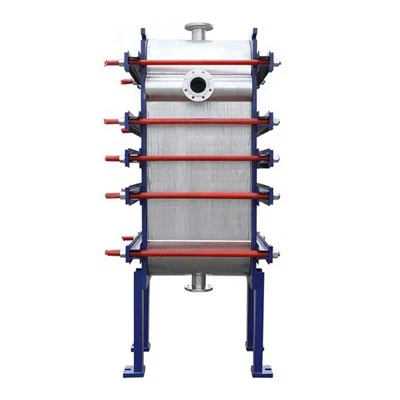
First, start with the non-negotiable: fluid compatibility. This is the foundation, and it’s where 60% of the wrong choices I’ve seen go wrong. Gaskets, for example, aren’t one-size-fits-all. If you’re running a food-grade application, you can’t use a standard EPDM gasket meant for wastewater—food products like dairy, juice, or cooked sauces require gaskets that meet FDA 21 CFR or EU 1935/204 regulations, because even tiny amounts of gasket material leaching into your product can trigger recalls. I had a craft brewery client last year who switched from a generic EPDM to a nitrile (NBR) gasket because they were handling hoppy beer; the hops’ alpha acids break down EPDM in as little as 8 weeks, leading to beer leaks onto the heat exchanger frame and production line. He told me he spent $15,000 in downtime and cleaning costs before he called me, and all he’d needed was a $200 gasket change. For chemical applications, it’s even trickier: concentrated acids, solvents, or hydrocarbons don’t play nice with EPDM or NBR. Synthetic rubber materials like Viton (FKM) or HNBR (hydrogenated nitrile butadiene rubber) resist those harsh chemicals far better, but they’re not cheap—so you don’t want to overspec here, either. If you’re just heating plain water, EPDM is totally fine, but if that water has added biocides or corrosion inhibitors, check the biocide’s chemical makeup against your gasket’s resistance: some biocides will swell EPDM to the point where gaps form between plates. For plates, the material ties into this too. Stainless steel is standard for most applications, but if you’re working with saltwater or brine, 304 stainless will corrode over time—you need 316L stainless steel plate, which has a higher molybdenum content that resists chloride corrosion. I had a fish processing client who stuck with 304 plates for their brine-to-water heat exchanger, and within 6 months, pinhole leaks had developed all over the plates. 316L would’ve cost 15% more upfront, but it saved them from replacing all plates every year and a half.
Next, operating conditions: pressure and temperature. This is the part that’s often ignored because people just grab a gasket rated for “high temp” without checking their actual system. Gaskets have two key ratings: maximum continuous operating temperature and maximum pressure. But here’s the catch: pressure and temperature don’t work in a vacuum. If you run a gasket at 100 PSI and 120°F, it’s fine—but if you bump the temperature to 180°F at the same 100 PSI, the material’s tensile strength drops, and it can compress too much or stretch, leading to leaks. I’ve seen companies use a 180°F-rated gasket for a system that runs at 175°F and 120 PSI, and within a month, the gasket had compressed by 15%—enough to create a gap between plates that let fluid mix. For plates, the pressure rating is about the design pressure of your heat exchanger, but also the number of plate passes and plate geometry. Rougher plate patterns (like wave or chevron plates) can handle higher pressure because they distribute load better, but if your pressure is unusually high, you may need thicker plates or a reinforced gasket to prevent gasket blowout. Blowout happens when the internal pressure is higher than the gasket’s ability to seal against the plate’s frame edges—it’s messy, it’s expensive, and it’s almost always from mismatched pressure and gasket strength. One of my pet peeves is when a client orders a gasket that’s too thin for their system’s pressure; a thin gasket can’t create enough compression between plates, so leaks start even at low pressure. Always check your system’s maximum operating pressure (not just the setpoint) and match that to the gasket’s working pressure, not just its burst pressure.
Then there’s plate design and compatibility with your existing exchanger. If you’re replacing plates or gaskets, don’t assume that a “generic” plate will fit your existing frame. PHE plates are not standardized across every manufacturer; a plate from Brand X won’t always line up, drill holes won’t match, and the gasket groove size could be slightly off, even if the plate looks similar. I had a food processing plant client who bought a cheap set of plates online that looked identical to their old ones, but the corner holes were 1mm off—when they bolted the frame together, the plates warped, leading to uneven sealing and leaks. The issue? The cheap plates were made to a lower tolerance, and their frame mount holes were not machined to the exact same specifications as the original plates made by their exchanger’s manufacturer. Even if you’re not replacing the entire plate set, if you’re adding plates to increase heat transfer area, you have to make sure the new plates match the thickness, pattern, and gasket groove of your existing ones. For gaskets, plate design ties into the gasket type: some plates use bonded gaskets (where the gasket is glued directly to the plate) and some use bolted gaskets (where the gasket is compressed between the plate and frame). If you have bonded gaskets, you can’t reuse them every time you open the exchanger—they have to be replaced, and the bonding adhesive has to be compatible with the plate’s surface and the new gasket material. Bolted gaskets, on the other hand, can be reused a few times, but only if they’re not torn or compressed out of shape during disassembly. I always tell clients to mark their plate and gasket positions when they open the exchanger the first time—plates are not symmetrical, so swapping plate positions can throw off flow distribution and reduce efficiency, which also creates extra stress on the gaskets.
Surface and maintenance considerations. This is where I see a lot of short-term thinking. Plates have surface finishes: smooth finish for food and beverage applications (it’s easier to clean and prevents product buildup), and slightly rougher finishes for applications where heat transfer is the top priority (like HVAC systems). If you choose a too-rough surface for food, you’ll get product residue stuck in the plate grooves, which is a food safety hazard and will require more frequent cleaning. For gaskets, surface finish ties into their durability: a smooth gasket surface resists tearing during installation, while a textured surface (for some high-pressure gaskets) helps with grip between plates. Maintenance is also a big part of choosing the right components. If your system needs to be opened regularly for cleaning (like in food processing or pharmaceutical manufacturing), you want gaskets that are easy to install and don’t tear easily during disassembly. Silicone gaskets, for example, are soft and easy to handle, but they don’t hold up as well to repeated cleaning cycles with strong chemicals. EPDM is more durable for frequent cleaning with caustic solutions, which is why it’s the go-to for many food and beverage plants. If you have a hard water system, mineral buildup on plates can reduce heat transfer efficiency by up to 30% over time. Choosing a plate with a slightly deeper channel can help with scaling, because it’s easier to flush out mineral deposits, but you have to balance that with pressure drop—deeper channels can create higher pressure drop, which means your pump has to work harder, increasing energy costs. Another thing: gasket longevity. A high-quality gasket can last 3-5 years in the right application, while a cheap one might only last 6-12 months. I’ve had clients who ask for the cheapest gasket because they think it’s a short-term fix, but the downtime and replacement costs add up more than just buying a quality gasket upfront.
Wait, let’s also talk about edge cases that people often overlook. If you’re handling two different fluids that can mix—like a cooling water and a process fluid that’s contaminated, or a potable water and a raw wastewater—you need gaskets that act as a barrier, not just a seal. In these cases, you can use gaskets with a backup layer of material that’s impermeable to the process fluid, to prevent cross-contamination. I had a pharmaceutical client a few years back who was using standard EPDM gaskets for their purified water system; over time, some of their solvent process fluid seeped through the gaskets, even though there were no visible leaks. They had to shut down their entire system for testing, which cost them $200,000 in lost production, before they switched to barrier gaskets. Also, extreme temperatures: if you’re running a heat exchanger for a high-temperature process (like pasteurization at 200°F+), EPDM will break down quickly—you need a high-temperature Viton or silicone gasket, but make sure the silicone is rated for continuous use at that temp, not just a short burst. If you’re running a cryogenic application (below -40°F), standard rubber gaskets become brittle and crack, so you need special fluorocarbon or silicone gaskets designed for low temperatures.
Now, let’s circle back to how suppliers can help here, because that’s what I do every day. When a client comes to me, I don’t just send them a catalog of gaskets and plates—I ask them a list of questions first: what fluids are they running (both sides of the exchanger), what’s the operating pressure and temperature, how often do they open the exchanger, what safety or regulatory standards do they need to meet (FDA, USDA, ATEX, etc.), and what’s their goal—longer lifespan, lower cost, easier maintenance? I can’t tell you how many times a client has come in saying “I just need gaskets” and after asking those questions, we realize they need plates replaced too, or a different material that will save them money in the long run. For example, a wastewater treatment client came to me saying they needed EPDM gaskets, but after asking, I found out their wastewater has 10% sulfuric acid content—EPDM would dissolve in 2 weeks, and HNBR gaskets would last 2 years, which is a better investment even though HNBR is more expensive.
If you’re currently in the market for PHE plates or gaskets, the worst thing you can do is guess. Don’t rely on a generic spec sheet from a random online seller—cross-check with your exchanger’s original manual, test your fluid’s compatibility with gasket materials (most suppliers will send free samples for small tests), and make sure the components are machined to the tolerance of your existing frame. Wrong choice now means downtime, lost product, and extra costs later.

If you’re ready to stop dealing with leaks, frequent replacements, and unexpected shutdowns, I’m here to help you find the right plates and gaskets for your specific system. We don’t do one-size-fits-all solutions; we work with you to match components to your operating conditions, regulatory requirements, and long-term goals, so you can focus on running your operation, not fixing your heat exchanger.
PHE Plates & Gaskets References:
- International Association of Refrigerated Warehouses (IARW) Guide to Plate Heat Exchanger Component Selection
- FDA 21 CFR Part 177.1520: Rubber Articles Intended for Repeated Use in Contact with Food
- Thermal Processing Magazine: “Fluid Compatibility and Gasket Durability in Plate Heat Exchangers”
- ASME Boiler and Pressure Vessel Code, Section VIII: Requirements for Plate Heat Exchanger Materials and Seals
Aflex Heat Exchanger Co., Ltd.
We’re well-known as one of the leading phe plates & gaskets manufacturers and suppliers in China. Welcome to buy bulk advanced phe plates & gaskets made in China here from our factory. If you have any enquiry about cooperation, please feel free to email us.
Address: No. 933, Yonghe Road, Nantong, Jiangsu, China
E-mail: sales@aflexphe.com
WebSite: https://www.aflexphe.com/
