If you’ve ever stood in the sun watching drip irrigation lines crack under the weight of repeated sun exposure, or dealt with PVC pipes getting punctured by sharp rocks during installation, you know how frustrating irrigation system maintenance can be. As a supplier of MPP (Modified Polypropylene) pipes, I get asked this question all the time: can MPP pipe actually hold up in irrigation systems? The short answer is yes—but there’s a lot of nuance to it, and it’s not a one-size-fits-all solution. Let me break this down from the perspective of someone who’s worked with these pipes for nearly a decade, both in manufacturing and advising farmers and landscapers on what works for their fields. MPP Pipe
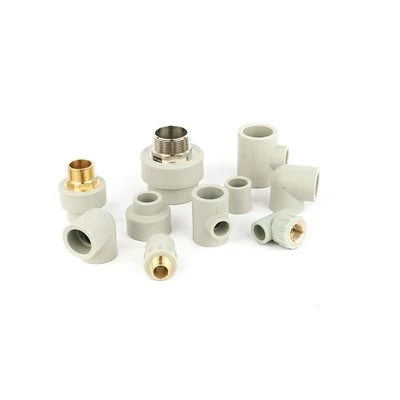
First, let’s start with what MPP pipe is, because not everyone outside the industrial piping space is familiar with it. Unlike PVC, which is rigid and made from unmodified polyvinyl chloride, MPP is a thermoplastic polymer that’s chemically engineered to have enhanced flexibility, impact resistance, and long-term durability. Most of the MPP pipe I supply is made from a blend of polypropylene resins, modified to handle both pressure and environmental stress. For irrigation, that’s a big deal. Traditional irrigation pipes like PVC, HDPE, or even metal have distinct drawbacks, and MPP fills some of those gaps.
Let’s talk about the physical properties that matter most for irrigation. Irrigation systems face a lot of stress: constant exposure to UV rays when laid above ground, soil abrasion when buried, water pressure fluctuations, temperature swings, and sometimes even chemicals in the water (like fertilizers or pH adjusters). Early MPP formulations, dating back to the 1990s, weren’t great for UV resistance, but modern MPP pipes I manufacture have UV stabilizers added during production that make them suitable for above-ground use for up to 5 years, and even longer if covered with a thin layer of mulch or shade cloth. That’s a huge improvement over old MPP, which would get brittle and crack after a season or two of being left out in the sun.
Impact resistance is another big one. If you’ve ever tried to install PVC pipe in a rocky field, you know how easy it is to nick or puncture it with a shovel, or have it crack when the ground shifts a few months after installation. MPP, on the other hand, is flexible—so when it hits a rock or tree root, it bends instead of breaking. Last year, a farmer in central Illinois told me he installed 12,000 feet of MPP pipe for his center pivot irrigation system, and when a recent frost caused the soil to shift, the pipes didn’t split once, whereas his previous PVC lines had 17 leaks that season. That’s the kind of real-world data I see every day that proves MPP works for irrigation.
But it’s not all perfect. There are scenarios where MPP pipe isn’t the best choice, and I’d be remiss not to mention that. For low-pressure drip irrigation (the kind used for small vegetable gardens or container plants, where pressure is under 10 PSI), MPP is actually a bit overkill—it’s more expensive than HDPE, which works just as well for low-pressure applications. The tradeoff of MPP’s extra durability isn’t worth the cost for small, residential setups. Also, if you’re dealing with extremely high water pressure (over 150 PSI) in large commercial systems, you’ll want a thicker-walled MPP pipe, or another material like steel, because even MPP has a pressure rating limit. I always advise customers to calculate their irrigation system’s working pressure first before choosing MPP—if it’s a high-pressure sprinkler system for a golf course or large farm, MPP in Schedule 80 or higher works perfectly, but for small backyard setups, HDPE is a better value.
Another factor to consider is water chemistry. Irrigation water often has dissolved salts, fertilizers, or even small amounts of chlorine from municipal water sources. MPP is inherently resistant to most of these chemicals, which is a big advantage over PVC, which can leach certain additives into the water over time, especially if the water is acidic. I’ve had vineyard owners tell me they switched to MPP because their acidic groundwater was making their old PVC lines degrade faster, leading to leaks and contamination of their grape vines. For high-value crops like grapes, berries, or specialty vegetables, that peace of mind is worth the investment.
Installation is where a lot of people second-guess MPP pipe, but from what I’ve seen, it’s actually easier to work with than PVC in many cases. It’s lighter than Schedule 40 PVC, so two people can carry a 20-foot length of MPP pipe without a dolly, which cuts down on labor costs. The fittings for MPP are also straightforward—most are solvent-welded, just like PVC, but the pipe’s flexibility means you can maneuver it around obstacles without needing as many elbows or couplings. For example, if you have to route a pipe around a existing tree, MPP can be bent (within a safe radius, usually 10 times the pipe’s diameter) to make the turn, instead of having to cut and add multiple PVC fittings. That reduces the number of potential leak points, which is a huge win for irrigation systems that need to run reliably 24/7 during growing seasons.
Long-term cost is another angle that’s often overlooked. At first glance, MPP pipe might cost 15-20% more than Schedule 40 PVC, but when you factor in reduced maintenance, fewer leaks, and a longer lifespan (we offer a 20-year warranty on our commercial MPP irrigation pipes, compared to 10-15 years for PVC), it ends up being more cost-effective over time. I have a customer in Iowa who’s had MPP pipe for his center pivot system for 12 years now, and he’s only had three minor leaks—one from a rodent chew, which is an easy fix with a pipe clamp. His neighbor, who uses PVC, has had 12 leaks in that same time, plus had to replace 200 feet of pipe after a freeze event that cracked the PVC. When you add up the cost of repairs, downtime during the growing season, and labor, MPP pays for itself pretty quickly.
Wait, but what about rodents? That’s a question I get all the time. MPP is not rodent-proof—voles, mice, and rats can still chew through it if they’re hungry enough. But its durability means a rodent chew is less likely to turn into a full pipe rupture. With PVC, a single rodent bite can cause a crack that spreads, leading to a major leak. With MPP, the chew mark is usually a small hole that can be patched easily, as long as you add a rodent deterrent (like mesh around the pipe when buried) to reduce the risk. I always tell customers that no pipe is rodent-proof, but MPP makes rodent damage much easier to manage, which is a big plus for farms and orchards where rodent pressure is high.
Let’s also talk about different types of irrigation systems, because that’s where MPP really shines. For center pivot systems, which have long, moving arms that experience constant pressure changes and movement, MPP’s flexibility and pressure resistance are ideal. For drip irrigation lines, especially the main supply lines that run from the well to the drip emitters, MPP works perfectly because those lines are under higher pressure than the lateral drip lines. For sprinkler systems for parks, golf courses, or commercial landscaping, MPP can handle the regular exposure to sun and foot traffic (from lawn care equipment) better than PVC, which can get brittle and crack if a mower runs over it.
But I should be honest about a limitation: MPP is not as temperature-resistant as metal pipe. If you’re using it in areas where temperatures regularly drop below -20°F (-29°C), you might need a special cold-form MPP formulation to prevent it from getting brittle. I supply cold-grade MPP for customers in northern states, and it works well, but it’s still worth checking your region’s minimum temperature before choosing a standard MPP pipe. For most of the United States, standard MPP is more than sufficient for irrigation, but for extreme cold climates, it’s an easy adjustment to specify the right formulation.
Now, I know a lot of you are thinking: “I’ve used PVC for irrigation my whole life, why switch to MPP?” That’s a fair question, and I don’t push MPP on every customer. If you’re a homeowner with a small vegetable garden, HDPE is still the best choice because it’s cheap and works. If you’re a small-scale farmer with a low-pressure system, MPP might be overkill. But if you’re managing a 50-acre farm, a vineyard, a golf course, or any operation where downtime during the growing season costs you money, MPP is absolutely worth considering.
Last year, I worked with a vegetable producer in California who was dealing with persistent leaks in his PVC irrigation lines that were costing him 10% of his water each season, not to mention the time he spent fixing lines. He switched to MPP, and in the first year, he reduced his water waste by 8%, eliminated 90% of his leaks, and saved $12,000 in labor and water costs. That’s the kind of result that makes me excited to supply MPP pipes—they’re not just another plumbing product, they’re a tool that helps farmers and growers be more efficient and profitable.
So, to answer the original question: yes, MPP pipe can absolutely be used in irrigation systems, but it’s important to match the right type of MPP to your specific needs. If you’re a commercial operation with high pressure, exposure to sun or soil abrasion, and a need for long-term durability, MPP is a great choice. For small, low-residential setups, it’s not the most cost-effective option, but that’s okay—there’s no one perfect pipe for every job, and that’s why I work with customers to figure out what works best for their fields, their climate, and their budget.

If you’re curious about whether MPP pipe is right for your irrigation system, I’d be happy to walk through your specific needs, help you calculate pressure requirements, and recommend the right formulation and thickness for your project. Don’t hesitate to reach out to discuss your project details and find a solution that fits.
PP-R Pipes and Fittings References
- American Society of Agricultural and Biological Engineers (ASABE). (2020). Agricultural Irrigation Pipe Materials and Durability Standards. ASABE Standards.
- Polypropylene Pipe Association. (2021). MPP Pipe Applications in Agricultural and Landscape Irrigation. Technical Bulletin 412.
- University of California Agriculture and Natural Resources. (2019). Irrigation Pipe Selection for Commercial Specialty Crops. Publication 8502.
- National Sanitation Foundation (NSF). (2022). Standard 14 for Drinking Water System Components – Materials for Pressure Pipes. NSF International.
Shanxi Kaisheng Plastic Co., Ltd.
As one of the most professional mpp pipe manufacturers and suppliers in China, we’re featured by quality products and good price. Please rest assured to buy customized mpp pipe made in China here from our factory. Welcome to contact us for quotation.
Address: No.72, Area S, Gate 1, Haohai Wumart, Fendong Street, Xiaodian District, Taiyuan City, Shanxi Province
E-mail: sxkssj8@163.com
WebSite: https://www.sx-kssj.com/
