If you’ve ever stood beside a CNC lathe during a high-volume turning job, watching an external turning cutter shear through a block of steel at 1,500 surface feet per minute, you’ve probably noticed something: the cut that starts sharp, smooth, and fast starts to drag, chip, and discolor within minutes. As someone who’s spent the last 12 years selling external turning cutters—visiting shops in Detroit, small fabrication garages in Ohio, and aerospace plants in Texas—I’ve seen that exact cycle play out hundreds of times. The culprit, more often than not, isn’t the cutter itself. It’s the coating on that cutter. Too many machinists treat coatings like a afterthought, a thin layer of paint that makes the tool look new, instead of the most impactful upgrade you can make to cut time, reduce costs, and extend tool life. External Turning Cutters
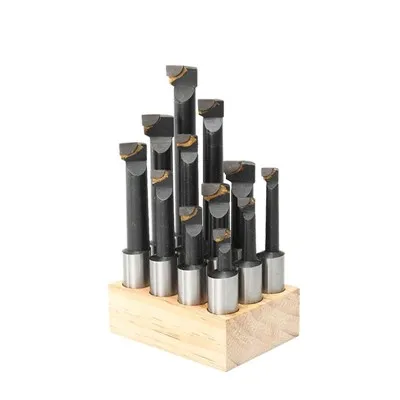
Let’s start with the basics that any machinist worth their salt knows, but bears repeating: external turning is the process of cutting material from the outer diameter of a rotating workpiece, whether you’re turning a soft aluminum axle for a bicycle or a hardened alloy shaft for a gas turbine. For this work, you need a tool that can handle three major stresses: extreme heat from friction between the cutter and the workpiece, high pressure that can cause the cutting edge to chip or deform, and adhesion—where bits of the workpiece material weld themselves to the cutter’s edge and leave ugly, uneven marks on the part. Coatings fix all three of these issues, but not all coatings are created equal. Over the years, I’ve worked with customers who swapped a generic TiN (titanium nitride) coating for a multi-layer AlTiN (aluminum titanium nitride) and saw tool life jump 300% on stainless steel. Others picked a coating too thick for their cut, leading to chipping within an hour. It’s not a one-size-fits-all, and that’s where a lot of confusion comes in.
First, let’s break down the most common coatings we supply, and how each performs for external turning, because that’s what my team and I focus on every day. TiN was the workhorse of the industry for 20 years. It’s golden, thin (about 2 to 5 microns), and hard enough for mild steels, aluminum, and even some non-ferrous metals. I still recommend it for low-speed, low-volume jobs where cost is king. But here’s the catch: TiN starts to break down at temperatures above 800°C, so when you’re turning high-temperature alloys like Inconel or running at high SFM, it wears out fast. A customer in Cleveland making parts for farm equipment was using TiN coated cutters for turning 4140 steel, changing inserts every 20 pieces. When we switched them to TiCN (titanium carbonitride)—another common coating, harder than TiN, up to 2,800 Vickers hardness vs. TiN’s 2,100—they extended insert life to 70 pieces. TiCN has a slightly higher temperature resistance too, up to 1,200°C, which makes it a go-to for medium-speed turning of steels.
Then there’s AlTiN, the workhorse for hard, high-heat jobs. AlTiN can handle temperatures up to 1,400°C, which is why it’s the coating of choice for turning hardened steels (45 HRC and above), titanium, and superalloys. A aerospace client I worked with in Dallas was struggling with external turning of titanium 6Al-4V, a material that’s notorious for sticking to cutters and generating so much heat it can warp the workpiece. Their uncoated and TiN coated tools were wearing out after 15 minutes of cutting, and leaving a rough surface finish that required extra grinding. We switched them to our premium AlTiN coated external turning cutters, and not only did tool life jump to two hours, the surface finish improved so much they eliminated the grinding step entirely, saving them 20 minutes per part. That’s the kind of impact coatings have that you don’t see on spec sheets.
But the newest kid on the block, and the one I get the most questions about, is diamond-like carbon (DLC) coatings, and polycrystalline diamond (PCD) coatings. DLC is great for non-ferrous metals—aluminum, copper, brass—where adhesion is the biggest problem. It’s super smooth, low-friction, so aluminum chips don’t weld to the cutter edge, which means no built-up edge (BUE) ruining parts. A customer making aluminum wheel hubs was using uncoated carbide cutters and dealing with BUE so bad they had to deburr every part by hand. After switching to our DLC coated external turning cutters, BUE was gone, deburring time dropped by 90%, and they could run 20% faster without sacrificing surface finish. PCD is even harder—up to 10,000 Vickers hardness—so it’s for ultra-high-volume turning of non-ferrous and non-metallic materials like graphite, ceramic, and even fiber-reinforced plastics. I saw a shop in Indianapolis making electronic components run PCD coated cutters for 40 hours straight on aluminum, no tool changes, something that would be impossible with carbide alone.
Now, it’s not all good news, and that’s the part that trips up a lot of machinists. Coatings have downsides, and applying the wrong one is a costly mistake. For example, DLC coatings are brittle, so they don’t work well for turning hardened steels or materials that cause high impact. If you try to turn a 50 HRC steel with a DLC coated cutter, you’ll chip the coating in minutes, leaving the soft carbide cutter exposed, and you’ll be back to square one. Another common mistake is coating thickness. Too thin, and you don’t get the heat or wear protection you need. Too thick, and the coating creates a larger edge radius on the cutter, which makes it less sharp, increases cutting force, and can lead to chatter in long, thin workpieces. I’ve had customers come to me frustrated that their new coated cutter wasn’t cutting as well as the old uncoated one, only to realize they’d ordered a 10-micron coating for a fine finish turning job, when a 2-micron coating is standard for that. Thickness matters, and it’s often tied to the coating composition too. Multi-layer coatings, which most modern cutters use, have alternating layers of different materials—TiN and AlTiN, for example—rather than a single layer. These multi-layers are more resistant to chipping and wear because they dissipate heat better, and the alternating layers prevent cracks from spreading through the entire coating. I always tell customers to ask for the layer count when they’re ordering, because a 3-layer AlTiN is going to outperform a single-layer one every time, even if the total thickness is the same.
Another effect of coatings that I don’t see talked about enough is their impact on cutting forces and power consumption. When a cutter has a low-friction coating, the amount of force needed to push the workpiece against the cutter is lower. That means less strain on your CNC machine, less wear on the spindle and bearings, and lower electricity costs. A job shop I worked with in Chicago had 5 CNC lathes running 10 hours a day, turning mild steel. They calculated that switching from uncoated to TiCN coated cutters cut their electricity bill for turning operations by about 8% a year, just because of lower cutting forces. That’s a small number per machine, but when you multiply that across 5 machines, that’s thousands of dollars a year, not to mention the reduced maintenance on the machines.
Heat is still the biggest enemy of external turning cutters, and coatings are the first line of defense against it. When a cutter cuts, up to 70% of the heat generated goes into the cutter itself, the rest goes into the chip and the workpiece. A good coating acts as a thermal barrier, preventing that heat from reaching the carbide substrate of the cutter, which is the part that actually holds the cutting edge. The better the thermal resistance of the coating, the longer the cutter stays sharp. I’ve seen coatings extend tool life by 5x or more in high-heat turning jobs, and that’s game-changing for shops that run 24/7. For example, a customer in Texas making oil field parts was turning 4140 steel at 1,200 SFM, a speed that would wear out an uncoated cutter in 10 minutes. Their AlTiN coated cutters lasted an hour and 15 minutes, which meant they didn’t have to have a full-time operator just changing cutters every few minutes. They could run the night shift unattended, saving on labor costs.
Wait, but what about when the coating wears off? That’s another common question I get. The substrate of an external turning cutter is almost always carbide—tungsten carbide with a cobalt binder—because it’s hard and tough enough to handle impacts. Coatings are deposited on the surface, usually using physical vapor deposition (PVD) or chemical vapor deposition (CVD). PVD is done at lower temperatures, around 500°C, so it doesn’t affect the hardness of the carbide substrate, which is good for sharp edges and finish turning. CVD is done at higher temperatures, up to 1,000°C, so it diffuses a bit into the surface of the carbide, making the bond between coating and substrate stronger. That’s why CVD coatings are better for high-impact, heavy turning jobs, like rough turning large parts. But when the coating does wear off, you’re left with the carbide substrate, which is softer than the coated layer, so wear speeds up. That’s why it’s important to replace or recondition cutters before the coating is fully worn, not after. A lot of machinists wait until the cutter is clearly worn, by which time the coating is gone and the carbide is wearing fast.
I also want to talk about surface finish, because that’s what makes a part good or bad. A good coating gives you a smoother cutting edge, which translates to a better surface finish. When you turn a part, the roughness comes from the shape of the cutter edge, the feed rate, and the friction between the cutter and the workpiece. A smooth, low-friction coating reduces that friction, so you get a smoother part with less need for secondary operations. A customer I worked with making hydraulic cylinders was struggling with a surface finish of Ra 1.2 on their turned parts, which required them to hone the cylinders to get to Ra 0.8, a requirement for their clients. After switching to our fine-finish AlTiN coated external turning cutters, their surface finish was Ra 0.75 right out of the lathe, so they eliminated the honing step, saving them $0.25 per part in labor and material costs. That might not sound like a lot, but when you’re making 10,000 cylinders a year, that’s $2,500 in savings, just from a coating.
Now, let’s get real about who this matters for. If you’re a small shop doing custom parts, turning soft aluminum once a week, a cheap TiN coated cutter might be all you need, and that’s fine. But if you’re running high-volume jobs, turning hard steels, or struggling with tool costs or part quality, the right coating for your external turning cutter is a non-negotiable. I’ve seen shops that thought coatings were a waste of money, spending more on cutter changes and scrap parts than they would have spent on higher-quality coated cutters. It’s a common mistake—machinists focus on the upfront cost of the cutter, not the total cost of ownership. A $5 coated cutter that lasts 5 times longer than a $1 uncoated cutter is actually cheaper per part, right? Let’s do the math: if one uncoated cutter costs $1, lasts 10 pieces, that’s $0.10 per piece. A coated cutter costs $5, lasts 50 pieces, that’s $0.10 per piece too. But add in the cost of labor to change cutters, the cost of scrap parts, and the cost of secondary operations, and the coated cutter becomes way cheaper. That’s the selling point I try to get across to every customer: it’s not how much the cutter costs, it’s how much it costs you per finished part.
Over 12 years in this industry, I’ve seen the technology of coatings evolve faster than almost any other part of the turning process. Ten years ago, AlTiN was the best you could get for high-heat jobs. Now we have nano-structured AlTiN, where the layers are just a few nanometers thick, which makes the coating even harder and more heat-resistant. We also have coatings with lubricious additives, like solid lubricants embedded in the coating, that reduce friction even at low speeds, which is great for finish turning. I’m excited to see where this goes, but for now, the key takeaway is that coatings aren’t a gimmick—they’re a critical part of external turning performance.
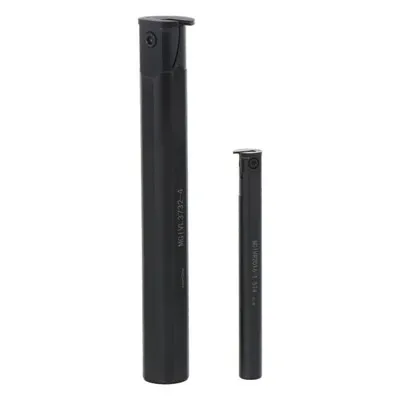
If you’re currently dealing with short tool life, poor surface finish, high scrap rates, or just want to cut costs on your turning operations, the first step is to look at your cutter coatings. The team here has worked with thousands of shops to match the right coating, cutter grade, and geometry to their specific jobs, no matter if you’re running a small home shop or a large aerospace facility. We don’t just sell cutters—we help you figure out what works for your needs, because at the end of the day, that’s what this is all about: making your job easier, your parts better, and your business more profitable. If you’d like to talk through your specific turning challenges, we’re here to help you find the right solution for your external turning cutters.
Twist Drill References
- Shaw, M. C. (2019). Metal Cutting Principles. Oxford University Press.
- Astakhov, V. P. (2006). Metal Cutting Mechanics: Theory and Applications. CRC Press.
- Davies, M. A., & Uhlmann, E. (2015). Advanced Cutting Tool Materials and Coatings. CIRP Annals – Manufacturing Technology, 64(2), 695-715.
- Budinski, K. G. (2010). Surface Engineering for Wear Resistance. Prentice Hall.
- Ezugwu, E. O. (2005). Key Improvements in the Machining of Aerospace Alloys. Journal of Materials Processing Technology, 162-163, 262-268.
Small Craftsman (Shandong) Machine & Tools Co., Ltd.
Small Craftsman (Shandong) Machine & Tools Co., Ltd. is one of the most experienced external turning cutters manufacturers and suppliers in China, also supports customized service with low price. Please feel free to buy bulk high quality external turning cutters in stock here from our factory. Contact us for pricelist.
Address: No.9 Quanxin Rd., Sishui Economic Developing Zone, Jining, Shandong, China.
E-mail: 6196@ocutchina.com
WebSite: https://www.ocutooling.com/
