In the realm of industrial and construction materials, FRP Ladder Rail Profiles have emerged as a revolutionary solution, offering unparalleled flexibility that caters to a wide range of applications. As a dedicated supplier of FRP Ladder Rail Profiles, I’ve witnessed firsthand how these profiles are transforming various sectors with their unique properties. In this blog post, I’ll delve into the flexibility of FRP Ladder Rail Profiles, exploring their design, material characteristics, and the numerous advantages they bring to different industries. FRP Ladder Rail Profiles
Design Flexibility
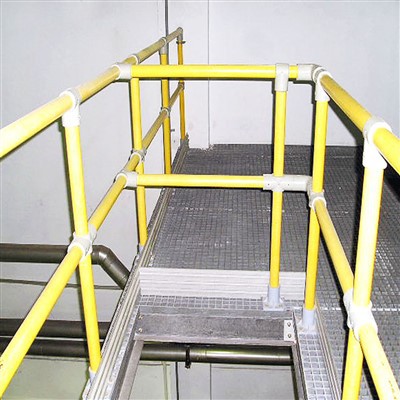
One of the most significant aspects of FRP Ladder Rail Profiles is their design flexibility. Unlike traditional materials such as steel or aluminum, FRP can be easily molded into a variety of shapes and sizes. This allows for the creation of custom ladder rail profiles that meet the specific requirements of any project.
Whether it’s a straight, curved, or angled design, FRP can be fabricated to fit the exact specifications. For instance, in industrial settings where space is limited, curved FRP Ladder Rail Profiles can be used to navigate around obstacles, providing a safe and efficient solution for access. Similarly, in architectural applications, the ability to create unique and aesthetically pleasing designs with FRP Ladder Rail Profiles opens up new possibilities for innovative building facades and staircases.
Moreover, the modular design of FRP Ladder Rail Profiles further enhances their flexibility. These profiles can be easily assembled and disassembled, making them ideal for temporary structures or projects that require frequent modifications. This feature significantly reduces installation time and labor costs, as compared to traditional materials that often require complex welding or fastening processes.
Material Flexibility
The material composition of FRP Ladder Rail Profiles plays a crucial role in their overall flexibility. FRP is a composite material made up of a polymer matrix reinforced with fibers, typically fiberglass. This combination of materials results in a profile that is both strong and lightweight, with excellent resistance to corrosion, chemicals, and environmental factors.
The fiberglass reinforcement provides high tensile strength, allowing the FRP Ladder Rail Profiles to withstand heavy loads and stresses. At the same time, the polymer matrix gives the profiles a certain degree of flexibility, enabling them to bend slightly without breaking. This property is particularly useful in applications where the profiles may be subjected to dynamic loads or vibrations, such as in offshore platforms or bridge construction.
In addition to its mechanical properties, FRP is also highly resistant to corrosion. Unlike steel, which can rust and deteriorate over time, FRP Ladder Rail Profiles maintain their integrity even in harsh environments. This makes them an ideal choice for applications in chemical plants, wastewater treatment facilities, and coastal areas, where corrosion is a major concern.
Another advantage of FRP is its low thermal conductivity. This means that FRP Ladder Rail Profiles do not transfer heat or cold as easily as metal profiles, reducing the risk of thermal shock and damage. In environments where temperature fluctuations are significant, such as in industrial ovens or cold storage facilities, the thermal insulation properties of FRP can provide significant energy savings.
Application Flexibility
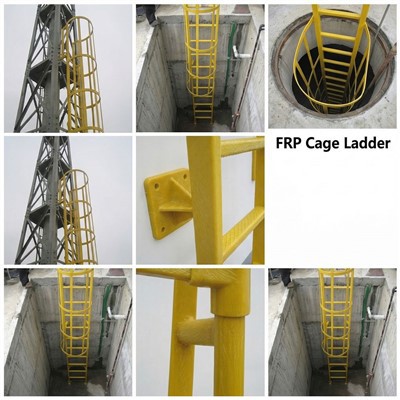
The flexibility of FRP Ladder Rail Profiles extends to a wide range of applications across various industries. In the industrial sector, these profiles are commonly used for access ladders, walkways, and handrails in factories, warehouses, and refineries. Their high strength-to-weight ratio and corrosion resistance make them a safe and durable alternative to traditional metal profiles.
In the construction industry, FRP Ladder Rail Profiles are increasingly being used in building facades, staircases, and balcony railings. Their design flexibility allows architects and designers to create unique and modern structures that are both functional and aesthetically pleasing. Additionally, the lightweight nature of FRP reduces the overall weight of the building, which can lead to cost savings in foundation design and construction.
The transportation industry also benefits from the flexibility of FRP Ladder Rail Profiles. These profiles are used in the construction of buses, trains, and aircraft, where their lightweight properties contribute to fuel efficiency and reduced emissions. In the marine industry, FRP Ladder Rail Profiles are used on boats, ships, and offshore platforms, providing a corrosion-resistant solution that can withstand the harsh marine environment.
Advantages of Choosing FRP Ladder Rail Profiles
- Cost-Effective: Despite their high performance, FRP Ladder Rail Profiles are often more cost-effective than traditional materials in the long run. Their low maintenance requirements, corrosion resistance, and long service life result in significant cost savings over time.
- Easy Installation: The modular design and lightweight nature of FRP Ladder Rail Profiles make them easy to install, reducing labor costs and installation time. This is particularly beneficial for projects with tight deadlines.
- Safety: FRP Ladder Rail Profiles are non-conductive, which means they do not pose a risk of electrical shock. This makes them a safe choice for applications in electrical substations, power plants, and other areas where electrical hazards are present.
- Environmental Friendliness: FRP is a sustainable material that can be recycled at the end of its life cycle. Additionally, its low energy consumption during production and transportation makes it an environmentally friendly choice.
Conclusion
In conclusion, the flexibility of FRP Ladder Rail Profiles is one of their most significant advantages. Their design flexibility allows for custom solutions that meet the specific requirements of any project, while their material flexibility provides excellent mechanical properties, corrosion resistance, and thermal insulation. The wide range of applications across various industries further demonstrates the versatility of these profiles.
Climbing Plant Supports If you’re in the market for high-quality FRP Ladder Rail Profiles, I encourage you to reach out to discuss your specific needs. Our team of experts is dedicated to providing you with the best solutions and ensuring your project’s success. Whether it’s a small-scale residential project or a large industrial installation, we have the expertise and resources to meet your requirements. Contact us today to start the conversation and explore how our FRP Ladder Rail Profiles can benefit your next project.
References
- "Fiber Reinforced Polymer (FRP) Composites in Civil Infrastructure." Edited by Sami H. Rizkalla. Wiley, 2007.
- "Handbook of FRP Composites for Civil and Structural Engineering." Edited by J. O. J. O. James. Woodhead Publishing, 2014.
- "FRP Composites in Construction: State – of – the – Art Review." Journal of Composites for Construction, ASCE. Various Issues.
Yizheng Wanteng Composites Co., Ltd.
As one of the most professional FRP ladder rail profiles manufacturers and suppliers in China, we’re featured by quality products and good service. Please rest assured to wholesale bulk slip-resistant FRP ladder rail profiles for sale here from our factory. Contact us for pricelist.
Address: No. 20 Longyi Road, Qingshan Town Industrial Park, Yizheng City, Jiangsu Province, China
E-mail: mark@wantfrp.com
WebSite: https://www.wantfrp.com/
