If you’ve ever worked on a commercial building, a residential subdivision, or a sprawling industrial site, you’ve likely encountered a box type transformer tucked on a concrete pad, half-hidden by shrubbery or a chain-link fence. For someone like me—who’s spent 12 years in the box type transformer supply business—those unassuming metal enclosures aren’t just boxes with wires. They’re the unsung workhorses that keep lights on, conveyor belts moving, and entire neighborhoods powered. But here’s the hard truth I’ve learned over the years: a transformer that looks sturdy and works at first glance can quickly become a costly, dangerous headache if it doesn’t meet industry standards. I’ve seen it firsthand: a project in the Pacific Northwest where a subpar unit failed six months after installation, shutting down a 10-building office complex and costing the owner $120,000 in lost revenue, not to mention the safety risks when it overheated. That’s why, after hundreds of sales, installations, and service calls, I’ve built our entire business around a non-negotiable rule: every box type transformer we ship must check every single box of relevant standards, no exceptions. If you’re a project engineer, facilities manager, or someone responsible for specifying transformer equipment, let me walk you through the step-by-step process I use to make sure every unit leaving our warehouse is truly up to code. Box Type Transformer
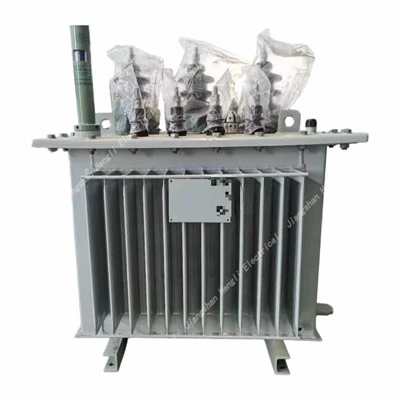
First, let’s get clear on what standards we’re actually talking about. Most regions follow two core sets: the International Electrotechnical Commission (IEC) standards, which are used in over 100 countries, and the Institute of Electrical and Electronics Engineers (IEEE) standards, widely adopted in North America and many parts of Asia. For box type transformers specifically, the key standards are IEC 60076 (Power Transformers) and IEEE C57.12.00 (General Requirements for Liquid-Immersed and Dry-Type Distribution Transformers), plus the application-specific standards like IEEE C57.12.20 for pad-mounted transformers, which is exactly what box type units usually are. But here’s the mistake many buyers make: they assume “compliance” is just a sticker on the transformer or a piece of paper in the manual. It’s not. Compliance is a chain of checks starting from the design phase, all the way through manufacturing, testing, and delivery to the job site. Let’s start at the beginning, because cutting corners in design is where most of the problems start.
When we take a new order, the first thing I don’t just pull a stock unit off the shelf. I work with our in-house design engineer to match every spec to the exact relevant standard, not just the customer’s request. For example, if a customer needs a 500kVA pad-mounted transformer for a 100-unit apartment complex in Florida, we don’t just size it to their load calculations. We check IEEE C57.12.20, which requires that the transformer can handle a 150% overload for two hours at a time—critical for Florida’s extreme summer AC loads, when every unit in the complex is running. I once had a customer try to specify a unit with a 125% overload rating to save a few hundred dollars. It didn’t take long to explain that their peak load would hit 135% on the hottest July afternoons, and a unit built to a lower standard would overheat, trip constantly, and burn out in two years instead of the 25-year lifespan a quality transformer should have. That’s where design due diligence comes in: every component, from the core steel to the wire gauge to the tank thickness, is verified against the standard’s minimum requirements. For box type transformers, the NEMA (National Electrical Manufacturers Association) also has standards for enclosure durability—NEMA 3R for outdoor units, which means they’re rain-tight and resistant to dust, but not waterproof like NEMA 4X, which is needed for corrosive coastal areas. Last year, a construction company in Houston ordered NEMA 3R units for a new subdivision near the Gulf Coast. We flagged that NEMA 3R wouldn’t hold up to the salt air, and suggested upgrading to NEMA 4X at a small extra cost. They took our advice, and six months later, their competitor’s un-upgraded units were already showing rust spots on the tank—our units were still looking like new. That’s the value of design checks: catching a mismatch before the metal is even cut.
Next comes manufacturing, and this is where the rubber meets the road, because even a well-designed transformer can be built wrong on the factory floor. I’ve toured enough bad factories to know that not all transformer production is equal. Our manufacturing partner is ISO 9001 certified, which means every step of the process is documented and audited, and we send a quality control inspector to the plant every month to walk the line. For box type transformers, the critical manufacturing checks start with the core and coil assembly. The core is made of grain-oriented silicon steel, and IEC 60076 says that the core must be assembled with butt joints, not overlapping ones, to reduce no-load losses. I’ve seen units with overlapping joints that hum so loud they’re audible 50 feet away—something that violates noise level standards, which are part of IEC 60076-10. The coils, whether liquid-immersed or dry-type, have to be insulated to withstand the rated voltage and any transient surges, like those from lightning or grid switching. The standard requires a dielectric test, where you apply a voltage higher than the rated voltage for a set time, to make sure there are no weak spots in the insulation. But here’s the catch: some cut-rate manufacturers skip this test, or only test a sample of units instead of every single one. We test every unit that leaves our facility. I’ve pulled test data from a unit that failed a dielectric test: the insulation on one secondary coil had a tiny defect from a loose wire during winding. That’s the kind of defect that would have caused a short circuit in the field, possibly starting a fire. Catching that at the factory saved the customer from a disaster.
After the core and coil, the next big step is the tank assembly. For box type transformers, the tank isn’t just a metal box—it’s part of the cooling system, whether it’s liquid-immersed with natural convection or fan-cooled. The standard requires that the tank be pressure-tested to make sure it doesn’t leak, both before and after filling with oil (if liquid-immersed). I once heard a story from a utility company about a transformer that leaked oil into a wetland, because the tank had a tiny weld defect that wasn’t caught during testing. It cost the company $500,000 in fines and environmental cleanup. That’s why our pressure test is non-negotiable: we fill the tank with air, pressurize it to 15 psi, hold it for 10 minutes, and check every weld, every gasket, every valve for leaks. We also use gasket material rated for the correct temperature and environment—for coastal areas, we use EPDM gaskets that resist UV rays and salt, not the generic rubber that some manufacturers use to cut costs. The enclosure design also has to meet safety standards: IEEE C57.12.20 requires that the box type transformer have locking features to prevent unauthorized access to live parts, and that the covers are designed so they can’t fall off when being opened—another detail that’s easy to skip if you’re focused on speed.
Once the transformer is assembled, it’s time for factory testing, and this is the part that I insist customers get a copy of before they sign off on delivery. A lot of suppliers will give you a generic test report that says “compliant with IEC 60076” without any actual numbers. That’s useless. We provide a full individual test report for every unit, with data points that the standard mandates. Let’s break down what those tests actually mean, because it’s not just jargon. The no-load loss test measures how much power the transformer uses when it’s running but not carrying any load—this is energy wasted around the clock, and IEC 60076 sets maximum limits based on kVA rating. A unit with higher no-load loss will cost you thousands of dollars over its 25-year lifespan in extra electricity bills. The load loss test measures the power lost when the transformer is carrying its rated load, which is equally important for operating costs. Then there’s the temperature rise test: we run the transformer at full load for 24 hours (or use a thermal equivalent test per standard guidelines) and measure the temperature of the windings, oil, and tank to make sure they don’t exceed the standard’s limits. Overheating is the number one cause of transformer failure, and this test is the only way to confirm the unit can handle the heat it will see in the field. I once had a customer who compared our test data to another supplier’s for a 1000kVA unit. The other supplier’s temperature rise test showed a 12°C higher winding temperature, which would have cut the transformer’s lifespan in half, per IEEE standards’ guidelines on aging. That customer chose us, no questions asked.
Another critical test that’s often overlooked is the impulse voltage test, which simulates a lightning strike or a grid surge. Box type transformers are often installed outdoors, so they’re exposed to lightning. The standard requires that the unit can withstand a 1.2/50 microsecond impulse voltage, which is a way to replicate the fast voltage spike from a lightning strike. A transformer that fails this test can be damaged by a single lightning hit, leaving your site without power. We perform this test every time, and we keep all the raw data on file for at least 10 years, just in case a customer needs to reference it later.
Now, what about when the transformer arrives at the job site? Standards don’t stop at delivery—there are on-site checks too, to make sure nothing got damaged during shipping. For example, during transport, the transformer can shift, loose bolts can come undone, or wiring can get jostled. I always tell our customers to do a visual inspection first: check the tank for dents (large dents can damage internal components, even if they look minor on the outside), make sure all the valves and fittings are tight, and compare the serial number on the unit to the test report we provided. We also recommend that customers do an on-site resistance test of the windings and a continuity test before energizing the transformer, just to confirm nothing went wrong during transport. Last year, a customer in Arizona told us that during unloading, the crane banged the side of the transformer. We advised them to do a full internal inspection (we have a third-party service that does this) and it turned out the core was slightly misaligned. We coordinated with our manufacturing partner to repair it at no extra cost, and the unit performed perfectly once it was back in place. That’s why we don’t just sell transformers—we stand behind them every step of the way.
I also want to address a common myth: “custom units don’t need to meet the same standards as stock units.” That’s 100% wrong. Even a custom box type transformer built for a unique application, like a remote mine or a solar farm, still has to comply with IEC or IEEE standards, depending on the region. I’ve had customers ask for a custom unit with a lower voltage rating to save money, and while we can adjust the design, we never compromise on the core requirements for insulation, temperature rise, or safety features. A few years ago, a solar developer needed a custom unit for a 5MW solar farm in New Mexico, where the ambient temperature hits 45°C in the summer. The standard maximum temperature rise for liquid-immersed transformers is 65°C, but at that high ambient, we had to adjust the cooling system to keep the total winding temperature within the standard limit. We worked with them to size the radiators and add a small fan to maintain compliance, and the unit has been running smoothly for three years, even in those extreme heat conditions.
At the end of the day, the goal of meeting standards isn’t just to check a box. It’s to protect your investment, keep your operations running, and most importantly, keep people safe. A faulty transformer can cause fires, electrical shocks, and power outages that disrupt lives and cost businesses millions. Over my career, I’ve built our business on the fact that when a customer buys a box type transformer from us, they don’t just get a piece of equipment—they get a unit that’s been designed, built, tested, and verified to meet every relevant standard, with a team that’s here to support them from design to installation to service.
If you’re currently sourcing a box type transformer for your next project, or if you’ve had a bad experience with a unit that didn’t hold up to standard requirements, I’d love to hear from you. We work with projects of all sizes, from small residential subdivisions to large industrial facilities, and we tailor our approach to make sure every unit meets your specific standards and application needs. There’s no such thing as a “one-size-fits-all” transformer, and we never try to sell you something that doesn’t match your requirements.

References
IEC 60076: Power transformers
IEEE C57.12.00: General Requirements for Liquid-Immersed and Dry-Type Distribution Transformers
IEEE C57.12.20: Standard for Pad-Mounted Distribution Transformers, 500 kVA and Below, 34500 Gradyed / 19920Y to 240/120 V, and 1000 kVA and Below, 34500 Gradyed / 19920Y to 480Y/277 V
NEMA 250: Enclosures for Electrical Equipment
Single Phase Pole Mounted Transformer Wait—before I wrap this up, I should add a quick note about long-term support, because standards compliance doesn’t end when the transformer is installed. We offer annual maintenance checks that include verifying that the unit is still operating within standard parameters, testing the oil quality (for liquid-immersed units), and checking the enclosure for damage. That’s another way we ensure our transformers stay compliant for their entire lifespan. I’ve seen too many customers buy a cheap transformer, install it, and then forget about it until it fails, only to find that the original unit didn’t meet standards in the first place. Taking those extra steps on the front end saves everyone time, money, and stress. If you’re ready to source a box type transformer that you can trust to meet all relevant standards, don’t hesitate to reach out—we can walk through your project details, share our test data process, and make sure you get a unit that will perform for decades.
Zhejiang Jiangshan Hengli Electrical Co., Ltd.
Zhejiang Jiangshan Hengli Electrical Co., Ltd. is one of the most professional box type transformer manufacturers and suppliers in China, featured by quality products and low price. Please rest assured to wholesale cheap box type transformer in stock here and get pricelist from our factory. Customized orders are welcome.
Address: 212 Fuzhu Street Sidu Town, Jiangshan, Zhejiang, China
E-mail: henglijs@foxmail.com
WebSite: https://www.henlypower.com/
