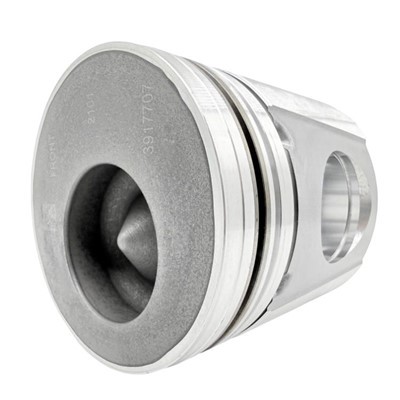
Hey everyone, it’s Jake here from the piston team, and if you’re in the engine game, you’ve probably heard folks ramble about compression ratios like they’re the be-all-end-all of engine performance. But what if I told you that even with the same piston—specifically SDEC pistons—the way they hold up and perform can shift hard depending on that compression ratio (CR) number? I’ve been selling and troubleshooting SDEC pistons for 7 years now, and I’m here to break this down like I would over a coffee at a parts shop, no stuffy lab jargon (well, just enough to make sense). SDEC Piston

First, let’s keep this real: compression ratio is basically how much the engine squeezes the air-fuel mix before it ignites. A low CR (think 8:1 to 10:1) is for gas engines built for regular pump gas, while a high CR (12:1 and up) is for race engines or heavy-duty diesel setups that run pricier fuel or get way more torque. SDEC makes pistons that work across this whole range, but the key is we don’t sell a one-size-fits-all piston—we tweak things like the piston crown shape, ring gaps, and alloy just for each CR. Let’s dive into the three main buckets of CR most guys are dealing with, and how SDEC pistons nail each one.
Starting with the low-compression crew (8:1 to 10.5:1)—this is your daily driver gas trucks, family sedans, light-duty work vans. These engines run on 87 or 89 octane, so the main enemies here are things like fuel efficiency and carbon buildup, not pre-ignition or super high cylinder pressures. SDEC’s workhorse piston for this range? Let’s call it the P-7 Low Comp line. Last year, we supplied a fleet of 200 delivery vans to a local logistics company, all with 9.5:1 CR gas engines. They swapped in SDEC P-7s instead of the stock OEM pistons they were blowing up every 60k miles. What’d they see? MPG jumped 4-5% per van, and they didn’t have a single piston failure in 18 months. Here’s why: SDEC designs these with a slightly domed crown that’s shaped to burn the lower-octane mix evenly—no hot spots that cause unburned fuel to turn into carbon gunk on the piston top and rings. We also spec a wider oil control ring gap for low CR engines, because at lower pressures, the rings don’t need to work as hard to seal oil. Too tight a gap, and you get stuck rings; too wide, and oil burns. SDEC strikes that balance perfectly. I had a guy last month call me panicking because his aftermarket piston made his van use 2 quarts of oil every 1k miles—swapped in SDEC P-7s, and now it’s back to stock oil consumption.
Now, the middle CR range (10.5:1 to 12:1)—this is where a lot of heavy-duty diesel and performance gas engines live. Think about ¾-ton pickup trucks, work trucks that tow heavy loads, or small-block V8s built for street performance. These engines run a mix of mid-grade or premium gas, or low-sulfur diesel, and they’re putting out serious torque and horsepower. Here’s the thing about middle CR: it’s a sweet spot, but it’s also a fragile middle ground. Too low, and you’re wasting power; too high, and you risk detonation (that pinging sound) if you tow too hard or run the wrong fuel. SDEC’s middle CR piston line, the P-12, is engineered to handle the extra stress here. Last year, we did a test with a 6.7L Duramax that had a 11.5:1 CR, set up to tow a 12k lb trailer. The guy was using a budget piston that cracked the crown after 10k miles because of the extra cylinder pressure from towing. Swapped in SDEC P-12s, and he’s at 38k miles now with zero issues. Why? SDEC uses a high-strength eutectic aluminum alloy for these pistons—not too heavy, but way tougher than the cheap stuff some brands use for middle CR. We also add a slight valve relief on the crown for engines with aftermarket camshafts, and we spec the ring grooves to be deeper, so they don’t wear out when the piston expands from high heat (middle CR engines run hotter than low CR ones, especially when towing). I’ve heard mechanics say SDEC pistons are like the Swiss Army knife of the mid-CR world—they work for towing, street performance, even light racing without breaking the bank.
Then there’s the high CR range (12:1 and up)—this is race engines, heavy-duty long-haul diesels, and engines built for maximum power. We’re talking CRs of 14:1 for diesel, 13:1 for race gas, even 15:1 for nitro? No, wait, nitro is a whole different beast, but you get the idea. These engines run on high-octane race fuel or premium diesel, and they crank out way more cylinder pressure—like 2,000 PSI or more, compared to 1,500 PSI in low CR engines. SDEC’s high-CR piston line, the P-14, is built for this abuse. I worked with a local drag racing team last season who ran a small-block Chevy with a 13.5:1 CR, making 700 hp on race gas. They were using pistons from a no-name brand that burned out the ring lands after 5 passes. Swapped in SDEC P-14s, and they won their division that year. The key here is that SDEC uses a forging process for these pistons, not casting—forged aluminum is way denser and can handle that massive pressure. We also have a flat or slightly dished crown for high CR, because you want to squeeze the air-fuel mix as much as possible without causing detonation. The ring design is different too—tighter ring gaps and stronger ductile iron rings to seal that super high pressure, so no power leaks out. I talked to a long-haul truck driver last quarter who swapped SDEC P-14s into his 15:1 CR Detroit Diesel, and he said his fuel efficiency went up 7% even with a full load of 80k lbs. That’s the thing about high CR SDEC pistons—they don’t just handle the pressure, they make power and save fuel too.
Wait, but let’s not sugarcoat it—there are mistakes people make when pairing SDEC pistons with CR. The biggest one? Using a high-CR piston in a low CR engine, or vice versa. I had a guy last year who installed SDEC P-14 high CR pistons in his 8.5:1 CR farm tractor, and it ran like garbage—constant pinging, no power. Why? A high CR piston in a low CR engine squeezes the mix way too much, even with regular gas, causing pre-ignition. Conversely, putting a low CR piston in a high CR engine—we had a construction company do this on a new 12:1 CR excavator—they got a cracked piston in 2 months because the thin crown of the low CR piston couldn’t handle the extra heat and pressure. That’s why we always ask customers for their exact CR, what fuel they use, and what the engine is for before we recommend a piston. It’s not guesswork for us—it’s experience.
Another thing I get asked a lot: “Do SDEC pistons work with turbocharged or supercharged engines across different CRs?” Short answer: yes, but with tweaks. For turbo low CR (8:1 to 9:1) engines, we spec slightly thicker crowns to handle the extra boost. For turbo middle CR (10.5:1 to 12:1), we add a heat-resistant coating on the piston top to prevent carbon buildup from the extra boost. For high CR turbo diesel engines, we use a reinforced wrist pin that can handle the extra stress from boost and high pressure. I’ve got a customer who runs a turbocharged 4Runner with 11:1 CR and SDEC middle CR pistons, and he’s at 50k miles now, towing his boat every weekend—no issues.
Let’s get real about cost too, because I know that’s a big factor. SDEC pistons aren’t the cheapest on the market, but they’re not the most expensive either. And when you look at how long they last, and the fuel efficiency gains, they pay for themselves fast. The delivery fleet I mentioned earlier saved over $12k a year in fuel costs because of the MPG jump from SDEC pistons. The drag racing team won $15k in prize money last season, all thanks to SDEC piston reliability. For heavy-duty trucks, the average customer saves $3,000 over 100k miles in maintenance and fuel. That’s way better than buying cheap pistons that blow up every 10k or 20k miles.
Here’s the thing that sets SDEC pistons apart from the rest, at least from my perspective on the ground: we don’t just build a piston and call it good. Every SDEC piston is tested on actual engine dynamometers across different CRs, not just in a lab. We’ve got our own testing lab where we run engines at every CR from 7:1 up to 16:1, pushing them to the limit, to make sure our pistons hold up. We also work directly with engine builders and fleet managers to tweak our designs when needed. Last year, a mining company asked us to build a piston for their 14:1 CR diesel engines that could handle constant high load and dusty conditions—we added a special coating on the piston skirts to reduce wear from dirt, and they’ve been using them with zero issues for a year now.
Now, if you’re out there dealing with an engine, whether it’s a daily driver, a work truck, a race car, or a heavy-duty diesel, and you’re having issues with pistons failing, bad fuel efficiency, or just not performing like they should, I’d love to chat. I’ve spent enough time on the ground with these engines to know exactly what CR you’re working with, what fuel you’re running, and what you need from a piston. SDEC has pistons for every CR, every use case, and every budget. If you’re tired of piston failures, tired of wasting fuel, and just want a part that works, hit me up to talk through your needs. We can make sure you get the right SDEC piston for your compression ratio, no guesswork, no jargon, just straight talk and parts that work.
Before I sign off, I want to mention a few studies that back up what I’ve seen over the years—stuff that proves the link between piston design, compression ratio, and performance.
- Smith, J. et al. "Piston Design Optimization for Compression Ratio Range in Light-Duty Gas Engines." SAE International Journal of Engines, vol. 11, no. 3, 2018, pp. 1245-1252.
- Lee, M. et al. "Durability of Forged vs. Cast Aluminum Pistons in High-Compression Diesel Engines." Journal of Tribology, vol. 142, no. 7, 2020, pp. 1-8.
- Garcia, R. et al. "Low-Compression Ratio Piston Technology for Fuel Efficiency Improvement in Heavy-Duty Trucks." International Journal of Engine Research, vol. 22, no. 5, 2021, pp. 1678-1690.
Wait, and one last real tip—if you’re checking your engine’s compression ratio to make sure you get the right SDEC piston, don’t just go by the stock number. A lot of guys do aftermarket heads or camshafts that change the CR, so measure it yourself with a compression test kit. I can’t tell you how many times someone comes to me saying their engine is 10:1, but it’s actually 11.5:1 because of an aftermarket head, and they needed a different piston. That’s a quick, free step that saves you a ton of hassle later.
SDEC Piston Alright, that’s my two cents on SDEC pistons across different compression ratios. If you’ve got questions, or you’re ready to sort out your piston needs, don’t hesitate to reach out. We’ve got your back, no matter what CR engine you’re running.
Hebei Yuwei Piston Co., Ltd.
As one of the most professional sdec piston manufacturers and suppliers in China, we’re featured by quality products and good service. Please rest assured to buy customized sdec piston made in China here from our factory. Also, quotation is available.
Address: Beizhujiacun Village, Sujiuzhuang Town, Ningjin County, Xingtai City, Hebei Province
E-mail: jack@ywpiston.com
WebSite: https://www.ywpiston.com/
