When it comes to the world of industrial pumping solutions, slurry pumps play a pivotal and indispensable role. As a dedicated slurry pump supplier deeply entrenched in this industry, I am constantly engaged in discussions and inquiries about the capabilities of these remarkable machines. One question that surfaces regularly is: What is the maximum particle size that a slurry pump can handle? This is a key concern for many of our clients across various sectors, including mining, construction, and wastewater treatment. Understanding the answer is crucial for ensuring the efficient and reliable operation of pumping systems. Slurry Pump
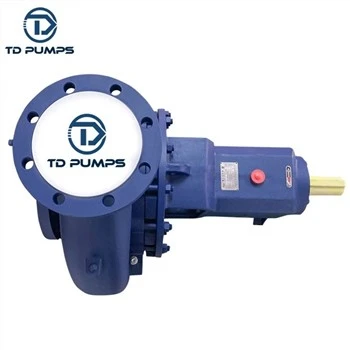
The Basics of Slurry Pumps
Before delving into the maximum particle – size handling capacity, it’s essential to understand what slurry pumps are and how they work. A slurry pump is designed to transport a mixture of solids and liquids, known as slurry. This makes them vastly different from standard pumps that are typically used for pure liquids.
The primary function of a slurry pump is to provide the necessary energy to move the slurry through a pipeline. They do this by converting mechanical energy from an external power source, usually an electric motor, into kinetic energy in the slurry. The impeller, a rotating component inside the pump, is responsible for this energy transfer. As the impeller spins, it creates a centrifugal force that throws the slurry outwards, pushing it through the pump and into the pipeline.
Factors Affecting the Maximum Particle Size
Several factors come into play when determining the maximum particle size a slurry pump can handle. These factors are interrelated and must be considered as a whole to accurately assess the pump’s capabilities.
Pump Design
The physical design of the pump is one of the most significant factors. The size of the pump’s inlet, impeller passages, and volute all influence the maximum particle size. Pumps with larger inlets and wider impeller passages can accommodate larger particles. For example, some heavy – duty slurry pumps used in the mining industry are specifically engineered with large, open – type impellers. These impellers have fewer vanes and wider spaces between them, allowing large particles to pass through without getting stuck.
The shape of the impeller also matters. Semi – open and open impellers are more suitable for handling large particles compared to closed impellers. Closed impellers have a more complex design with vanes that are enclosed on both sides. While they are more efficient for pumping clean fluids or slurries with small particles, they are more likely to clog when dealing with large particles.
Material of Construction
The material used to construct the pump components is another critical factor. The pump must be able to withstand the abrasion caused by the solid particles in the slurry. Harder materials are generally better at handling larger particles. For instance, pumps made from high – chrome alloys are commonly used in applications where the slurry contains large, abrasive particles. These alloys have excellent wear resistance, which allows the pump to operate effectively even when pumping slurries with large chunks of rock or ore.
Slurry Characteristics
The nature of the slurry itself has a significant impact on the maximum particle size the pump can handle. The concentration of solids in the slurry, the shape of the particles, and their hardness all play a role. A high – concentration slurry with large, angular, and hard particles will pose a greater challenge to the pump than a low – concentration slurry with small, rounded particles.
For example, in a mining operation, the slurry may contain large pieces of ore that are jagged and extremely hard. These particles can cause significant wear on the pump components and may even block the flow path if they are too large for the pump to handle. On the other hand, a wastewater treatment plant may deal with a slurry that contains relatively small, soft organic particles, which are much easier for the pump to transport.
Industry – Specific Requirements
Different industries have unique requirements when it comes to the maximum particle size a slurry pump can handle. Let’s take a closer look at some of the major industries and their needs.
Mining Industry
The mining industry is one of the largest users of slurry pumps. In mining operations, slurry pumps are used to transport ores and tailings. The maximum particle size can range from a few millimeters to several centimeters, depending on the type of mining and the processing methods.
In open – pit mining, large pieces of ore are often crushed on – site before being pumped as a slurry. The pumps used in this process need to be able to handle relatively large particles, sometimes up to 50 mm or more. These pumps are typically heavy – duty and designed to withstand the harsh conditions of the mining environment.
Construction Industry
In construction, slurry pumps are used for various applications, such as dewatering construction sites, transporting concrete slurries, and handling drilling mud. The maximum particle size in construction applications is usually smaller compared to mining. For dewatering, the particles may be sand and gravel with sizes typically ranging from a few millimeters to around 10 mm. Concrete slurries may contain small aggregates, and the maximum particle size is usually limited to ensure proper flow and prevent blockages in the pumping system.
Wastewater Treatment Industry
Wastewater treatment plants use slurry pumps to handle sludge and other solid – liquid mixtures. The maximum particle size in this industry is relatively small, usually in the range of a few millimeters. The particles are often organic matter, small debris, and sediment. The pumps need to be designed to handle these materials without clogging and to operate efficiently over long periods.
Testing and Determining the Maximum Particle Size
To accurately determine the maximum particle size a slurry pump can handle for a specific application, testing is often required. This involves conducting trials with different particle sizes under controlled conditions.
In a laboratory setting, a sample of the slurry can be prepared with known particle sizes and concentrations. The pump is then run with this slurry, and its performance is monitored. Parameters such as flow rate, head, and power consumption are measured to assess the pump’s ability to handle the particles. Any signs of clogging, excessive wear, or reduced efficiency are noted.
Field testing is also valuable, as it allows the pump to be tested in a real – world environment. This can provide more accurate data on how the pump will perform under actual operating conditions. During field testing, the pump can be used to transport the actual slurry from the source, and the operator can observe its performance over time.
Implications for Our Clients
As a slurry pump supplier, understanding the maximum particle – size handling capacity of our pumps is crucial for our clients. By accurately assessing their needs, we can recommend the right pump for their application.
Using the wrong pump can lead to a variety of problems. If a pump is not able to handle the maximum particle size in a slurry, it may experience frequent clogging. This can result in downtime for maintenance, which is costly for our clients. Additionally, excessive wear on the pump components can reduce the pump’s lifespan and increase the overall cost of operation.
On the other hand, if we recommend a pump that is oversized for the application, it will consume more energy than necessary, leading to higher operating costs. Therefore, accurately matching the pump’s capabilities to the client’s requirements is essential for ensuring efficient and cost – effective operation.
Conclusion
The maximum particle size that a slurry pump can handle is a complex issue that depends on multiple factors, including pump design, material of construction, and slurry characteristics. Different industries have different requirements, and accurate testing is necessary to determine the appropriate pump for a specific application.

As a reliable slurry pump supplier, we are committed to providing our clients with the best – fitting solutions. Our team of experts has in – depth knowledge of slurry pumps and can assess your specific needs to recommend the most suitable pump for your project. Whether you are in the mining, construction, or wastewater treatment industry, we have the expertise and the range of products to meet your requirements.
Gravel Pump If you are interested in learning more about our slurry pumps and how they can handle the specific particle sizes in your application, or if you are ready to start a procurement discussion, please get in touch with our sales team. We look forward to the opportunity to work with you and provide you with top – quality slurry pumping solutions.
References
- "Slurry Pump Handbook", The McGraw – Hill Companies
- "Pump Selection and Application", Wiley – IEEE Press
- Various industry whitepapers on slurry pump technology and operation.
Hebei Tongda Pump Co., Ltd.
Hebei Tongda Pump Co., Ltd. is well-known as one of the leading slurry pump manufacturers and suppliers in China. Our factory offers high quality slurry pump made in China with competitive price. Welcome to contact us for pricelist.
Address: No.158, Bo Ming Xi Lu, Boye County, Baoding City, Hebei Province
E-mail: wendy@hbtdby.com
WebSite: https://www.waterpumpmanufacturer.com/
