Hey there! I’m [Your Name], and I work as a supplier of Tranter Plates. You might be wondering, "What’s the big deal about these Tranter Plates, and how do they seal?" Well, stick around, and I’m gonna break it down for you in plain English. Tranter Plate
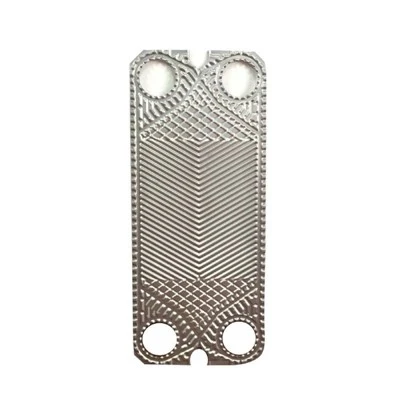
The Basics of Tranter Plates
First off, let’s talk a bit about what Tranter Plates are. These plates are a crucial part of plate heat exchangers. They’re used in all sorts of industries, from food and beverage to chemical processing. The main job of a plate heat exchanger is to transfer heat between two fluids without them actually coming into contact with each other. And the Tranter Plates play a key role in making this happen safely and efficiently.
The Sealing Mechanism Unveiled
Now, let’s get to the heart of the matter: the sealing mechanism of Tranter Plates. There are basically two types of seals used in Tranter Plates—gasketed seals and welded seals. Each has its own advantages and works in different situations.
Gasketed Seals
Gasketed seals are the most common type. They use rubber or elastomeric gaskets to create a tight seal between the plates. These gaskets are like little rubber barriers that prevent the fluids from leaking out of the channels between the plates.
How do they work? Well, the gaskets are carefully designed to fit into grooves around the edges of the plates. When the plates are stacked together and tightened, the gaskets get compressed. This compression creates a seal that can withstand a fair amount of pressure and temperature.
One of the great things about gasketed seals is that they’re pretty easy to maintain. If a gasket gets worn out or damaged, you can simply replace it without having to replace the whole plate. This makes them more cost – effective in the long run, especially for applications where regular maintenance is a must.
Another advantage is their flexibility. You can choose different types of gaskets depending on the fluids you’re dealing with. For example, if you’re working with a corrosive fluid, you can use a gasket made from a material that’s resistant to corrosion.
However, gasketed seals do have some limitations. They’re not suitable for extremely high – pressure or high – temperature applications. At very high pressures, the gaskets might get squeezed out of place, and at very high temperatures, the rubber can start to degrade.
Welded Seals
Welded seals, on the other hand, are a bit more permanent. Instead of using gaskets, the plates are welded together. This creates a hermetic seal that’s extremely strong and can handle much higher pressures and temperatures compared to gasketed seals.
The welding process is done carefully to ensure that the seal is leak – proof. Special welding techniques are used to make sure that the welds are uniform and strong. Once the plates are welded, they form a single, solid unit.
One of the main advantages of welded seals is their durability. They’re perfect for applications where you need a long – lasting, reliable seal. Also, since there are no gaskets to replace, there’s less maintenance required.
But there are downsides too. Welded seals are more expensive to manufacture and repair. If a welded plate gets damaged, it can be difficult and costly to fix. In some cases, you might even have to replace the whole heat exchanger.
Factors Affecting the Sealing Performance
Several factors can affect how well the Tranter Plates seal.
- Fluid Properties: The type of fluid you’re working with matters a lot. If it’s a corrosive or abrasive fluid, it can wear down the gaskets or the welds over time. You need to choose the right materials for the seals and the plates to ensure that they can withstand the properties of the fluid.
- Pressure and Temperature: As I mentioned earlier, high pressures and temperatures can put a lot of stress on the seals. You have to make sure that the sealing mechanism you choose is appropriate for the pressure and temperature conditions of your application.
- Plate Alignment: When the plates are stacked together, they need to be properly aligned. If the plates are misaligned, the seals won’t work as effectively, and you might end up with leaks.
Why Tranter Plates are a Great Choice
Now, you might be thinking, "There are so many plate heat exchangers out there. Why should I choose Tranter Plates?" Well, there are a few reasons.
- Quality Design: Tranter has been around for a long time, and they know what they’re doing. Their plates are designed with precision to ensure the best possible sealing performance.
- Wide Range of Options: Whether you need gasketed or welded seals, Tranter has you covered. They offer a variety of plates and sealing options to fit different applications.
- Reliability: Tranter Plates have a reputation for being reliable. When you’re using them in your process, you can trust that they’ll do their job properly and keep your fluids where they’re supposed to be.
Wrap – Up and Call to Action

So, there you have it—the sealing mechanism of Tranter Plates in a nutshell. Whether you’re in the food industry, chemical processing, or any other field that needs heat transfer, Tranter Plates can be a great solution.
Sondex Plate If you’re interested in finding out more about our Tranter Plates, or if you’re ready to start a procurement negotiation, feel free to reach out. We’re always happy to answer your questions and work with you to find the best solution for your needs.
References
- Tranter Technical Documentation
- Industry Research on Plate Heat Exchangers
- Personal experience as a Tranter Plate Supplier
WTSML Heat Transfer Technology Co., Ltd.
Address: Qiaoxing Road 150, Torch Industrial Zone, Licheng Area, Quanzhou, Fujian, China
E-mail: phe@wtsml.net
WebSite: https://www.phe-service.com/
