If you’ve ever stopped to wonder why lithium batteries have taken over everything from your phone to electric buses, you’ve probably stumbled on the phrase “cost-effectiveness” more times than you can count. As a lithium battery supplier, I hear this question at least once a week—usually from a small business owner upgrading their delivery vans, a homeowner deciding between solar panels and a gas generator, or an engineer at a factory looking to cut energy bills. What most people don’t realize is that cost-effectiveness for lithium batteries isn’t just about the upfront price tag. It’s a messy, long-term equation that wraps together upfront costs, maintenance, lifespan, and even hidden environmental costs that most suppliers (including me) don’t always spell out clearly at first. Let me break this down the way I do with every customer who sits across my desk, no corporate jargon, no fine print. Lithium Battery

Let’s start with the part everyone looks at first: upfront cost. Ten years ago, a standard 10 kWh lithium battery for a home solar system would’ve run you around $15,000. Today? That same system is roughly $5,000, and we’re already seeing models that tip closer to $4,000 for the same capacity. That drop isn’t a trick of the market—it’s the result of a decade of scaling production, better chemistry, and global supply chain tweaks that have pushed costs down 80% since 2010, according to data from the International Energy Agency (IEA). But before you jump to “that’s half the price, so it’s a no-brainer,” you have to compare it to the alternative. Lead-acid batteries, the old workhorse for everything from golf carts to backup power, still clock in at around $700 for that same 10 kWh system on paper. That sounds way cheaper—until you dig into the long game.
Lead-acid batteries have a lifespan most of us know intuitively: if you cycle a deep-cycle lead-acid battery every day, you’re looking at 500 to 1,000 full cycles before it drops to 80% of its original capacity. Translate that to real years, and that’s about 3 to 5 years for a home backup system, maybe 2 to 3 for a delivery van battery. Lithium batteries? We design our standard commercial-grade models for 6,000 to 10,000 full cycles, with top-tier long-life models hitting 15,000. That’s 15 to 20 years of daily use for home systems, 10 to 15 years for heavy-duty transport. Suddenly, that $5,000 lithium battery vs. $700 lead-acid comparison gets a lot sharper. Let’s do the math over 15 years: replace 3 lead-acid systems at $700 each, plus any extra maintenance—like replacing corroded terminals, topping up distilled water, or repairing casing leaks that pop up in extreme weather—you’re looking at over $2,500 for just replacement and upkeep. The lithium battery costs $5,000 total, no replacements, no regular maintenance beyond an annual check-in. That’s a huge gap.
But wait—there’s a catch that trips up a lot of my customers: depth of discharge (DoD). Lead-acid batteries can only safely use about 50% of their capacity before damage starts to set in. If you drain a lead-acid battery all the way down to 0% regularly, you’re cutting its lifespan in half, maybe more. So that 10 kWh lead-acid system I talked about earlier? You’re only getting 5 kWh of usable power, because draining the other 5 kWh would kill it fast. Our lithium batteries, though, have a 90%+ DoD rating. That means you can safely use 9 out of every 10 kWh, no damage, no shortened life. That same 10 kWh lithium battery gives you 9 kWh of usable power, not 5. So the “effective” upfront cost per usable kWh isn’t $500—it’s around $555. For lead-acid, that $700 10 kWh system is actually $1,400 per usable kWh. That’s where the cost-effectiveness really clicks.
Of course, not every lithium battery is the same. I’ve seen too many cut-rate models on the market that undercut my prices by 30% or more, and 9 times out of 10, those are the ones that end up being a nightmare for customers. They use cheap cathode materials, skip the necessary battery management systems (BMS) that keep cells balanced and prevent overcharging or overheating, and have half the cycle life of a reputable brand. Last year, a small electric food truck owner came to me after buying a $2,500 lithium battery from an overseas supplier. It died after 18 months, and the company went under before he could get a warranty claim honored. He ended up paying more to replace it with our system than he would have if he’d bought the right product the first time. That’s why I always tell customers: the cheapest lithium battery isn’t the most cost-effective. You have to look at the total cost of ownership (TCO), not just the sticker price.
That TCO also includes something most people don’t account for: operational savings. For electric vehicles (EVs) powered by lithium batteries, the numbers speak for themselves. A diesel delivery van costs about $0.18 per mile to fuel, plus $0.05 per mile for maintenance, totaling $0.23 per mile. A lithium battery-powered electric van costs roughly $0.04 per mile for electricity, and maintenance is minimal—no oil changes, no transmission work, no exhaust system repairs—coming in at $0.01 per mile. That’s $0.05 per mile total operational cost, a 78% savings over diesel. Multiply that by a driver who logs 100,000 miles a year, and that’s $18,000 a year in savings, enough to cover the difference between a lithium-powered van and a diesel one in just a couple years. For businesses, that’s not a “nice to have”—that’s money that goes straight to the bottom line.
For residential users, the savings come from pairing lithium batteries with solar panels. Let’s say a homeowner in Arizona has 5 kW of solar panels, generating about 7,000 kWh a year. Without a battery, they send excess power to the grid for around $0.05 per kWh, and buy grid power at $0.15 per kWh at night. With a lithium battery, they store that excess solar and use it at night, cutting their grid bill almost entirely. Over 15 years, that’s $30,000 or more in avoided utility costs, minus the $5,000 battery upfront. Even if you have to finance the battery, the monthly payments usually come out to less than the old utility bill, so the homeowner saves money from day one.
But here’s the part that’s still being figured out, even for suppliers like me: the end-of-life cost. Lithium batteries aren’t indestructible—after their useful life of 10 to 15 years, they still have 70 to 80% capacity left, perfect for less demanding applications like grid energy storage or backup power for small businesses. Only after that second life, when they drop below 20% capacity, do they need to be recycled. The old problem was that most lithium batteries ended up in landfills, leaching toxic materials into soil and water. Today, though, recycling technology has improved so much that we can recover 95% of the lithium, cobalt, and nickel from a battery, enough to make new batteries from the recycled materials. In fact, the IEA projects that by 2030, recycled lithium could meet 10% of global demand, bringing down material costs even more. The Environmental Protection Agency (EPA) says that proper recycling of a lithium battery avoids roughly 100 kg of carbon emissions compared to sending it to a landfill, which means you get a carbon benefit on top of the cost savings.
That said, there are still edge cases where lithium batteries aren’t the most cost-effective choice right now. If you only need power for a few years—like a seasonal cabin that’s only used in the summer—a lead-acid battery might be cheaper upfront, even with replacement. If you’re operating in an area with extremely limited access to electricity and very low fuel costs, maybe a diesel generator makes more sense for a temporary setup. But for any long-term use case—anything 5 years or more—lithium batteries almost always come out ahead, especially when you factor in growing regulations on lead-acid batteries, which many countries are phasing out due to their toxicity and shorter lifespan.
I’ll be honest with you too: lithium batteries aren’t perfect. They work best in moderate temperatures—extreme cold can reduce their capacity by 20 to 30% in frigid climates, though we’ve engineered our commercial models with heating systems that offset that for use in places like Canada or northern Europe. They also require a proper recycling infrastructure to be truly sustainable, and while that’s growing fast, it’s not universal in every part of the world. But those issues are being addressed every day, and as production scales and technology improves, the gaps are closing.
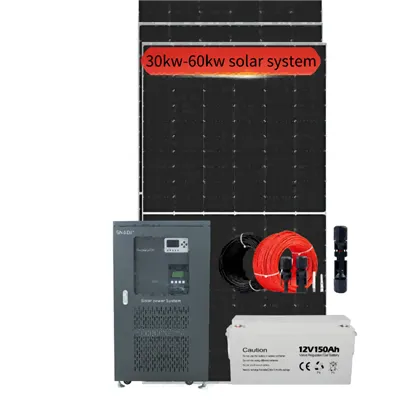
At the end of the day, cost-effectiveness isn’t a one-size-fits-all number. It’s not just “lithium is expensive or cheap”—it’s about matching the right battery to your needs, calculating total cost of ownership over the life of the product, and accounting for all the hidden costs and savings that don’t show up on the initial quote. As a lithium battery supplier, my job isn’t just to sell you a battery—it’s to help you figure out which one gives you the best return, whether that’s for your delivery fleet, your home solar system, or your factory’s backup power. If you’re tired of guessing about whether lithium is worth the investment for your use case, I’m here to walk you through the numbers, no sales pressure, no fine print. Reach out to discuss your specific needs and get a clear breakdown of cost, lifespan, and savings.
Inverter References
International Energy Agency. (2023). Global Lithium Supply and Demand Report. International Energy Agency.
U.S. Environmental Protection Agency. (2022). Lithium Battery Recycling and Environmental Impact Assessment. U.S. EPA Office of Resource Conservation.
National Renewable Energy Laboratory. (2021). Cost-Effectiveness of Residential Energy Storage Systems. NREL Technical Report TP-5400-78921.
Battery University. (2023). Deep Cycle Battery Comparison: Lithium-Ion vs. Lead-Acid. Battery University.
Hebei Mutian Solar Energy Technology Development Co., Ltd.
Hebei Mutian Solar Energy Technology Development Co., Ltd. is one of the most professional lithium battery manufacturers and suppliers in China, featured by quality products and good service. Please rest assured to buy lithium battery in stock from our factory. Contact us for customized service.
Address: Room 3120, Block A, Zhili Building, 77 Fuxing West Road, Baoding City, Hebei Province, China
E-mail: mona@solarmt.com
WebSite: https://www.solar-systemkit.com/
