If you’ve ever held a stainless steel vacuum flask on a freezing morning and sipped a piping hot coffee hours later, or used it to keep iced lemonade crisp through a sweltering afternoon, you’ve probably wondered: what even makes these little jugs work? As a supplier of stainless steel vacuum flasks, I get this question all the time—from baristas stocking up for outdoor pop-ups, to small businesses ordering branded ones for employee perks, and even regular folks curious why their $20 flask outlasted the $10 one they bought last year. It’s not just magic; it’s a mix of intentional material choices, and skimping on any one of them is how you end up with a flask that leaks, gets rusty, or can’t hold temperature for 2 hours, let alone 12. Stainless Steel Vacuum Flask
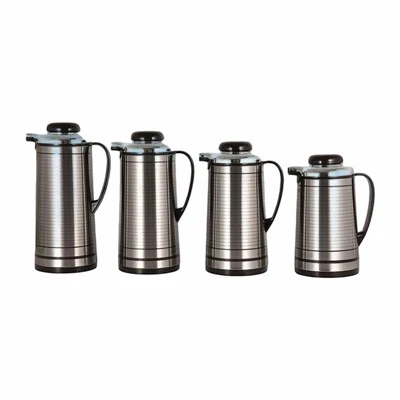
Let’s break it down simply, no boring engineering jargon, just what actually goes into your average (and a few premium) stainless steel vacuum flask. First off, the whole thing revolves around two core materials that pair up to create that vacuum seal—the part that makes it keep hot things hot and cold things cold. That’s 18/8 food-grade stainless steel, right? Wait, but what do those numbers mean, and why is it the go-to instead of plastic or other metals? Let’s start with why stainless steel at all. Plastic leaches chemicals (especially when you pour boiling water into it, yikes), glass breaks if you drop it, and aluminum reacts with acidic drinks like orange juice or tomato soup, giving them a weird metallic aftertaste. Stainless steel is non-reactive, durable, and easy to clean—perfect for something that touches food and gets banged around in a tote bag or a car cup holder all week.
Now, the 18/8 (sometimes written as 18-8) part: that’s the composition of the steel itself. 18% chromium, 8% nickel, with the rest being iron and a tiny bit of carbon. Why those two? Chromium is what makes stainless steel “stainless”—it forms a super thin, invisible oxide layer on the surface when it’s exposed to air or water, which stops rust from spreading. Skip the chromium, and your flask would be just plain steel that’ll turn brown and flaky after a few months of use. Nickel adds toughness and that smooth, silver sheen, plus it makes the steel more resistant to corrosion from things like vinegar or sports drinks. You’ll also see 18/10 sometimes, which is a higher nickel content—those are usually the more premium flasks, a little softer, more polished, and even more resistant to rust. We use both here: 18/8 is the sweet spot for most of our everyday flasks (affordable and tough enough for daily use), and 18/10 for our line of travel flasks marketed to hikers and commuters who want that extra durability.
But wait—there’s more to the flask than just the inner and outer walls. The inner wall, where your drink touches, needs to be extra smooth, right? That’s why most of our inner linings get a polish, sometimes a mirror polish, not just the basic finish. We do a passivation process too, which sounds fancy, but it’s just dipping the inner steel parts in a mild acid solution to wipe out any tiny iron particles on the surface that could start to rust over time. Super important—if we skipped that step, your coffee might get that metallic tang after a few uses, and the flask would end up looking dingy long before it should.
Then there’s the vacuum part, which is the whole point of the flask. Between the inner liner and the outer shell, there’s a gap, and all the air is sucked out to create a vacuum. Why? Because heat travels three ways: conduction (touching a hot surface), convection (moving through air), and radiation (heat waves through empty space). A vacuum eliminates conduction and convection—so the only way heat can escape is through radiation, which we barely notice in daily use. But the outer shell? If we used the same 18/8 as the inner liner, would that be enough? Well, technically, yes, but we use a slightly thicker grade for the outer shell, usually 201 stainless steel for our entry-level flasks, or 304 for mid-range and premium ones. Wait, 201 vs 304? Don’t panic—304 is the same as 18/8, basically, while 201 is a cheaper stainless steel with less nickel, more manganese. It’s still food-safe, but it’s a little more prone to rust if you leave saltwater or acidic drinks in it for days. So we only use 201 for the outer shells of our budget flasks, where the user is mostly using it for water or coffee, and pair it with a tight, BPA-free lid to keep moisture out.
Now, the lid—another big part people overlook. A flask’s lid is what keeps the vacuum intact, right? If the lid is loose, all that heat escapes in 30 minutes instead of 6 hours. The main materials here: most lids have two parts, the inner seal and the outer part. The inner seal is usually silicone, sometimes rubber, but silicone is better because it’s flexible, doesn’t crack after repeated use, and is food-safe. We use BPA-free silicone, obviously—no one wants to ingest bisphenol A every time they take a sip. The outer part of the lid is often plastic too, and again, we use BPA-free food-grade plastic, not the cheap stuff that smells like chemicals when you first open the flask. Some premium lids have stainless steel outer parts, but those are heavier, so we save those for our top-end vacuum flasks for folks who prioritize portability.
Wait, what about the base? The flat bottom that sits on your desk or in your car cup holder. That’s usually a thin piece of plastic or rubber added to the bottom of the outer shell. Why? Two reasons: first, it keeps the steel from scratching your desk, and second, it acts as an extra layer to prevent any moisture from seeping in around the edge. If we skipped that, water could get between the inner and outer walls, ruin the vacuum, and make the flask stop keeping drinks hot or cold. We also make sure all our bases are tightly sealed during production, so you can flip the flask upside down and it won’t leak—tested hundreds of times before it even leaves our warehouse.
Let’s talk about common mistakes people make with materials, too. I see it all the time: a customer buys a cheap flask from a discount store, notices it rusts on the inner wall after a month, or their lemonade gets a metallic taste. That’s usually because the manufacturer cut corners on the stainless steel grade. They might use 201 steel for the inner liner instead of 304, or skip the passivation process, so chromium content is too low. Or worse, they might use a plastic inner liner (gross, I know) instead of stainless steel, which can leach chemicals when hot liquid is poured in. Another mistake: not having a proper vacuum seal. Some cheap flasks have a partial vacuum, not a full one, so they only hold temperature for an hour, max. That’s why our flasks go through a vacuum pressure test before shipping—if there’s even a tiny leak, we toss it, no exceptions.
What about coatings, like powder coating or paint? A lot of flasks have colored exteriors, and that’s all a coating, right? We use food-safe powder coating for our colored flasks, not regular spray paint, because spray paint can chip off and get into your drink, especially if the flask is dropped. Powder coating is thicker, more durable, and doesn’t leach chemicals. Some premium flasks have a ceramic coating on the inner wall, too—what’s that for? It’s non-stick, so coffee residue or tea stains don’t set in, and it’s even more non-reactive than stainless steel. We offer that as an option for people who make a lot of espresso or herbal tea, since those can stain stainless steel over time.
Now, why does this all matter to you, whether you’re a regular customer or someone looking to buy flasks in bulk? It’s not just about material specs; it’s about how the flask works for you. If you’re a parent packing your kid’s lunch for school, you need a flask that won’t rust if they leave juice in it overnight, and that keeps mac and cheese hot until lunch. If you’re a runner heading out on a 10-mile jog, you need a lightweight flask that keeps water cold for hours, without sweating all over your gym bag. Our flasks use 18/8 304 stainless steel for inner liners (unless you pick our budget line), food-grade silicone lids, tested vacuum seals, and powder-coated exteriors that don’t chip easily. We source all our materials from reputable suppliers, so we don’t have to worry about that cheap steel that rusts after two uses.
I’ll be honest, we’ve tested cheaper materials before, just to see. Once we tried a lower grade stainless steel for the outer shell to cut costs, and within three months, a batch of flasks sent to a local café had rust spots on the outer bottom from condensation. We fixed that quick, but it taught us a lesson: the materials aren’t just numbers on a spec sheet—they’re what make the flask useful, reliable, and something you’ll use for years, not toss after a month.

If you’re thinking about buying a new vacuum flask, or restocking for your business, don’t just look for the cheapest option. Ask about the materials: what grade stainless steel is the inner liner? Is the lid BPA-free? Is there a proper vacuum seal? Those are the details that separate a $15 flask from a $50 flask, and honestly, worth every penny.
Stainless Steel Coffee Carafe For anyone looking to order, whether it’s a few flasks for personal use or a bulk order for your team or store, feel free to reach out. We can answer any questions about materials, sizes, custom branding, whatever you need. Don’t go for the cheap stuff that’ll leave you with a rusty flask or a weird-tasting drink—go for something built to last, with materials that are safe and effective.
References
- International Organization for Standardization. “Food-Grade Stainless Steel Specifications for Food Contact Applications.” ISO 4510:2019.
- US Food and Drug Administration. “Guidance for Industry: Safety of Stainless Steel in Food Equipment.” 2021.
- Vacuum Insulation Manufacturers Association. “Standards for Vacuum Seal Integrity in Portable Food and Beverage Containers.” 2022.
- European Food Safety Authority. “Evaluation of Silicone and BPA-Free Plastics for Food Contact Materials.” EFSA Journal, 2020.
Kairun International Co., Ltd.
As one of the most professional stainless steel vacuum flask suppliers in China, we’re featured by quality products and good service. Please rest assured to wholesale customized stainless steel vacuum flask made in China here from our factory. Welcome to contact us for more cheap products.
Address: NO.60 JIAZHAI,NANSHI DISTRICT,DONGYANG CITY,ZHEJIANG PROVINCE, CHINA
E-mail: lanzhou301@126.com
WebSite: https://www.kairunhouseware.com/
