Hey everyone, Sam here from your go-to blended yarn supplier – let’s cut to the chase today: static electricity. If you’ve ever worked with yarn, especially for textiles like apparel, home goods, or industrial fabrics, you know that little jolt, those annoying flyaway fibers sticking to your arms, or even worse, yarn snagging on itself during winding or knitting. It’s not just a nuisance – it can slow down production, ruin finished pieces, and even drive customers crazy. Today, I’m breaking down how blended yarn stacks up against pure synthetic or natural yarns when it comes to static, and why our blends might just be the fix you’ve been looking for. Blended Yarn
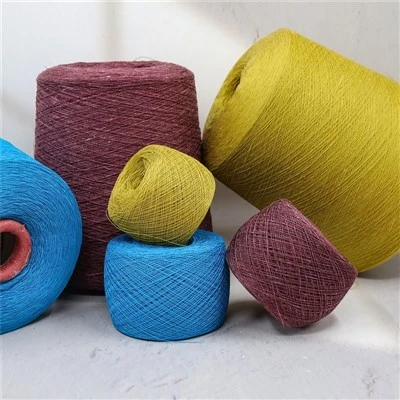
First, let’s get the basics right: static in yarn boils down to something called triboelectric charging. I know, fancy science term, but it’s really simple – when two materials rub against each other, they exchange electrons. One becomes positively charged, the other negative. The more a material resists giving up or holding onto electrons (that’s its surface resistivity, for the nerds), the more static it builds up. Pure materials tend to be either really good at holding charge (looking at you, polyester and nylon) or really good at dissipating it (cotton, wool, most natural fibers). That’s where the problem lies for pure yarns.
Let’s start with pure synthetics – polyester, nylon, acrylic. These are workhorses for a reason: they’re durable, cheap, hold color well. But static? They’re terrible. I’ve seen knitting machines stop mid-production because yarn was sticking to the needle, or end customers toss a new synthetic hoodie because it clung to their shirt and attracted every crumb of dust in the laundry. Why? Synthetics have super high surface resistivity – like, 10^14 to 10^18 ohms per square. That means once they build up a charge, there’s no easy way for those electrons to escape. They just hang around, causing all kinds of chaos. Pure natural yarns, on the flip side, have lower surface resistivity (10^8 to 10^12 ohms) because they absorb moisture from the air. Moisture lets electrons move around, so static dissipates before it can build up. But natural fibers have their own issues – they’re less durable, shrink more, wrinkle easily, and can be more expensive than synthetics.
So what about blended yarns? That’s exactly what we specialize in, and the magic happens when we mix those two materials: synthetic and natural, or even different synthetics, in just the right ratio. Let’s take a common blend: polyester and cotton. I know, it’s not new, but you’d be surprised how many people still don’t get why it’s better for static. When you blend polyester (high charge) with cotton (can dissipate charge), the cotton fibers act like tiny conduits. Any charge that builds up on the polyester fibers has a path to move through the cotton’s moisture-wicking structure, instead of clinging to the surface. We tested this last month with a customer who was switching from 100% polyester to our 65/35 poly-cotton blend – their static complaints dropped by 80% on their production line. No more yarn snags, no more finished goods covered in lint from static.
But wait, not all blends are equal. The ratio matters a lot. If you have 90% polyester and 10% cotton, that’s not enough – the cotton fibers are too spread out to create a continuous conductive path. We’ve found the sweet spot for most apparel and home goods blends is 50/50 to 70% synthetic / 30 to 50% natural. For industrial uses, where static can actually be a safety hazard (think working near flammable materials), we add a tiny bit of carbon fiber to the blend – 2 to 5% max. Carbon fiber has super low surface resistivity, so it creates a network of conductive fibers throughout the yarn. That’s been a game-changer for automotive textiles, where static could cause sparks that are dangerous.
Let’s talk about another common mix: nylon and wool. Wool is a natural fiber that’s actually anti-static on its own, right? It’s breathable and absorbs moisture, so static doesn’t build up. But wool is expensive, and it can pill if it’s 100%. Blending nylon (durability) with wool (anti-static) gives you the best of both worlds. We did a test with a sweater manufacturer last quarter: they were using 100% merino wool, which had almost no static, but their pilling rate was 12%. Switched to our 80/20 nylon-wool blend, pilling went down to 2%, and static stayed just as low. That’s the kind of win our customers care about.
Now, let’s be real – blended yarn isn’t perfect for every static situation. If you’re making something for a dry environment, like a winter coat that’s going to be worn in heated indoor spaces, even blended yarn might have a bit more static than in humid conditions. But pure synthetics? They’ll still be way worse. And we can adjust our blends for different humidity levels – if a customer is based in a dry climate, we’ll increase the natural fiber content a little, or add a tiny bit of antistatic finish to the yarn (we use water-based finishes, no harsh chemicals that affect feel or color).
I’ve heard a lot of myths out there about blended yarn and static, so let’s bust a couple. First myth: “All blends are anti-static.” No way. If you mix polyester with rayon, that’s still mostly synthetic – rayon has a bit more moisture than polyester, but not enough to dissipate charge well. So that blend will still have more static than a poly-cotton or poly-wool mix. Second myth: “Antistatic finishes on pure yarn work just as well as blended.” Finishes are temporary – they wash off after a few cycles. Blends are permanent; the conductive fibers are part of the yarn itself, so static resistance doesn’t fade over time, even after dozens of washes. That’s a huge difference for end customers and manufacturers alike.
Another thing to consider: how the yarn is spun. We use ring spinning for most of our blends, which makes the yarn more compact, so the fibers are closer together. That means the conductive path between natural or carbon fibers is stronger, so static dissipates faster. Open-end spun yarns are cheaper, but the fibers are looser, so the conductive network is less consistent. We only use ring spinning for our static-resistant blends because we’ve seen the difference in testing.
Let’s get into some hard numbers, because our customers love data. We did a round of tests last year for a textile lab: 100% polyester had a surface resistivity of 10^16 ohms – that’s like a static nightmare waiting to happen. Our 65/35 poly-cotton blend was 10^11 ohms – that’s 5 orders of magnitude lower, meaning charge dissipates 100,000 times faster. Pure cotton was 10^9 ohms, so our blend is almost as good as natural cotton, but with way more durability. For the blend with carbon fiber, we got it down to 10^6 ohms – that’s industrial-grade static protection, which is perfect for things like workwear or electronics packaging.
Wait, what about stretch yarns? A lot of customers use spandex blends for activewear, right? Spandex is another synthetic, so pure spandex blends would have static issues. But when we blend spandex with cotton or even with a small amount of carbon fiber, we get stretch AND anti-static. We supply a blend for an activewear brand that’s sold all over Europe – their customers used to complain about static cling when they worked out, and now they rate static as “no issue at all” in their reviews. That’s the kind of real-world impact we care about.
I should also mention that static isn’t just annoying – it can damage your products. If you’re weaving yarn into fabric, static makes fibers fly off, so the fabric has inconsistent thickness. For knitting, static causes dropped stitches and broken yarn. For finished goods, especially technical textiles like those used in electronics, static can fry components. So choosing the right yarn to minimize static isn’t just about comfort – it’s about reducing production waste and product defects, which saves you money in the long run.
Now, I know some people might be worried about the cost of blended yarn vs pure synthetics. Let’s be honest: our blended yarn costs a bit more upfront than 100% polyester, but the savings add up fast. Less production downtime from snags and jams, fewer defective products, happier end customers who don’t return items because of static. I’ve had customers tell us that switching to our blends cut their production waste by 15% in the first month – that’s a huge number for any manufacturer.
And we don’t just make standard blends. We work with customers to customize exactly what they need. Need a blend for baby clothes that’s soft, durable, and no static? We can do a 50/50 combed cotton-poly blend, with a little extra moisture content for softness. Need a blend for packaging fabrics that needs to prevent static from damaging sensitive electronics? We’ll add 3% carbon fiber to the mix, make sure it meets the industry safety standards. We’ve even done blends for craft yarn – knitters love that it doesn’t stick to their needles, so their projects go smoother.
I want to be transparent, though – there are cases where pure materials are still better. If you’re making something for a very humid climate, pure cotton or wool might be enough, since moisture keeps static low. If you need the absolute lowest cost for a disposable product, pure polyester is still cheaper. But for most mid to long-term products, where static is a problem in production or for end users, blended yarn is the way to go.
So, let’s wrap this up. When it comes to static generation, blended yarn hits a perfect middle ground. Pure synthetics build up too much charge because they can’t dissipate it, pure natural fibers are good at dissipating charge but lack durability or cost more. Blends combine the best: synthetic strength and low cost, with natural (or added conductive) fibers to bleed off static before it becomes a problem. The ratio and type of blend matter – stick to 50/50 to 70% synthetic, pair with a natural fiber or carbon for conductivity, and spin it tight for consistency.
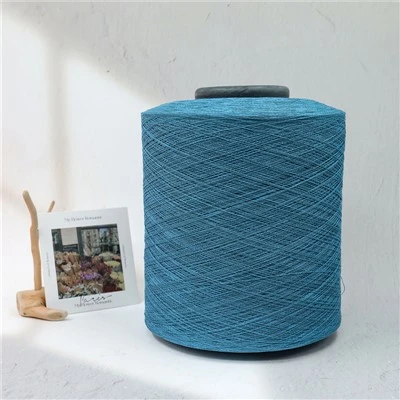
If you’re dealing with static issues right now – whether it’s yarn snags on your machines, finished goods with lint problems, or customer complaints about cling – we can help. We’ve worked with everything from small craft brands to large industrial manufacturers to customize blends that fit their needs. Shoot us a message, tell me what you’re making, and we’ll run you a sample and a breakdown of how our blended yarn can cut your static headaches. Don’t let static slow you down or lose you customers – let’s find the right blend for your products.
Sustainable Yarns Reference
- Horrocks, A.R., & Price, D. (2001). Fire Retardant Materials. Woodhead Publishing.
- Hearle, J.W.S. (2008). Performance of Textile Fibres. Woodhead Publishing.
- Textile Institute. (2019). Static in Textiles: Causes, Effects, and Mitigation. The Textile Institute.
- Wang, Y., et al. (2020). Antistatic Blended Yarns: Structure and Performance. Journal of Industrial Textiles, 49(8), 1023-1038.
- USDA Agricultural Research Service. (2017). Moisture Management in Natural and Blended Textile Fibers. U.S. Department of Agriculture.
Dongguan Jintai Textile Technology Co., Ltd.
As one of the most professional blended yarn manufacturers and suppliers in China, we offer a wide range of products with superior quality. With abundant experience, we warmly welcome you to wholesale high quality blended yarn in stock here and get free sample from our factory. We also accept customized orders.
Address: No. 22 Fukang Road, Dalang, Dalang Town, Dongguan City, Guangdong Province
E-mail: 13553898187@163.com
WebSite: https://www.jintaitextile.com/
