If you’ve ever driven along a winding coastal road, walked a curved pedestrian bridge, or navigated the edge of a sloped parking garage, you’ve likely taken guard rails for granted. These simple-looking barriers are designed to save lives, but as a guard railing supplier with over a decade in the industry, I can tell you: installing them on a curved surface is where even the most experienced teams hit unforeseen walls. It’s not just a matter of bending a pipe to match a curve—it’s a calculus of precision that impacts safety, durability, and compliance, and I’ve seen projects derail because teams underestimated every layer of this challenge. Guard Railing
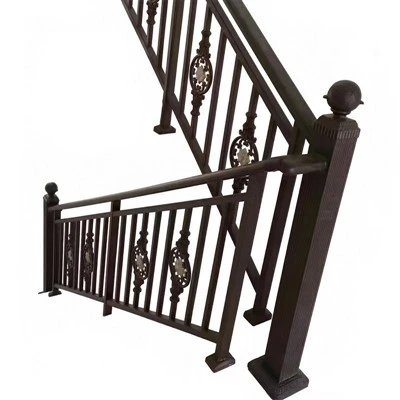
First, let’s ground this in the core physics of curved surfaces, because that’s where the confusion often starts. A straight guard rail follows a linear plane, so calculating its length and alignment is straightforward. But a curved surface—whether it’s a smooth radius like a mountainous highway bend or a complex, organic curve like a historic building’s perimeter—has constantly changing radii along its arc. For example, a 90-degree curve might have a radius of 15 feet at its inner edge but shift to 18 feet at its outer edge, a quirk of how roadbeds or walkways are graded. When guard rails are installed here, each section needs to match that specific radius, and if even one section is off by a fraction of an inch, it creates a misalignment that compromises structural integrity. Think about it: guard rails aren’t just decorative—they need to catch a vehicle or a falling pedestrian, and a misaligned joint can bend under impact or create a sharp edge that’s more dangerous than no rail at all. I remember a project a few years ago for a regional transportation authority where a contractor used pre-cut straight rail sections and tried to force them to bend with clamps, rather than custom fabricating curved segments. Within six months, three joints had pulled loose, and we had to rework the entire project at a cost that was double the original quote. That’s the cost of skipping the geometry.
Then there’s the matter of material fabrication and customization. Standard guard rail stock comes in fixed lengths and straight profiles, so curved surfaces require either bending standard material in the field or fabricating custom curved segments off-site. Field bending sounds like a quick fix, but it’s notoriously imprecise. Hot bending, the most common field method, uses heat to soften steel or aluminum so it can be shaped, but it causes what’s called “heat-affected zone” stress—areas where the metal’s molecular structure weakens, making it prone to cracking or corrosion over time. I’ve seen hot-bent steel rail on a coastal curve start rusting through within two years, thanks to salt air accelerating that weakening. Cold bending, while less damaging, requires specialized tools that most small installation teams don’t have on hand, and even with those, it’s hard to match tight, complex curves. Custom fabrication is the more reliable route, but it adds lead time. Measuring a curved surface requires far more than pulling a tape measure along the edge of the road—you need to use surveying equipment to map every radius, calculate the chord lengths between joints, and account for any grade changes along the curve. A few years ago, we had a client with a pedestrian curved ramp at a city park; their initial measurements were off by two inches because they ignored the ramp’s slight slope, and the custom rail segments we made didn’t fit, delaying the project by three weeks. That’s the tradeoff: precise measurements mean time, but sloppy measurements mean costly rework.
Foundation and anchoring are another set of challenges unique to curved surfaces. On a straight surface, guard rail posts are anchored at regular intervals, usually drilled straight into concrete or the ground, with alignment checked using a level. On a curve, those posts aren’t parallel anymore—they have to follow the curvature of the surface, so their angle relative to the ground changes along the arc. For a gentle curve, the angle shift is minimal, but for a sharp, tight curve (like a hairpin turn on a mountain road), each post’s orientation can differ by several degrees. That’s not just a small adjustment; it affects how well the rail transfers impact force. If posts are angled incorrectly, the rail can twist or pivot during an impact, rather than distributing the force evenly to stop a vehicle or person. Even more critical is the foundation: on flat straight surfaces, posts sit on level ground, so concrete footings are uniform. But many curved surfaces are sloped—think of a banked highway curve designed to keep traffic from sliding outward. A post on the inside of the curve sits at a different elevation than a post on the outside, which means their footings need to be adjusted in depth and angle to stay stable. I once worked on a snow removal depot project with a curved loading dock; the contractor tried to use pre-cast concrete footings for all posts, without adjusting for the dock’s slope. Within a year, four posts had shifted 1.5 inches, causing the rail to buckle. Fixing that required excavating and re-pouring each footing, a job that could have been avoided with careful pre-planning for the curved surface’s elevation changes.
Compliance is the silent challenge that many teams overlook. Guard rail isn’t a one-size-fits-all product—there are strict local, state, and national codes that dictate everything from height to impact resistance. When a rail is installed on a curve, those codes get harder to apply because the curve changes the rail’s effective performance. For example, the U.S. Manual on Uniform Traffic Control Devices (MUTCD) sets minimum heights for guard rails, but on a sharp curve, a lower rail might provide better visibility for drivers around the bend, while still meeting impact requirements. But how do you balance that visibility need with compliance? Another code quirk: on curved surfaces, the distance between posts can’t just be the same as on a straight surface. A 10-foot spacing on a straight road might be too much on a sharp curve, because the rail is under more continuous stress from vehicles navigating the bend. We once had a project in a mountain state where the code required post spacing on curves to be 2 feet closer than straight stretches. The contractor missed that detail in their initial bid, and we had to add 12 extra posts mid-install, blowing their budget. Compliance isn’t just about following rules—it’s about interpreting those rules for a geometry that doesn’t exist in standard code examples.
Weather and environmental factors amplify these challenges, especially for outdoor curved surfaces. A straight guard rail is more exposed to wind in some cases, but a curved surface creates areas of turbulence—on the leeward side of a curve, wind can be much stronger, putting extra stress on the rail’s anchoring. For coastal curves, salt spray corrodes joints and weakened areas from fabrication, while for mountain curves, freezing and thawing can expand post footings and shift alignment over time. I’ve seen a guard rail on a frozen mountain curve shift 3 inches in a single winter, because the curved surface’s uneven drainage caused water to pool and freeze around certain posts. The rail’s joints, which were welded on-site and had small gaps, allowed salt and water to seep in, accelerating corrosion and making the shifting worse.
As a guard railing supplier, our role isn’t just to provide steel, aluminum, or composite rail—it’s to solve these curve-specific challenges. We work with surveyors to map every radius and elevation of a curved surface, not just give generic measurement guides. We use custom fabrication techniques that minimize heat stress, like press-bending for steel and CNC machining for aluminum, so the rail maintains its structural integrity. We also provide code consulting to our clients, making sure their post spacing, height, and anchoring meet both safety standards and curve-specific needs. But even with that support, the key takeaway is that installing guard rail on a curved surface isn’t a job for a one-off crew. It requires planning, specialized tools, and attention to every detail that doesn’t matter on a straight surface.

If you’re working on a project with a curved surface—whether it’s a highway, pedestrian bridge, parking garage, or any other structure—don’t cut corners on the prep work. Rushing measurements, using standard stock without customization, or skipping code checks will lead to costly delays, rework, and, most importantly, safety risks. Our team has overseen hundreds of curved guard rail projects across the country, and we know how to navigate every challenge from geometry to compliance. If you need expert guidance on designing, fabricating, or installing guard rail for your curved surface, we’re here to help.
Guard Railing Reference:
- American Association of State Highway and Transportation Officials. (2021). Roadside Design Guide. Washington, DC: AASHTO.
- National Association of City Transportation Officials. (2020). Urban Bikeway Design Guide. New York, NY: NACTO.
- Steel Construction Institute. (2019). Design of Guardrail Systems for Road Bridges. Berkshire, UK: SCI.
Nantong Yinuo Metal Technology Co., Ltd.
As one of the most professional guard railing manufacturers and suppliers in China, we have world-leading production equipment and strong manufacturing capabilities. Please feel free to wholesale customized guard railing made in China here from our factory. Welcome to contact us for quotation.
Address: No. 888 Yucai Road, Baochang Town, Haimen District, Nantong City, Jiangsu Province
E-mail: ntyinuo2026@163.com
WebSite: https://www.ntyinnuo.com/
