If you’ve spent any time working with data centers, IT infrastructure, or even commercial office power distribution, you’ve likely come across the term PDU. But dig a little deeper, and you’ll soon find specific variations designed for specialized use cases—none more iconic (or often misunderstood) than the Hubbell PDU socket. As a supplier of PDU sockets, I field dozens of questions about these components every week: What makes a Hubbell PDU socket different from any other? Why do data center operators, audio-visual installers, and industrial technicians swear by them? And most importantly, when should you actually choose one over a standard outlet? Let’s break this down, straight from someone who builds and delivers these sockets to teams that rely on them every single day. PDU Sockets
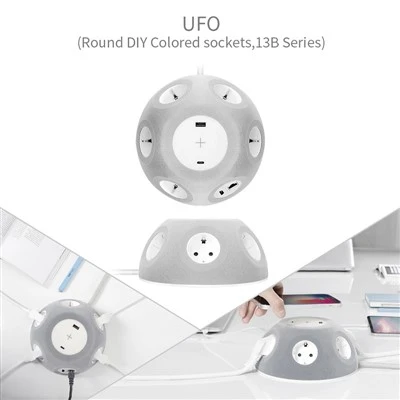
First, let’s ground ourselves: A PDU itself is a Power Distribution Unit—a core piece of hardware that takes a single incoming power source and splits it into multiple outlets to power servers, racks, tools, or other heavy-use devices. A Hubbell PDU socket isn’t just “any socket that fits a Hubbell PDU;” it’s a specific line of high-grade receptacles engineered and manufactured by Hubbell Incorporated, a name that’s been synonymous with electrical components for over 125 years. Unlike the generic, low-cost plastic outlets you’ll find in a home, Hubbell PDU sockets are built for continuous, high-demand power loads, with design features that solve common pain points standard PDUs and sockets suffer from.
Let’s start with the core design that sets Hubbell PDU sockets apart. Most standard PDU receptacles are molded from thin, brittle plastic, with internal metal contacts that can loosen or corrode over time. Hubbell’s take uses a thermoplastic housing rated for extreme temperatures—perfect for data center racks where ambient heat hovers around 90-100°F, or industrial settings where dust and moisture are constant. The internal contacts? They’re solid brass, often tin-plated for corrosion resistance, with a dual-spring design that grips plug prongs firmly—no wiggling, no accidental disconnects mid-task. For context: I’ve had customers tell me their old, off-brand PDUs would lose power to a server if anyone brushed a cable too hard, but switching to Hubbell PDU sockets eliminated that issue overnight. That’s not a marketing line—that’s real field feedback from teams that can’t afford downtime.
Another key feature is the variety of configurations Hubbell offers for PDU sockets, tailored to specific use cases. You won’t find a one-size-fits-all Hubbell socket, and that’s intentional. For data centers, most Hubbell PDU sockets are NEMA-rated (National Electrical Manufacturers Association) to match U.S. and Canadian industry standards, with options for 15A, 20A, or 30A loads, straight blade or locking receptacles. Locking sockets, like the Hubbell Twist-Lock, are a staple in data center PDUs: they twist and click into place to prevent unplugging, which is critical for servers running 24/7. For AV setups in theaters or conference centers, you’ll find Hubbell PDU sockets with tamper-resistant shutters, so accidental insertion of foreign objects isn’t a risk. For industrial workshops, there are weatherproof Hubbell PDU sockets rated for wet locations, perfect for powering tools on a factory floor.
Wait, let’s clear up a common misconception: A Hubbell PDU isn’t a PDU that uses Hubbell sockets exclusively, and vice versa. As a supplier, I’ve worked with integrators who build custom PDUs with Hubbell sockets, and with others who use generic sockets. But the tradeoff is real. Generic PDU sockets might save you $1-$2 per unit upfront, but they have a 1-3 year lifespan in continuous use, while Hubbell PDU sockets are rated for 10+ years. That’s a huge difference for data centers, where replacing hundreds of PDU sockets every other year adds thousands in labor and replacement costs. Let’s do a quick math check: If you have a 42U data center rack with 48 PDU sockets, replacing generic sockets every 2 years costs you roughly $480 in parts, plus labor hours to swap them. Hubbell sockets cost $5 more per unit upfront, but last a decade—so over 10 years, you’re looking at $240 in parts, and no labor for socket replacements. That’s a no-brainer for teams that prioritize uptime over short-term savings.
Another edge Hubbell PDU sockets have is compliance with strict electrical safety standards. Hubbell is a UL-listed manufacturer, meaning every socket meets Underwriters Laboratories’ rigorous testing for electrical shock resistance, fire safety, and load capacity. Many regions have strict codes for commercial and industrial electrical systems—for example, OSHA requires PDU components in data centers to be listed for their intended use, and generic sockets often don’t pass the required tests. I’ve had a few customers come to me after a safety inspector flagged their old PDUs: they had to replace their entire PDU fleet, and choosing Hubbell PDU sockets made the rest of their system inspection-ready without extra modifications. Even for smaller businesses, this peace of mind matters—no one wants a liability risk from a faulty power component.
Now, let’s talk about where Hubbell PDU sockets shine most, because they’re not the right fit for every job. They’re overkill for a home office, where you’re powering a laptop and a printer. But for high-demand environments—data centers, co-location facilities, broadcast studios, industrial manufacturing lines, and outdoor event setups—they’re the standard. I recently supplied a 500-port PDU fleet to a co-location provider in Texas, where summer temperatures regularly spike to 105°F. Their old PDUs were tripping constantly in the heat; switching to Hubbell PDU sockets cut their power-related downtime by 90% in the first month. That’s exactly the kind of use case these sockets were engineered for.
But wait, can you mix Hubbell PDU sockets with other brands? Absolutely, as long as the amperage and voltage match. As a supplier, I often work with teams that have existing PDUs from other manufacturers but want to upgrade the sockets mid-cycle—Hubbell’s standard receptacle dimensions fit most PDU enclosures, so you don’t have to replace the entire unit. That’s a flexible benefit that many people don’t know about.
One last point that comes up a lot: What about “smart” Hubbell PDU sockets? Hubbell makes a line of smart PDU sockets with built-in metering, so you can track power usage for each outlet remotely. That’s a game-changer for data center operators who need to balance load across servers, or for AV teams that need to bill clients for power used in a conference space. The smart Hubbell PDU sockets sync with common building management systems, so you don’t have to add extra hardware to monitor power. That’s not a niche feature—many of our regular customers have added these smart sockets to their PDUs to cut energy costs and streamline maintenance.
Now, if you’re reading this, you’re likely in the market for PDU sockets, or trying to figure out if Hubbell PDU sockets are the right choice for your next project. Let’s cut through the noise: If you need a socket that will hold up to continuous power, prevent downtime, meet safety codes, and stand the test of time, Hubbell PDU sockets are a proven solution. They’re not the cheapest option upfront, but they’re the one that will save you money, stress, and labor in the long run.

As a supplier of PDU sockets, I work directly with integrators, facility managers, and IT teams to match the right socket to their needs—whether that’s a standard 20A locking Hubbell PDU socket for a server rack, a tamper-resistant option for a school’s AV system, or a weatherproof variant for an outdoor event. If you’re evaluating your power distribution needs, or ready to upgrade your existing PDU fleet, I encourage you to reach out to our team to discuss your requirements. We’ll walk through your load needs, environment, and budget to find the perfect Hubbell PDU sockets (or custom variants) that fit your project.
References
Oval Power Grommet Hubbell Incorporated. (2024). "Hubbell PDU Receptacles: Engineering for Industrial and Data Center Environments." Hubbell Electrical Solutions.
National Electrical Manufacturers Association (NEMA). (2023). "Standard for Receptacles and Plugs for Electrical Equipment, NEMA WD-6."
Underwriters Laboratories (UL). (2024). "Standard for Safety: Plugs, Receptacles, and Couplers, UL 498."
Occupational Safety and Health Administration (OSHA). (2022). "Power Distribution Units and Electrical Safety in Data Centers, OSHA 3098."
Cixi Mingye Communication & Electronic Co., Ltd.
Cixi Mingye Communication & Electronic Co., Ltd. is one of the most professional pdu sockets manufacturers and suppliers in China, featured by quality products and good service. Please rest assured to wholesale durable pdu sockets at competitive price from our factory. Welcome to contact us for custom service and ODM service.
Address: West Industrial District,Guanhaiwei Town,Cixi city,Zhejiang Province,China
E-mail: enquiry@officelink.com.cn
WebSite: https://www.officelinkelectric.com/
