If you’ve ever messed around with radio gear, cell phones, or even that old Bluetooth speaker in your junk drawer, you’ve probably interacted with RF amplifiers—those tiny, powerful circuits that make wireless signals travel far and clear. I’m the guy who sells air core inductors, and let me tell you: most people don’t give these little copper coils a second thought, but they’re the unsung backbone of every RF amp that works right. Air Core Inductor
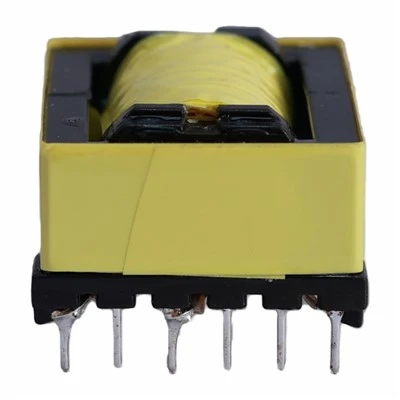
Let’s break this down like we’re geeking out over a circuit board over a coffee, no fancy textbook jargon (I’ll save the “self-resonant frequency” for the shop talk, promise). First, what’s an RF amplifier, anyway? It’s a circuit that takes a tiny, weak radio signal—like the one from a cell tower 10 miles away—and beefs it up so your phone can decode it, or so a ham radio operator can chat with someone across the country. The problem here is: not all ways to boost a signal work well for super high frequencies (that’s “RF,” short for radio frequency, ranges from ~30 kHz to 300 GHz, fyi). If you use a regular ferrite-core inductor—you know, the ones wrapped around a metal rod you see on power supplies—at RF frequencies, it’s garbage. Why? The core itself adds loss, heats up, and throws the signal out of whack. That’s where air core inductors come in.
Air core inductors are exactly what they sound like: coils of wire (usually copper, sometimes silver-plated for extra conductivity) with nothing inside them, just air. No metal core to muck things up. For RF, that’s a game-changer. Let’s get specific about their role here, because it’s not just “they hold current”—it’s way more targeted.
First up: matching networks. Every RF amp has a matching network, right? It’s the part that makes sure the amplifier’s output power doesn’t bounce back into itself like a rubber ball, and also that the power transfers smoothly to the antenna. Without a good match, your signal is weak, or it might even damage the amp. Air core inductors are the workhorses here. Let’s say you’re running a 2.4 GHz Wi-Fi amplifier. The matching network needs a specific amount of inductance to pair with capacitors and create a “bandpass filter” that only lets your Wi-Fi signal through, not the 5 GHz one next to it. Ferrite cores can’t handle that high a frequency without losing energy—they act like little heaters, wasting power instead of moving it. Air core inductors have way lower loss at RF bands because there’s no core material to absorb energy. They’re tight, compact, and we can wind them to exactly the inductance value you need—no guesswork for the engineers designing the amp.
Another big role: bias circuits. RF amplifiers need a little extra power to stay active, right? That’s called bias. If you tried to run that bias through a resistor in the RF path, it would bleed into the signal and muck it up. Inductors, though, are like “RF blockers” in this case. They let DC bias current pass through easily (DC is the constant power needed to keep the amp running) but block the RF signal from sneaking into the power supply lines. Air core inductors do this perfectly because their reactance (that’s the “resistance” AC signals feel, different from DC) is low for DC and super high for RF. So no signal leakage, no messy interference. I can’t tell you how many times a customer’s prototype failed because they used a ferrite inductor here instead of an air core—their signal was dropping by 3 dB overnight, and they couldn’t figure out why until they swapped it out. That’s the kind of problem we fix every week.
Wait, what about signal filtering? Yeah, air core inductors are key here too. RF signals can get cluttered with noise—like that static you hear on an old AM radio when a fridge turns on. A filter made with air core inductors and capacitors can strip out that noise, leaving only the clean signal. For example, in a cell phone’s power amplifier, the air core inductor filters out harmonics—those extra frequency signals the amp generates that aren’t the one you want. Harmonics are bad because they cause interference with other devices (your neighbor’s Wi-Fi, a walkie talkie, whatever). Air core inductors don’t add any extra harmonics themselves, so the filter works exactly as designed. That’s a huge deal for wireless devices, which have to meet strict FCC rules about signal interference.
Now, let’s get real about why air core inductors beat the alternatives. I’ve worked with a lot of engineers who used to default to ferrite cores, then switch to air core once they hit RF frequencies. Ferrite cores have high “core loss” at high frequencies—every time the signal flips direction, the core resists, turns that power into heat, and wastes it. Air core inductors have almost no core loss because… well, there’s no core. They also have a higher self-resonant frequency (SRF)—that’s the point where the inductor stops acting like an inductor and starts acting like a capacitor, which is bad for RF work. A ferrite inductor might have an SRF of 1 GHz, so above that it’s useless. An air core can have an SRF of 5 GHz or higher, which covers almost every common RF band: Wi-Fi (2.4 and 5 GHz), cellular (600 MHz to 3 GHz), Bluetooth (2.4 GHz), ham radio, even satellite comms. We wind our air core inductors with tight, evenly spaced copper wire to get that high SRF—no gaps, no flimsy winding that would lower the frequency.
But it’s not just the specs—we listen to what our customers need. A few months back, a aerospace engineer hit me up because they were building a satellite RF amp, and they needed an inductor that could handle extreme cold (-40°C) and high vibration. Our standard air core was great, but we adjusted the winding tension to make it more rigid, used a teflon coating instead of plastic (teflon doesn’t outgas in space, which is a must), and met their exact inductance value. They told me the amp went from a 90% power efficiency to 98% after swapping in our air core inductors. That’s the difference between a working prototype and a product that launches. Another customer was building a portable ham radio, so they wanted tiny, lightweight inductors—we miniaturized our windings to fit in a 0402 package (that’s like the size of a grain of rice) without losing performance. They said their radio went from 1 ounce too heavy to under a half ounce, perfect for backpacking trips.
Wait, I should mention a common misconception: some people think air core inductors are only for low-power amps. No way—we make them for 100W amplifiers, even higher. For higher power, we use thicker wire, sometimes multiple turns, and add a coating that can handle heat. The core is still air, so no loss from a metal core. It’s the same logic, just scaled up. If you’re running a TV broadcast amp, for example, you can’t use a ferrite core because it would melt from the heat. Air core handles that power like a champ.
So let’s wrap this up: the role of air core inductors in RF amplifiers boils down to three main jobs: matching the power between the amp and antenna so you get maximum signal, keeping bias power from messing up the signal path, and filtering out noise and harmonics to keep everything clear and legal. They solve problems that other inductors can’t, especially at the high frequencies that make wireless tech work.
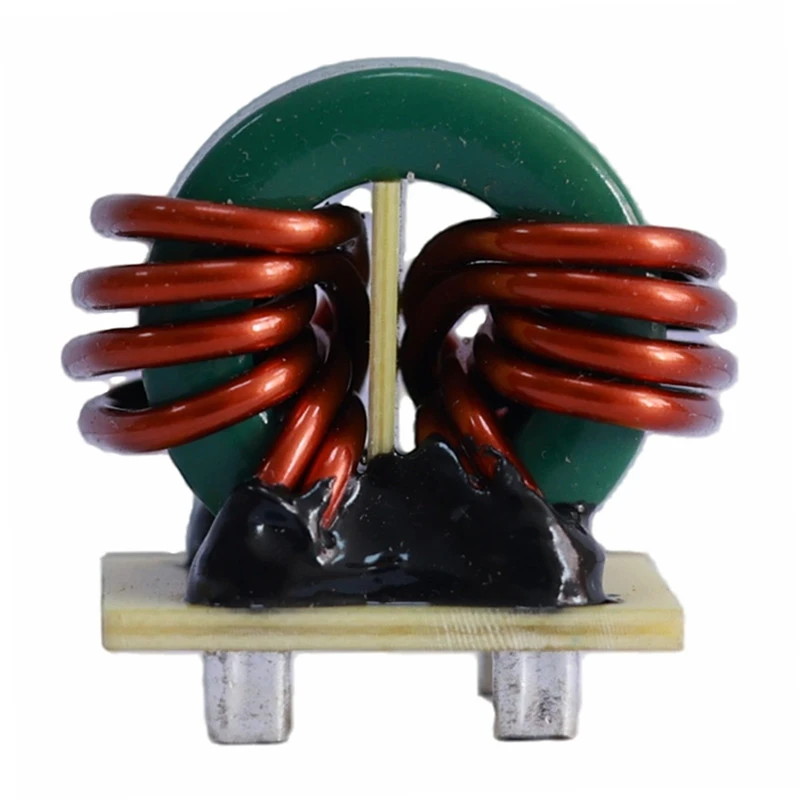
If you’re designing an RF amplifier—whether it’s for cell phones, Wi-Fi, ham radio, aerospace, or any other wireless gear—and you’re tired of signal loss, interference, or amps that just don’t hit efficiency, I’m here. We custom-wind air core inductors to your exact specs, no one-size-fits-all garbage, and we can tweak them for frequency, power, size, whatever you need. Don’t waste time guessing with the wrong inductor—hit us up to chat through your project.
Current Transformer References
- RF Circuit Design, 2nd Edition by Christopher Bowick
- Inductor Technology for High-Frequency Applications, IEEE Transactions on Microwave Theory and Techniques, 2019
- Wireless Communications: Principles and Practice, 2nd Edition by Theodore S. Rappaport
- Air-Core Inductor Performance for RF Power Amplifiers, International Journal of RF and Microwave Computer-Aided Engineering, 2021
Dongguan Hensiron Electric Co., Ltd.
As one of the most professional air core inductor suppliers in China, we have world-leading production equipment and strong manufacturing capabilities. Please feel free to buy high quality air core inductor made in China here from our factory. Customized orders are welcome.
Address: Building 4, Xinxing Industrial Zone, Wangao Road, Wanjiang Street, Dongguan City, China
E-mail: jessica@dghensiron.com
WebSite: https://www.dghensiron.com/
