Hey there! If you’ve ever stepped foot in a chemistry lab, biology research space, or even a high school science classroom, you know the lab bench is basically the unsung hero of the whole operation. It’s where experiments happen, samples get handled, and messy (but groundbreaking) ideas turn into real data. But have you ever stopped to wonder what’s actually on a properly set-up lab bench? As someone who’s been supplying lab benches and their gear for years, I’ve seen everything from a tiny high school bench with just a beaker to a university research bench packed with fancy (expensive) equipment. Let’s break it down like we’re chatting over coffee—no stuffy jargon, just real talk about what makes a lab bench work. Lab Bench
First off, let’s start with the core: the lab bench itself. Wait, I know, you might think “it’s just a table,” but no—high-quality lab benches are built to handle way more than a regular kitchen table. We supply benches with solid phenolic resin tops, which are resistant to spills, heat (up to like 350°F), and even mild chemicals. No more panicking when someone knocks over a beaker of acid or leaves a hot beaker on the surface for too long. They also have epoxy-coated steel frames that don’t rust, even if you wipe them down with disinfectant a dozen times a day. A lot of people ask us if they can use a regular workbench for lab work—trust me, skip that. A real lab bench is designed for safety, and that’s non-negotiable.
Now, moving to the must-have gear that goes on top of that bench. Let’s start with the big, obvious stuff: benchtop labware. You know the basics—beakers, flasks, test tubes—but not just any. We supply borosilicate glassware because it’s tough, withstands temperature changes, and doesn’t leach weird chemicals into samples. There’s also graduated cylinders for accurate liquid measurements (way better than guessing in a beaker). Pro tip: always get a mix of sizes—small 10mL ones for tiny samples, big 1L beakers for mixing batches. No one wants to juggle a 2L beaker for a 5mL experiment.
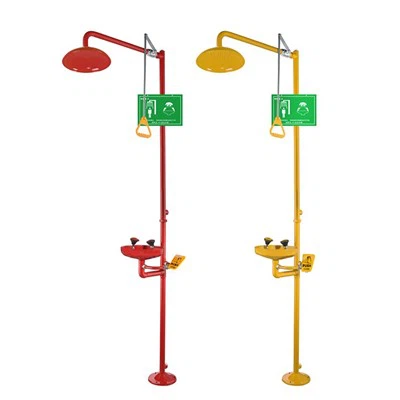
Next up, something you can’t skip for any wet lab: safety gear. And this isn’t just a pair of goggles we’re talking about. Every lab bench needs a dedicated eyewash station (mounted right above the bench edge, so it’s easy to reach in a pinch). We also supply spill kits—those little bins with absorbent pads, neutralizing powder for acids/bases, and gloves. Trust me, a spill happens at least once a week in any lab, and being unprepared is a disaster. Oh, and fume hoods? Wait, some benches have a built-in benchtop fume hood for smaller tasks, which is perfect if you don’t have a big central hood. Way more convenient than hauling a beaker across the lab.
Then there’s the smaller, but super important, tools that make your day run smoother. Let’s talk about lab tools: pipettes, for example. Single-channel pipettes for precise liquid transfers (like moving 10μL of a sample), and multichannel ones if you’re doing 96-well plate work—game changer for high-throughput experiments. We only sell autoclavable pipette tips, too, because sterilization is key for avoiding cross-contamination. Also, don’t forget basic stuff like tweezers (for handling small samples without touching them), spatulas (for weighing solids), and ring stands with clamps to hold flasks in place when you’re heating or mixing. Those ring stands are lifesavers—no more holding a hot flask while you stir.
What about power? Every bench needs access to reliable power outlets, right? We install grounded, water-resistant outlets along the bench’s back edge, so you can plug in a hot plate, centrifuge, or stirrer without worrying about spilled water causing a short. Some labs also add USB ports these days, since a lot of lab equipment has digital displays that need charging. Oh, and hot plates and magnetic stirrers—those are non-negotiable. A magnetic stirrer lets you mix solutions hands-free, which is great if you’re doing something else while waiting. We supply ones with temperature controls, so you can heat a solution to exactly 60°C without guesswork.
Wait, what about dry labs? Because not all labs are wet—some are for molecular biology, like PCR work. For those, you’ll want things like a microcentrifuge, which spins tiny tubes fast to separate samples, and a thermal cycler for PCR reactions. Those usually go on the bench too, along with a laminar flow hood (or a bench-top version) to keep samples sterile, especially when working with DNA or cell cultures. We make sure the benches we supply have extra space for these heavier, more sensitive pieces of equipment, with reinforced surfaces so they don’t warp over time.
Storage is another big one, and it’s part of the bench set-up too. Under-bench cabinets, right? We supply lockable cabinets for storing chemicals that need to be secured, and open shelves for frequently used labware. Also, drawer units with dividers—perfect for organizing those tiny tools so you don’t spend 10 minutes digging for a pipette tip. No one has time for that. A lot of labs overlook this, but messy benches lead to mistakes (and safety hazards), so good storage makes all the difference.
Wait, let’s not forget the little extras that people don’t always think about, but make life way easier. Bench mats—non-slip, chemical-resistant mats that go on the surface to catch small spills and protect the bench top. We also supply label makers or pre-printed labels for marking samples (so no more guessing which beaker has what inside). And of course, waste containers—separate bins for glass sharp (like broken test tubes), chemical waste, and regular trash. Labeled clearly, so everyone knows where to toss what. That’s a huge safety thing—wrong waste disposal can cause big problems.
Now, let’s get real about who needs what. A high school lab bench is gonna have different stuff than a pharmaceutical research lab bench. For high schools, we supply benches that are durable (they get used 8 hours a day, 5 days a week) with basic glassware, goggles, and simple hot plates. For biotech startups, we set up benches with laminar flow hoods, multichannel pipettes, and modular storage that can grow with them as they get more experiments. And for university research labs, we do custom benches with built-in gas lines (for Bunsen burners, if they still use those) and data ports to connect equipment to computers.
I’ve been in this business long enough to know that people often skimp on the “boring” parts—like the bench itself or the basic safety gear—but that’s where you get burned. Last year, a small research lab called us because their old bench top got stained by a strong acid and started to warp, which messed up their experiments for weeks. We replaced their bench with a phenolic resin one, and added a spill kit and eyewash station that they didn’t have before. They were so relieved, because now their space is safer and their experiments don’t get interrupted. That’s the stuff that matters.
If you’re setting up a new lab or renovating an old one, don’t just go for the cheapest stuff. A lab bench is an investment—it’s where all your work happens, so it needs to be reliable, safe, and fit exactly what you need. We don’t do one-size-fits-all, either. If you need a bench with more space for a centrifuge, or built-in gas lines, or even a mobile bench that you can move around for classes, we can customize it. Our team has helped everything from high schools to Fortune 500 biotech companies get their lab set up right.

If you’re tired of dealing with benches that don’t hold up, or gear that breaks mid-experiment, let’s chat. I can walk you through what you actually need, not what the sales guy tells you to buy. We offer fair pricing, fast delivery, and even installation if you need it. No hidden fees, no confusing contracts—just real equipment for real labs. Drop us a line to talk through your set-up, and we’ll make sure your lab bench has everything you need to get to work (and avoid those messy, stressful spills that nobody wants).
Balance Tables References:
- Laboratory Bench Safety and Design Guidelines, Occupational Safety and Health Administration (OSHA)
- Borosilicate Glassware Standards, American Society for Testing and Materials (ASTM)
- Lab Equipment Selection Guide, National Institute of Standards and Technology (NIST)
- Modular Laboratory Bench Systems, International Laboratory Organization (ILO)
HAMECC(Shanghai) Lab Solutions Co., Ltd.
We’re well-known as one of the leading lab bench manufacturers and suppliers in China, featured by quality products and good price. Please rest assured to buy customized lab bench made in China here from our factory.
Address: Building 1, No.2222, Huancheng Road, Jiading District, Shanghai
E-mail: info@hamecc.com
WebSite: https://www.hamecc.com/
