As a high-pressure booster air compressor supplier, I talk to customers every week who are confused about service schedules for their equipment. It’s one of the most common questions we get, and understandably so—high-pressure boosters aren’t like standard shop air compressors you might service once a year on a whim. These units work far harder, running at elevated pressure ratios to deliver compressed air for applications like PET bottle blowing, diving fill stations, pneumatic test stands, or industrial chemical processing. Skipping service here doesn’t just mean lost efficiency—it can lead to unplanned downtime, safety hazards, or even catastrophic equipment failure. That’s why I wanted to break down how often you should service your high-pressure booster, based on real-world use cases, manufacturer guidelines, and insights from the technicians who work on these units every day. High-Pressure Booster Air Compressor
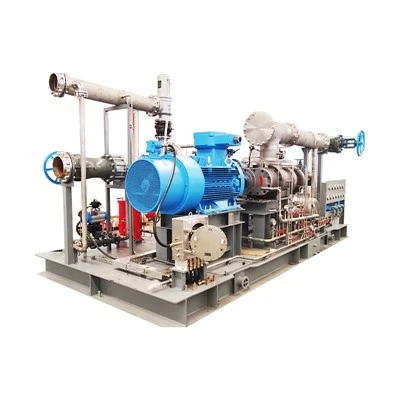
First, let’s get one thing straight: there’s no one-size-fits-all answer. A booster running 24/7 at a marine dive center in salt air is going to need far more frequent service than a unit used 8 hours a day, 5 days a week in a climate-controlled manufacturing plant. That said, we can anchor the conversation around two core service tiers—preventive maintenance (the proactive checks you do regularly) and corrective maintenance (the fixes you need when wear hits)—and align timelines with what actually happens to these machines.
Let’s start with the most critical service: oil changes. For oil-lubricated high-pressure boosters (the most common type for industrial applications), this is non-negotiable. The oil lubricates the cylinder walls, piston rings, bearings, and valve components, all of which operate under extreme pressure (often 1000 PSI and above, sometimes up to 6000 PSI for diving units). Over time, compressor oil breaks down from heat and pressure, gets contaminated with moisture, carbon deposits, or dust, and loses its lubricating properties. We typically recommend changing the oil every 500 operating hours for units under heavy duty. For example, a PET bottle manufacturer running a booster 10 hours a day, 5 days a week will hit that 500-hour mark in roughly three and a half months. If your booster is used intermittently—say 4 hours a day, 3 days a week—you can stretch that to every 1000 operating hours, which would be around 18 months of use. But here’s a caveat: never go longer than 12 months between oil changes, even if you barely use the unit. Oil degrades over time just sitting in the crankcase, even if the compressor isn’t running. We’ve seen units that sat unused for two years start up with thick, sludge-like oil that seized the piston, leading to a $12,000 repair bill.
Next, oil filter and separator element changes. These components work hand in hand with the oil: the oil filter catches metal shavings and contaminants before they reach moving parts, while the separator element ensures almost no oil exits the compressor with the compressed air. For heavy-duty units, change the oil filter every 500 operating hours, same as the oil. The separator element, though, is a bit different. We’ve found that a separator element can last anywhere from 1500 to 3000 operating hours, depending on how clean your intake air is. If your compressor is in a dusty environment (like a woodworking shop or a construction site), or exposed to moisture (like a marine application), the separator will clog faster—you’ll need to check it every 1000 hours and replace it when it’s visibly dirty, or if you notice oil in your compressed air output. Oil in your end product is a big problem for PET bottles, for example, because it can taint food and beverage products.
Then there’s the intake air filter. This is one of the most overlooked parts of high-pressure boosters, and also one of the most impactful. A clogged intake filter forces the compressor to work harder to pull in air, increasing energy use by up to 20%—that’s a huge hidden cost for a unit that runs every day. For units in clean, indoor environments, change the intake filter every 2000 operating hours. For units in dusty or outdoor environments, check the filter weekly and replace it every 500 hours. We had a customer last year who skipped changing his intake filter for 18 months. By the time he checked it, it was so clogged with sawdust that the compressor’s valves were grinding against debris, leading to a valve replacement that cost $8,000 and a week of downtime while he waited for parts. It was a preventable mistake—if he’d just changed the $50 intake filter on schedule, he would have avoided all that.
Valve inspections are another make-or-break service for high-pressure boosters. The intake and discharge valves control the flow of air into and out of the compressor’s cylinders, and they take a huge beating every time the piston moves. Worn valves lead to reduced pressure, lower efficiency, and increased heat. For most industrial applications, we recommend a full valve inspection every 1000 operating hours. If you notice your booster is taking longer to reach its rated pressure, or it’s making a knocking noise, that’s a sign the valves are worn and need to be replaced sooner. For diving or breathing-air applications, valve inspections are even more critical—these units supply air for human use, and a faulty valve can lead to inconsistent pressure or even dangerous compressed air contamination. We advise diving station operators to inspect valves every 500 hours, since air quality is non-negotiable there.
Cooling system checks are also essential. High-pressure boosters generate a lot of heat—compressing air raises its temperature significantly, and if that heat isn’t dissipated, oil breaks down faster, seals fail, and the compressor can overheat and shut down mid-cycle. For air-cooled boosters (the most common type for mobile or small industrial units), clean the cooling fins every 500 operating hours. Dirt and dust build up on the fins and block airflow, reducing cooling efficiency by 30% or more. For water-cooled boosters, flush the cooling water system every 12 months to remove mineral deposits that can clog lines and reduce heat transfer. We also recommend checking the thermostat every year to make sure it’s triggering the cooling fan or water pump correctly—if the fan isn’t turning on when it should, you’ll run into overheating issues fast.
Now, what about if you have an oil-free high-pressure booster? A lot of customers don’t realize there are two types: oil-lubricated for general industrial use, and oil-free for applications where even trace amounts of oil are unacceptable, like pharmaceutical manufacturing or semiconductor production. For oil-free units, service timelines change a bit. Since there’s no oil to break down, the big wear points are the piston rings, cylinder liners, and valves. For oil-free boosters, we recommend a full internal inspection every 1500 operating hours, and a piston ring and liner replacement every 3000 operating hours. These units also have special intake filters with HEPA elements, which need to be changed every 1000 hours to maintain air quality and prevent contamination of the oil-free compression chamber.
I also want to talk about seasonal adjustments, because a lot of customers don’t account for how weather affects their service schedule. If you’re in a cold climate, winter brings cold, dry air, which can make oil thicker and increase wear on seals. We recommend doing a full pre-winter service every October: check all seals, replace any worn gaskets, and test the startup cycle to make sure the compressor doesn’t struggle to turn over in cold temperatures. In humid climates, summer brings more moisture, which can build up in the air receiver tank and cause rust, as well as lead to corrosion in valves and cylinders. For humid climates, drain the air receiver tank weekly and add a drying agent (like a desiccant filter) to your compressed air line if you’re not already using one. We also recommend a corrosion check every 6 months for units in coastal or humid environments, where salt air is a big factor.
Another common question we get: what if I follow the service schedule, but my compressor still breaks down? That’s why we emphasize preventive maintenance as a partnership, not just a list of tasks. Our team offers service plans tailored to your specific unit and application—for example, a 24/7 manufacturing plant might opt for a quarterly on-site check, while a smaller dive center might do monthly remote diagnostics and annual full service. We also track service intervals digitally for many customers, sending automated reminders when their next oil change or filter replacement is due. This eliminates the guesswork and ensures you never miss a critical service window.
Let’s put this all together into a simple, actionable guide you can use right now. If your high-pressure booster is:
- Used 8 hours a day, 5 days a week in a clean indoor environment:
- Oil/filter/separator: Every 500 hours (approx. 3 months)
- Intake filter: Every 2000 hours (approx. 1 year)
- Valves: Every 1000 hours (approx. 6 months)
- Cooling system: Every 6 months
- Full internal inspection: Every 2 years
- Used 24/7 in a dusty, humid, or outdoor environment:
- Oil/filter/separator: Every 500 hours (approx. 2 months)
- Intake filter: Every 500 hours (approx. 2 months)
- Valves: Every 500 hours (approx. 2 months)
- Cooling system: Every 3 months
- Full internal inspection: Every 1 year
- An oil-free unit used in a clean, sensitive application:
- Intake HEPA filter: Every 1000 hours (approx. 6 months)
- Piston rings/liners: Every 3000 hours (approx. 18 months)
- Full internal inspection: Every 1500 hours (approx. 9 months)
I’ve seen too many customers delay service, only to end up with a compressor that’s down for weeks. High-pressure boosters are investments—sometimes costing $10,000 or more—and proper service extends their lifespan by 5 to 10 years, while reducing energy costs by 15-25% in most cases. We’ve had customers tell us their 15-year-old boosters still run like new because they stuck to a consistent service schedule. That’s the value of proactive care, not reactive fixes.

If you’re still unsure about your specific unit, or you want to build a customized service plan to fit your operation, our team is here to help. We work with everything from small dive stations to large manufacturing plants, and we can tailor advice to your application, environment, and usage. Whether you need to book a routine service, troubleshoot a small issue, or just get a second opinion on your maintenance schedule, don’t hesitate to reach out to our team to schedule a consultation.
Centrifugal Air Compressor References:
- Compressed Air Gas Machinery Association (CAGI). (2022). Recommended Practice for High-Pressure Booster Compressor Maintenance.
- Gardner Denver. (2021). Service Guidelines for Oil-Lubricated High-Pressure Air Compressors.
- International Organization for Standardization (ISO). (2020). ISO 1217: Compressed Air Tools and Equipment – Maintenance Requirements for Breathing Air Systems.
- Ingersoll Rand. (2023). Industrial High-Pressure Booster Maintenance Best Practices.
- US Department of Energy. (2022). Compressed Air System Efficiency Guidelines for Industrial Applications.
Shanghai Sollant Energy Saving Technology Co., Ltd.
As one of the most professional high-pressure booster air compressor manufacturers and suppliers in China, we’re featured by quality products and good service. Please rest assured to buy bulk durable high-pressure booster air compressor from our factory. Welcome to view our website for more information.
Address: No.215, Songri Center, Beihongqiao, Jiading District, Shanghai, China.
E-mail: info3@sollant.com
WebSite: https://www.sollant-gas.com/
