When I first started sourcing and supplying straight seam steel pipes over 12 years ago, I made the mistake of prioritizing low production costs over understanding every detail of the product I was selling. Back then, I thought straight seam pipes were a one-size-fits-all solution for construction, oil and gas, and infrastructure projects. But over the years, I’ve had to walk away from more than a few orders because I knew those pipes wouldn’t hold up to what the client needed. That’s why today, I want to pull back the curtain on a topic that’s often glossed over: the real disadvantages of straight seam steel pipes, from someone who’s lived both the successes and regrets of working with them. Straight Seam Steel Pipe

First, let’s get a basic definition out of the way to set context. Straight seam steel pipes are manufactured by rolling flat steel plates into a cylindrical shape, then welding the lengthwise seam along the pipe. This is different from seamless pipes, which are formed from a single solid steel billet without any weld, or spiral seam pipes, which use a twisted steel strip and have a helical weld. The straight seam design makes production faster and cheaper, which is why they’ve become so popular for high-volume, less demanding applications. But that low-cost production comes with inherent tradeoffs that many buyers don’t consider until it’s too late.
One of the most significant disadvantages I’ve seen firsthand is seam weakness. No matter how skilled the welders or how advanced the welding equipment is, that lengthwise seam will always be a potential failure point. I once had a client in the agricultural sector who used straight seam pipes for irrigation pipelines running through a rural area. Six months after installation, a section of pipe burst—right along the weld. The issue wasn’t just a bad weld; it was that the seam itself, even when done correctly, has lower tensile strength than the parent steel. Welding creates a heat-affected zone (HAZ) around the seam where the steel’s molecular structure changes. Depending on the welding method (submerged arc welding is the most common for straight seam pipes), that HAZ can become brittle, especially if the steel has high carbon content. In cold temperatures, that brittleness becomes even worse; I’ve had pipes crack along the seam in northern climates where winter temperatures dropped well below freezing, even when the pipes were rated for outdoor use. Compare that to seamless pipes, where there’s no weld and thus no HAZ, and it’s easy to see why seamless is the go-to for applications with extreme pressure or temperature fluctuations.
Pressure resistance is another big pain point. Straight seam pipes aren’t designed for high-pressure environments. The reason boils down to how the weld interacts with the pipe’s circumference. When a pipe is under internal pressure, the force puts stress on the wall along the length of the pipe (longitudinal stress) and around the circumference (hoop stress). For straight seam pipes, the weld runs parallel to the longitudinal stress, which means the hoop stress is the primary force acting across the seam. Wait, let me get that right—actually, hoop stress is twice as high as longitudinal stress in a pressurized pipe, and the straight seam is oriented at 90 degrees to the hoop stress? No, correction: if the seam is straight along the pipe’s length, the seam runs parallel to the axis, so hoop stress acts perpendicular to the seam. That means the weld has to resist that perpendicular force, which adds more strain on the seam. I’ve turned down multiple requests from oil and gas clients who wanted straight seam pipes for transmission lines operating at over 1,000 psi. Those lines require pipes that can withstand extreme internal pressure, and even a minor flaw in the weld—like a tiny porosity or uneven fusion—can lead to a catastrophic leak. I once heard about a pipeline failure in a rural area that cost a farmer his entire corn crop when oil seeped into his field, and the investigation pointed to a straight seam weld that failed under pressure. Seamless pipes, on the other hand, have uniform strength throughout the entire wall, so they can handle pressure up to several thousand psi without issue.
Size limitations are a third disadvantage that often catches buyers off guard. Straight seam pipes are great for medium to large diameters, but smaller diameters (under 12 inches) are hard to manufacture with consistent quality. Wait, no—actually, it’s the other way around? No, let’s clarify: when making straight seam pipes from flat plates, the minimum diameter is constrained by the width of the steel plate. If you have a narrow plate, you can’t roll it into a very small diameter without the edges overlapping improperly, which ruins the seam. For diameters smaller than, say, 6 inches, the production yield drops significantly because a lot of steel is wasted in trimming the edges to fit the rolling process. I’ve had small construction contractors come to me looking for 4-inch straight seam pipes for scaffolding, and I always tell them to go with seamless. Even if the price of seamless is a bit higher, the straight seam small pipes are often more inconsistent. The weld is harder to execute accurately on small diameters, so you’re more likely to have defects. Also, for very large diameters—over 60 inches—straight seam pipes are more cost-effective than seamless, but wait, that’s an advantage. So the size disadvantage is really in the mid-small range: straight seam pipes are not ideal for diameters under 8 inches, where seamless offers better consistency and fewer defects. I learned this the hard way when I stocked a batch of 5-inch straight seam pipes for a scaffolding project, and 20% of them had weld cracks during a pressure test. The client sued, and I had to cover the cost of replacement and the delay in their project. That’s a mistake I never made again—now I redirect any requests for pipes under 8 inches to seamless, even if it means a smaller profit margin on that order.
Corrosion resistance is another area where straight seam pipes lag behind their seamless counterparts. The weld seam, especially if it’s not properly finished, can create a crevice where moisture and contaminants can get trapped. That crevice corrosion is a common issue in straight seam pipes, particularly when they’re used in underground or marine environments. I supply a lot of pipes for coastal construction, and I’ve seen straight seam pipes corrode at the seam three times faster than seamless pipes in saltwater. The HAZ around the weld is also more susceptible to corrosion because the welding process can leave residual stresses in the steel. Those residual stresses create small gaps where salt and water can penetrate, leading to pitting and eventual wall thinning. Seamless pipes, with no weld or HAZ, have a more uniform surface, so corrosion spreads evenly instead of focusing on one weak point. I once had a marine construction client who switched from straight seam to seamless pipes for a dock pilings project. He told me the seamless pipes lasted 15 years, while the straight seam pipes had to be replaced every 7 years due to seam corrosion. That’s a huge difference in long-term cost, even if the initial price of seamless is higher.
Delivery lead times are another hidden disadvantage, especially when you factor in rework. Because straight seam pipes have more potential defects, there’s a higher rate of rejections during quality control (QC). I work with a QC team that checks every pipe for weld flaws, dimension accuracy, and wall thickness, and we reject about 5-8% of straight seam pipes before they leave our warehouse. That might not sound like much, but if you have an order for 10,000 pipes, that’s 500-800 pipes you have to rework or return to the mill. Rewelding the seam is possible, but it’s not always reliable, and sometimes the only option is to wait for a new batch from the manufacturer. Seamless pipes, on the other hand, have a rejection rate of less than 1%, so lead times are more predictable. I once had a construction client who needed 2,000 straight seam pipes for a bridge project with a 2-week deadline. Our first batch had a 10% rejection rate, and we had to wait an extra week for a new batch. The client ended up having to pay a $50,000 penalty for delaying the project, and they almost canceled their long-term contract with me. That’s when I realized that the “low production cost” of straight seam pipes often comes with hidden costs: rework, delays, and quality issues that can cost clients more in the long run.
Now, it’s important to note that straight seam pipes aren’t all bad. They’re perfect for applications where cost is the top priority, and pressure, temperature, and corrosion aren’t major concerns. For example, structural supports for buildings, fencing, or temporary pipelines for water or non-corrosive fluids—straight seam pipes work great there. But if a client comes to me with an application that involves high pressure, extreme temperatures, underground or marine exposure, or small diameters, I always be honest about the disadvantages. I don’t want to sell them a product that will fail, damage their reputation, or cost them more money in the long run.
Over the years, I’ve built a business around transparency. I tell clients exactly what a pipe is good for and what it’s not. That’s why even though I supply straight seam pipes, I also carry seamless pipes, spiral seam pipes, and other types, because I want to match the right product to the right application. I’ve lost some orders because I wouldn’t sell a client the wrong pipe, but I’ve gained hundreds more because clients trust that I’m not just trying to make a quick sale. For example, a pipeline engineer who worked on a major natural gas project came to me three years ago, looking for straight seam pipes. I explained the pressure requirements, told him that straight seam wouldn’t be safe, and recommended seamless. He went with my recommendation, and when his project was finished, he referred three other major clients to me. That’s the kind of relationship that lasts, and it’s worth more than any single order.
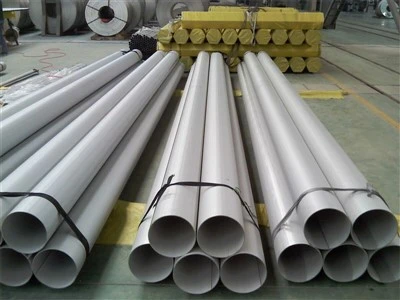
So, if you’re in the market for steel pipes, don’t just look at the initial price tag. Ask questions: What’s the pressure rating for your application? What’s the operating temperature? Will the pipe be exposed to corrosion from soil, water, or chemicals? What diameter do you need? The answers to those questions will tell you if straight seam pipe is the right choice, or if you need a different type. And if you’re not sure, reach out to me. I’ve spent 12 years learning the ins and outs of straight seam steel pipes, and I’m happy to walk you through the pros and cons, and help you choose the best product for your project. Whether you’re a small contractor working on a residential build or a large engineer on a major infrastructure project, I can provide the pipes you need, along with the honest advice to make sure they perform as expected.
Welded Pipe Carbon Steel Pipe Galvanized Pipe References
- Steel Pipe Manufacturing Handbook, American Iron and Steel Institute, 2019.
- “Weld Seam Performance in Straight Seam Steel Pipes”, Journal of Structural Engineering, Vol. 145, No. 7, 2019.
- Corrosion Behavior of Welded Steel Pipes in Marine Environments, National Association of Corrosion Engineers (NACE International), 2021.
- “Size and Pressure Limitations of Straight Seam Welded Pipes”, Pipeline Industry Journal, Vol. 32, No. 4, 2020.
Gnee Steel (Tianjin) Co., Ltd.
Gnee Steel (Tianjin) Co., Ltd. is one of the most professional straight seam steel pipe manufacturers and suppliers in China, specialized in providing high quality customized service. We warmly welcome you to wholesale discount straight seam steel pipe for sale here and get free sample from our factory. Good service and low price are available.
Address: No.4-1114, Beichen Building, Beicang
E-mail: pipe@gneesteel.com
WebSite: https://www.chinaalloypipe.com/
