If you’ve ever wandered through a factory floor, a construction site, or a warehouse, you’ve probably glanced at rows of heavy-duty electrical plugs and sockets and thought, “Why are these all different colors?” As an industrial plug supplier who’s spent the last 12 years working directly with maintenance teams, electricians, and plant managers, I can tell you this isn’t a random design choice. Color coding for industrial plugs is a standardized language that prevents downtime, fires, and even fatal mistakes—especially when you’re working with 3-phase power, high-voltage machinery, or specialized equipment. Let’s break down the science, the standards, and what every industrial operator needs to know. Industrial Plug
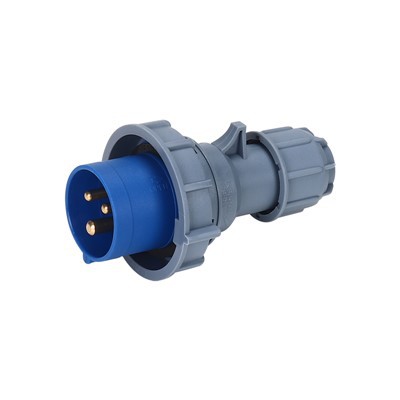
First, let’s get one thing straight: this isn’t the same as the color coding you see for standard household plugs. Home outlets in the U.S. follow NEMA color rules, but industrial systems use global and regional standards that are tailored for safety in harsh environments. The two biggest frameworks you’ll encounter are IEC (International Electrotechnical Commission) standards, which are used in most of the world outside North America, and NEC (National Electrical Code) guidelines, adopted by OSHA in the U.S. for industrial applications. The core goal of both is simple: color tells you three critical details at a glance—what voltage the plug uses, how many phases it’s designed for, and whether it’s for single-phase or 3-phase power.
Let’s start with IEC, the most widely used global standard for heavy-duty industrial plugs. IEC 60309, the document that defines these color codes, was updated in 2017 to align more closely with modern safety needs, so it’s the baseline for 90% of industrial projects across Europe, Asia, Africa, and Latin America. Here’s the breakdown you’ll see out in the field:
- Blue: This is the go-to color for low-voltage single-phase power, specifically 120V or 230V. Wait, no—hold on, it’s not just voltage, and that’s a common mistake. Blue plugs are for “low power, low voltage” single-phase, typically for tools like welders’ auxiliary power, portable lighting, or small conveyor belts. They have a 3-pin configuration, no ground pin? No, wait, no—they have a protective ground pin, but it’s positioned to only fit into a matching blue socket, so you can’t plug a 415V machine into a 230V outlet. That’s the whole point: the keyed plug and color work together to prevent mismatches.
- Black: For single-phase high-voltage, usually 400V. These are less common than blue, but you’ll see them for heavy single-phase loads like large air compressors or industrial ovens. Again, 3 pins (phase, neutral, ground) and only fit black sockets.
- Red: This is where a lot of people get confused. Red is the code for 3-phase power, specifically 400V, the most common industrial voltage for machinery like pumps, CNC machines, and production line motors. Red plugs are 5-pin (three phases, neutral, ground), and their key is offset so you can’t plug them into a lower-voltage blue or black socket. That’s a lifesaver—if someone accidentally tries to plug a 3-phase motor into a 230V outlet, it won’t work, but if they reverse the voltage, it could blow the motor, start a fire, or injure someone.
- Yellow: For extra-low voltage (ELV) systems, usually 110V or 50V, designed for temporary outdoor work. Think construction sites, where workers use power tools that have built-in safety to prevent electric shock in damp conditions. Yellow plugs are keyed for ELV sockets, and their color stands out in messy, loud job sites where no one wants to mix a 110V tool cord with a 400V line.
- Grey: Wait, some regions use grey for DC power, right? Yes, IEC added grey as an optional color for direct current systems, used in things like battery chargers for forklifts or solar inverters. That’s a newer addition, so you’ll see it more in facilities with a lot of renewable energy gear.
- Orange: This one’s less common, but it’s used for special applications—like emergency power systems, or high-temperature environments where the standard yellow or red might fade. A lot of food processing plants use orange for washdown areas, where plugs need to be durable against cleaners, so their color stays visible even after years of high-pressure washing.
Now, for the U.S., it’s not exactly the same, because NEC rules for industrial plugs follow a slightly different set of standards, based on NEMA. Here, the color coding is a bit simpler, but still just as critical. The most common industrial plug colors here are:
- White or Grey: For 120V single-phase, standard household but heavy-duty industrial use, like office equipment or small shop tools.
- Black: For 240V single-phase, used for larger tools like table saws or water heaters.
- Red: For 240V 3-phase, the big one for U.S. factories, powering most industrial motors and machinery.
- Blue: For 120V 3-phase, less common, but used for portable equipment that needs three phases at lower voltage.
The key difference between IEC and NEMA is that in the U.S., color coding isn’t legally mandated by OSHA in all cases, which is why some older facilities might have mismatched colors—like a 480V plug painted green because that’s what was on hand. That’s a huge safety gap, and it’s one of the reasons I work so closely with plant managers to make sure their entire fleet of plugs and sockets is standardized. I’ve seen way too many near-misses: a maintenance tech who plugged a red 240V 3-phase plug into a white 120V socket, fried a $10,000 motor, and took a production line down for three days. Standardized color coding isn’t just a “nice to have”—it’s a cost-saver, and more importantly, it prevents harm.
Wait, I should also clear up a myth I hear all the time: some people think color coding is just for differentiating voltage, but it’s also for differentiating function. For example, in data centers, you’ll see purple plugs for redundant power systems, so if the main power goes out, the backup has its own color to avoid mistakes when switching circuits. In mines, you’ll see bright orange plugs for explosion-proof systems, because in environments with flammable dust or gas, every plug’s color tells you if it’s rated for hazardous locations. It’s not just voltage—it’s application, which is why my team custom-makes plugs for specific industries, instead of selling a one-size-fits-all model.
Another big piece of this: color coding isn’t universal across every country. For example, in Australia, they use a different IEC variant where red is 415V 3-phase, but some older Australian facilities use red for single-phase high voltage, which is a trap for electricians used to IEC standards from Europe. In Japan, their industrial plugs use yellow for 200V single-phase, and white for 100V, so if you’re working on a global project, you can’t just rely on the color you know at home. That’s why my company offers a color matching service: we can label plugs with both the standard color and a custom marking (like “400V 3P” stamping) so teams working across regions never mix up systems.
Let me share a recent example that drove this home. Last year, a food processing plant in the Midwest was expanding its production line, and they ordered some cheap generic plugs online, without checking color coding. The new red plugs they received were actually 230V single-phase, not 400V 3-phase. The maintenance team installed them, and when they tried to power their new 400V packaging machines, the plugs wouldn’t fit. They thought they had the wrong sockets, so they swapped out the entire bank of sockets, and ended up paying $15,000 in labor and lost production time just because the supplier didn’t follow standard color coding. That’s the kind of mistake we help customers avoid: every plug we ship has a color that aligns with the IEC or NEC standard they specify, and we check each one before it leaves our warehouse to make sure the key, the pin configuration, and the color all match the required voltage.
Now, what about when you need to modify a plug? Some maintenance teams will paint a plug a different color if it’s for a new use, but that’s a big no-no. Paint can chip, fade, and hide the color code, and it doesn’t align with industry standards. If you need a plug for a special application, reach out to a supplier that works with industrial teams—we offer custom color coding, engraved labels, and verification testing, so you don’t have to risk a mistake that could shut down your operations or hurt someone.
I also want to talk about why colors are chosen, not just assigned arbitrarily. Bright colors (yellow, red, orange) stand out in busy, cluttered work environments where people are moving fast, wearing gloves, and focused on tasks. Muted colors (blue, grey) are for lower-voltage systems that don’t need to be top-of-mind, but still need to be identifiable. For example, blue is easy to spot against the grey concrete of a factory floor, but not so bright that it’s distracting when you’re looking for a red plug for a high-voltage machine. That’s intentional—each color is picked for visibility in the environments where those plugs are used.
If you’re a plant manager, electrician, or maintenance supervisor reading this, the biggest takeaway is this: don’t ignore the color on your plugs. If you have a mix of colors that don’t align with a standard, it’s worth investing in a re-code of your entire fleet. The cost of re-coloring or replacing mismatched plugs is a fraction of the cost of a production shutdown, a damaged piece of equipment, or a safety incident. And if you’re sourcing new plugs, make sure your supplier is following the correct standards for your region—too many cheap knock-offs skip the color coding and keying, just to cut costs.

That’s where we come in. For 12 years, our team has worked with industrial operations across North America and overseas, supplying plugs that meet IEC 60309 and NEC standards, with accurate color coding, keyed designs, and tested durability for harsh environments. Whether you need standard plugs for a factory floor, custom color coding for a construction site, or verification of your existing fleet to make sure it’s up to code, we can help. Stop guessing what your plugs mean—let’s make sure your system is standardized, safe, and efficient. Reach out to discuss your industrial plug needs, and we’ll walk you through the best options for your operation.
Industrial Connector References
- International Electrotechnical Commission. IEC 60309-1:2019, Plugs, socket-outlets and couplers for industrial purposes – Part 1: General requirements. Geneva: IEC, 2019.
- National Fire Protection Association. NFPA 70: National Electrical Code (NEC). Quincy: NFPA, 2023.
- Occupational Safety and Health Administration. “Electrical Standards for Industrial Establishments.” Washington, DC: OSHA, 2022.
- Australian/New Zealand Standards. AS/NZS 3123:2018, Plugs, socket-outlets and couplers for industrial purposes. Sydney: Standards Australia, 2018.
Zhejiang Hefeng Electric Co., Ltd.
Zhejiang Hefeng Electric Co., Ltd. is one of the most professional industrial plug manufacturers and suppliers in China, featured by quality products and low price. Please rest assured to buy durable industrial plug made in China here from our factory. Also, OEM service is available.
Address: Wenzhou Daqiao Industrail Park, Beibaixiang Town, Yueqing City, Zhejiang Province, China
E-mail: hefengplug@chinahfe.com
WebSite: https://www.hfcee.com/
