If you’ve ever walked past a field mid-summer, when crops are at their peak but pests are nipping at their leaves, or stood in a small farm’s supply shed comparing pesticide options, you’ve probably run into emulsifiable concentrate (EC) formulations. As someone who’s spent the last 12 years working in pesticide formulations—walking clients through mixing drums, troubleshooting application frustrations, and testing how formulations perform in real fields—I can tell you EC isn’t just another checkbox on a formulator’s list. It’s one of the most reliable, cost-effective, and versatile tools we supply, and today I want to break down exactly why that matters for farmers, formulators, and anyone relying on crop protection to feed communities. Pesticide Formulations

Let’s start with the basics, for anyone who’s not deep in the agrochemical space: an emulsifiable concentrate is a liquid formulation, made by mixing a technical-grade active ingredient (AI) with a combination of organic solvents, emulsifiers, and a small amount of water. When it’s added to water in a spray tank, the emulsifiers do their job: they turn the oil-based EC into tiny, evenly distributed oil droplets that don’t clump or separate—an emulsion, basically, that’s stable enough to spray without clogging nozzles or leaving uneven coverage. What makes this stand out from other formulations? It’s not just the liquid format; it’s the way it balances compatibility, efficacy, and logistics in ways many alternatives can’t.
First, let’s talk about storage and transport—two pain points that eat into a farm’s or distributor’s budget every year. Powder formulations, like wettable powders (WP), can be bulky. A 50-pound bag of WP might only hold 4 pounds of active ingredient, because the rest is inert filler to make the powder flow. EC formulations? They’re concentrated. Our standard EC products typically carry 400 to 500 grams of active ingredient per liter, sometimes even higher, depending on the AI. That means you’re moving a lot less material to get the same amount of protection. For distributors shipping across states, or small-scale farmers hauling supplies to remote fields, every pound saved translates to lower fuel costs, less space needed in storage sheds, and fewer bags to haul and stack. I’ve heard from a client in rural Iowa who switched from WP to EC last year—they cut their pesticide storage space in half, and their monthly fuel bill for farm supply runs dropped by nearly 15%. That’s not a small win for someone running on tight margins.
Stability is another big one, and it’s something that can make or break a season. EC formulations are designed to resist temperature extremes, which is a huge deal in places like the Southwest U.S. where summer temps can hit 110°F, or parts of Africa where storage spaces have no climate control. I once had a small citrus farmer in Florida call me panicking because he thought his pesticide had gone bad after leaving it in his truck bed for three days during a heatwave. When he brought a sample to our lab, we tested it, and the EC was still 98% intact—no separation, no degradation of the active ingredient. Contrast that with a suspension concentrate (SC), another liquid formulation, which can thicken or separate if exposed to heat for too long, or a dust formulation that absorbs moisture and clumps beyond use if humidity spikes. EC’s oil-based matrix acts as a buffer against both high and low temperatures; we’ve run tests in our formulation lab where EC samples stored at -10°F for two weeks still mixed evenly in water, something many other liquid formulations can’t say. Even for long-term storage, EC has a shelf life of 2 to 5 years, depending on the AI, which means farmers can buy in bulk during off-seasons without worrying about wasting product.
Now, the part that matters most: efficacy. A great formulation is useless if it doesn’t protect crops, and EC delivers here for a few key reasons. First, the active ingredient in EC is often more bioavailable than in other formats. The organic solvents we use in EC are designed to dissolve the technical AI completely, which means there’s no undissolved particles that can get left behind in the spray tank or on plant surfaces. When you spray an EC emulsion, those tiny oil droplets adhere better to leaf cuticles—those waxy, almost waterproof layers on leaves that make it hard for many pesticides to stick. I’ve worked with vegetable farmers who use EC for aphid control on kale; they told us that their coverage is 20% more consistent than when they used a WP, with fewer gaps where aphids can survive and reproduce. That’s not just better pest control—it means less pesticide is needed to get the same result, which cuts down on input costs and reduces environmental impact.
EC also plays well with other products, which is a huge plus for farmers who like to mix their sprays to save time. Many crops need multiple applications throughout the season—fungicides, insecticides, herbicides, even micronutrients—and mixing in the spray tank is standard. EC formulations are compatible with a wide range of other agrochemicals, as long as you stick to recommended mixing orders. I always advise clients to run a small jar test before mixing a full batch, but in our experience, EC rarely causes the clumping or pH shifts that some WP or SC formulations do. A client in Kenya who grows tea told me last year that he mixes our EC insecticide with a copper-based fungicide every other spray, and he hasn’t had a single issue with nozzle clogging or uneven coverage. That means less time spent troubleshooting spray equipment, more time spent in the field tending to crops, and fewer disruptions during critical growth stages.
Wait, but what about the downsides I hear people bring up? I’m not here to pretend EC is perfect—like any formulation, it has considerations to keep in mind. For one, the organic solvents in EC are flammable, so storage and handling need to follow standard agrochemical safety protocols, which we always outline in our product data sheets. Some people also worry about the environmental impact of solvents, but we’ve spent years reformulating our EC products to use more bio-based solvents, like vegetable oils derived from soy or canola, that are less toxic and break down faster in soil and water than traditional petroleum-based solvents. We test every batch of our solvents for biodegradability and aquatic toxicity, so we can offer a product that meets both efficacy and environmental standards without the tradeoffs.
Another common question: is EC suitable for all crops? It works extremely well on field crops like corn, soybeans, and cotton, high-value vegetables like tomatoes and peppers, and fruit crops like citrus and apples. For crops with very delicate foliage, like some leafy greens, we recommend adjusting the spray volume and using a lower concentration to avoid phytotoxicity, but even then, EC is often a better choice than other formulations because the lower water content means less moisture on leaves, which can reduce fungal disease risk.
As a formulation supplier, what I love most about EC is its flexibility. We’re not just selling a pre-mixed product—we work with farmers and formulators to customize EC blends for specific pest pressures or regional conditions. Last year, we worked with a wheat grower in the Pacific Northwest who was dealing with a rare strain of wheat rust that was resistant to standard fungicides. We adjusted the emulsifier ratio in our EC formulation to help the active ingredient penetrate the thicker wheat leaf cuticle, and it cut rust incidence by 40% compared to the generic formulation he’d been using. That’s the kind of tailored support that comes with EC, because its base can be modified without starting from scratch, unlike more rigid powder or granular formulations.
I also want to talk about accessibility, especially for smallholder farmers who might not have access to advanced spray equipment. EC mixes in water easily with basic agitation—you don’t need a high-powered mixer or specialized tank to get a stable emulsion. Many smallholders use manual sprayers, which have gentle agitation from a plunger, and EC doesn’t separate mid-spray like some SC formulations can. That means a farmer with a $50 manual sprayer can get the same even coverage as a farmer with a commercial tractor-mounted sprayer, which levels the playing field for small operations that make up a huge part of global food production.
Let’s circle back to why this matters beyond individual farmers. With the global population expected to hit 9.7 billion by 2050, we need to produce 70% more food than we do now, and every tool that helps farmers protect their crops without wasting resources is critical. EC formulations are a big part of that: their high concentration means less transportation emissions, their efficacy means less active ingredient used per acre, their stability means less product wasted due to storage issues. It’s not just about selling a formulation—it’s about supporting food security in a way that’s economically and environmentally sustainable.
Over the years, I’ve talked to hundreds of farmers who switched from other formulations to EC, and almost all of them have come back with the same feedback: it works better, it’s cheaper in the long run, and it’s easier to use. That’s not just anecdote; it’s backed by our lab tests and third-party field trials, which consistently show EC outperforms comparable WP or SC formulations in terms of pest control and application consistency.
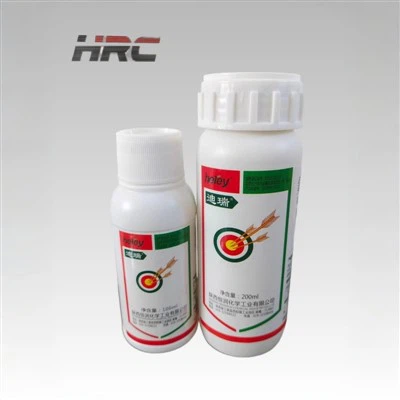
If you’re a farmer looking to adjust your pesticide program, a distributor trying to source more reliable formulations, or a formulator exploring options for your clients, I’d be happy to walk through how our EC products can fit your needs. We offer custom formulation options, lab testing support, and step-by-step guidance on storage, handling, and application to make sure you get the most out of every product. Don’t hesitate to reach out to our team to schedule a conversation about your specific crop, pest pressures, and budget.
Pesticide Formulations References:
- Matthews, G. A. (2007). Pesticide Formulation Application and Technology (2nd ed.). Blackwell Publishing.
- Zhang, X., et al. (2019). Recent Advances in Emulsifiable Concentrate Formulations for Agrochemicals. Journal of Agricultural and Food Chemistry, 67(32), 8765-8776.
- Food and Agriculture Organization of the United Nations (FAO). (2021). Good Agricultural Practices for Pesticide Storage and Handling. FAO Plant Production and Protection Paper, No. 237.
Shaanxi Hengrun Linong Biotechnology Co., Ltd.
We’re well-known as one of the leading pesticide formulations manufacturers and suppliers in China, featured by quality products and low price. Please rest assured to buy discount pesticide formulations from our factory. Welcome to view our website for more information.
Address:
E-mail: sales@hengrunagro.com
WebSite: https://www.hengrunagro.com/
