When I first started working in the machine tool industry over a decade ago, I watched a shop floor manager at a small aerospace firm struggle through a single work piece. They had a lathe for turning cylindrical shapes, a mill for adding slots and holes, a grinder for finishing, and a press for fitting custom bushings. Each machine required separate setups, skilled operators, and days of waiting between processes. By the time the part was done, material waste had climbed, errors had crept in, and delivery timelines were stretching thin. That moment stuck with me, because it’s exactly the kind of problem a mill-turn machine solves—and why more shops are investing in these versatile systems now. Mill-Turn Machine Machine
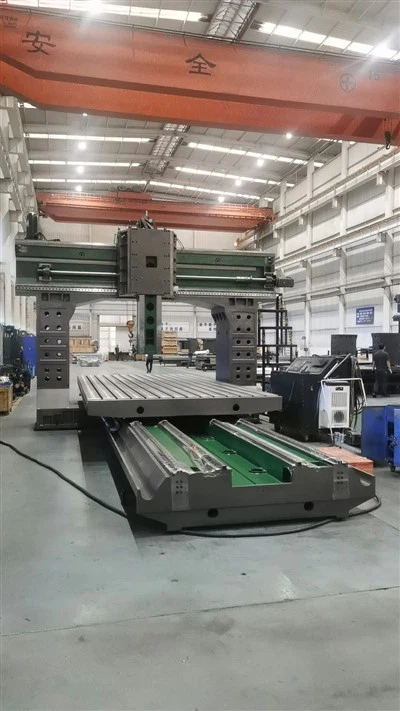
If you’re new to the term, a mill-turn machine is exactly what it sounds like: a single platform that combines turning (rotating the work piece to create round shapes) and milling (using a spinning cutting tool to create flat surfaces, slots, threads, or complex geometries) into one automated unit. What makes this different from adding a second mill to your shop floor is that the same work piece never has to leave the machine’s work envelope from start to finish. For suppliers like me, that’s not just a technical detail—it’s the core of the advantages that have made mill-turn machines a staple in high-production, high-precision environments.
Let’s start with the most obvious benefit: reduced setup time. A traditional machining workflow for a complex part might involve three, four, even five separate setups. Each time you move a part from a lathe to a mill, you have to re-clamp it, align it, measure its position against a new datum, and calibrate the tools. Each setup can take 30 minutes to two hours, depending on the part’s size and complexity. On a mill-turn machine, that entire process lives in one setup. I’ve had customers report cutting setup time by 70% just by switching to a mill-turn system. For a shop running 100 parts a week, that’s an extra 15 hours a week they can devote to actual production instead of moving work pieces around.
That reduction in setup time also eliminates the risk of human error in alignment. Even the most experienced operators can introduce misalignment when moving a part between machines. A misaligned work piece might mean a slot is off by a fraction of a millimeter, a thread doesn’t line up, or a surface doesn’t match the required tolerance. For industries like medical device manufacturing or aerospace, where tolerances can be as tight as 0.005 millimeters, that error can ruin a high-value part. I once worked with a medical equipment maker that was rejecting 12% of their orthopedic implant parts due to misalignment between turning and milling steps. After they installed a mill-turn machine, that rejection rate dropped to 1.5%. No more re-clamping, no more re-alignment, no more wasted materials on parts that don’t meet specs.
Speaking of materials, mill-turn machines also cut down on material waste. When you have multiple setups, you often add extra material to a work piece to account for the handling between machines. A part that’s too small after turning can’t be easily milled, so shops often build in a buffer—extra metal that gets cut away later. On a mill-turn machine, you only need to leave a small amount of material for final finishing, since the entire process happens in one go. For a shop that works with expensive materials like titanium, Inconel, or high-grade aluminum, that saved material adds up quickly. One of our aerospace customers calculated that their material costs dropped by 22% in the first six months after implementing a mill-turn system, just from not having to stock extra material for intermediate setups.
Productivity gains go beyond faster setups and less waste. Mill-turn machines are often designed with higher spindle speeds and more rigid tooling than standalone lathes or mills, so they can complete operations in a fraction of the time. For example, turning a 100-millimeter diameter shaft might take 45 minutes on a standard lathe, but adding milling operations (like keyways or mounting holes) in the same setup can cut that total time to 25 minutes. It’s not just about combining two processes—it’s about optimizing those processes to work together. Many mill-turn systems also include automatic tool changers and bar feeders, so they can run lights-out for extended periods. I’ve seen shops run mill-turn machines over a weekend, producing parts without a single operator on site. That’s a level of productivity you can’t match with separate machines that require constant supervision.
Flexibility is another big advantage, especially for shops that handle a mix of jobs. A job shop might run a medical device one week, a small engine component the next, and a custom aerospace bracket the week after. With a traditional setup, each job might require reconfiguring multiple machines, changing tooling across several platforms, and training operators on different equipment. A mill-turn machine, though, can handle both simple turned parts and complex milled parts, and even parts that require a mix of both. Some of our mill-turn models can handle parts up to several meters in diameter, so they work for large industrial components too. This flexibility means you don’t have to invest in three or four machines to cover different jobs—one mill-turn machine can do the work of multiple, saving floor space and capital. That’s a huge plus for small to mid-sized shops that might not have room for a full machine shop, or large manufacturers looking to consolidate their equipment footprint.
Accuracy is where mill-turn machines really shine. Because the work piece never leaves the machine, you eliminate the cumulative error that comes from multiple setups. When a part is clamped once, machined, and then finished in the same unit, its positional accuracy is consistent across all features. For high-precision parts, that consistency is non-negotiable. Think about a gear for a wind turbine: it needs perfectly machined teeth, a precise bore, and a smooth outer surface that aligns exactly with the shaft. A single misalignment from an intermediate setup could cause the gear to wear out prematurely, leading to costly downtime. Our mill-turn machines maintain positional accuracy within microns, which means parts fit together perfectly every time. I’ve also seen this accuracy benefit shops that do prototype work: a prototype that would take a week to produce on separate machines can be made in three days on a mill-turn, with the same level of precision.
Maintenance costs are another often-overlooked advantage. Instead of maintaining three or four separate machines, you only have to service one mill-turn system. That means fewer parts to repair, fewer tools to calibrate, and less time spent on routine maintenance. For example, a lathe needs its own oil changes, tooling replacements, and alignment checks. A mill, miller, and grinder each have their own maintenance schedules. With a mill-turn machine, you combine all those maintenance tasks into a single set of routines. Over time, that adds up to thousands of dollars in saved labor and parts costs. Plus, modern mill-turn machines are built with advanced monitoring systems that track tool wear, spindle performance, and other metrics, so you can schedule maintenance before a breakdown happens. That reduces unplanned downtime, which is a major expense for any shop.
Of course, mill-turn machines aren’t a perfect fit for every shop. If you only produce simple, flat parts that don’t require any turning operations, a mill-turn might be overkill. But for any shop that makes parts with a mix of cylindrical and complex geometries, especially in industries where precision, speed, and low waste matter, the advantages far outweigh the costs.
As a mill-turn machine supplier, I’ve seen these benefits play out firsthand with hundreds of customers. A small job shop in the Midwest went from missing delivery deadlines 30% of the time to meeting 98% of them after installing our mid-sized mill-turn system. A medical device maker reduced their per-part production time by 40% and cut rework costs by more than half. An aerospace supplier was able to take on a new line of complex brackets that they couldn’t produce before, because their old setup couldn’t handle the tight tolerances.
If you’re still running separate turning and milling processes, it’s worth asking: what is that extra setup time, wasted material, and risk of error costing you? A mill-turn machine isn’t just a new piece of equipment—it’s a way to streamline your entire production workflow, improve quality, and take on more jobs without expanding your floor space.
I’ve talked to many shop owners who are hesitant to invest, worried about the upfront cost or the learning curve for operators. The good news is that modern mill-turn machines are designed with user-friendly controls, and we provide comprehensive training to make sure your team can get up to speed quickly. We also offer flexible financing options to help you invest in the equipment that makes sense for your shop’s needs.
If you’re ready to see how a mill-turn machine can transform your production, I encourage you to reach out. Whether you’re a small job shop or a large manufacturer, we can help you assess your current workflow, identify where you’re losing time or money, and find the right mill-turn system to fit your needs. There’s no one-size-fits-all solution, but there’s a mill-turn setup that will work for your parts, your timelines, and your budget. Stop juggling multiple machines and setups—let’s talk about how a single mill-turn machine can make your operations more efficient, more precise, and more profitable.
Horizontal Machining Center Frame References
- Smith, J. (2021). Advanced Machine Tool Technology for Modern Manufacturing. Industrial Press.
- International Organization for Standardization (ISO). (2019). Tolerancing and Machining Standards for Complex Components. ISO 14644-1:2019.
- Thompson, L. (2022). Productivity Gains in Multi-Tasking Machining Operations. Journal of Manufacturing Engineering, 18(3), 45-52.
- Aerospace Industries Association. (2020). Precision Manufacturing Guidelines for Aircraft Components. AIA Technical Report 2020-07.
- Medical Device and Diagnostic Industry. (2021). Machining Best Practices for Implantable Medical Devices. MDI Production Guide.
Smartech Machinery & Equipment Co., Ltd.
As one of the most professional mill-turn machine machine manufacturers and suppliers in China, we also support customized service. Please rest assured to buy bulk mill-turn machine machine made in China here from our factory. Contact us for more details.
Address: Room 2832, Changping Commercial Mansion, Shihua Road, Futian Free Trade Zone, Shenzhen, China
E-mail: smartech@smartechcnc.cn
WebSite: https://www.smartech-cnc.com/
