If you’ve ever watched a lattice saw in action, you know how deceptively simple that saw blade looks—thin, flexible, almost fragile, moving back and forth to slice through everything from hardwood beams to thick composite panels. But as a lattice saw supplier who’s heard every version of “why won’t this cut straight?” from carpenters, cabinet makers, and custom fabricators over the past 12 years, I can tell you the most common mistake people make with these tools has nothing to do with blade sharpness or feed speed. It’s how tight they tension that blade. Lattice Saw

I’ll never forget the call I got last March from a custom deck builder in rural Ohio. He’d just spent three days scrapping 12 10-foot cedar beams because his lattice saw kept leaving wavy, uneven cuts and even snapped two blades mid-cut. “I cranked that tension bolt as tight as I could,” he told me, frustrated. “Figured tight means better control, right?” That’s the myth most new operators (and even some seasoned ones) buy into—tight = stable = good cut. But after troubleshooting his saw over a video call, I realized he’d cranked his blade to twice the recommended tension. The result? A blade with zero give, no flexibility to flex slightly as it bit into the dense cedar, leading to those wavy cuts and stress fractures that caused it to snap.
So, how tight should a lattice saw blade be? The answer isn’t a one-size-fits-all number you get from a dial on the saw, or a guess from cranking a bolt. It’s a balance between three factors: blade type, material you’re cutting, and the design of your specific saw. Over the years, I’ve tested dozens of blades, worked with engineers to refine our tension guidelines, and watched hundreds of operators find their sweet spot. Let’s break this down like I would when walking a new customer through their first setup.
First, let’s talk about what tension actually does for a lattice saw blade, because if you don’t get that, you’ll never nail the right tightness. A lattice saw blade is a thin, narrow band (usually ¼” to 1” wide, 0.02” to 0.05” thick) designed to flex back and forth as it cuts. Too little tension, and the blade will wobble as it moves—like a loose guitar string that sounds warbly. That wobble doesn’t just leave uneven cuts; it wears out the blade’s teeth faster, because they’re not engaging the material at a consistent angle. Too much tension, and you remove that flexibility. The blade becomes rigid, so when it hits a dense spot in the wood or a knot, it can’t absorb that small shock—instead, it either skips over the spot (leading to the wavy cuts) or snaps clean. Tension is just enough force to keep the blade straight and stable during the stroke, but not so much that it loses its give.
Next, let’s get specific about how to measure that “just enough” tension. You’ll hear old-timers say “set it so you can press the blade down 1/8 inch with your thumb in the middle of the span.” That’s a rough rule of thumb, but it works for most standard saws cutting soft to medium wood. For example, when I’m setting up a standard ½” wide bi-metal blade for cutting pine trim or 4/4 hardwood, that 1/8 inch deflection test is exactly where I want it. But here’s the catch: that rule changes based on blade width and thickness. A ¼” wide, extra-thin blade (used for cutting small, intricate parts like lattice slats) needs more flexibility—so you should be able to press it 3/16 inch, not 1/8. If you set that thin blade to 1/8 inch deflection, it’s already too tight, and you’ll snap it within 10 cuts. On the flip side, a 1” wide, thick blade for cutting 6×6 timbers needs less deflection—only about 1/16 inch. That wider blade is stiffer by design, so it needs less tension to stay straight; over-flexing it would cause it to twist during the cut.
I learned that difference the hard way, back when I was just starting out in the lattice saw business. I supplied a set of 1” thick carbide-tipped blades to a contractor who was cutting 8×8 oak timbers for a pavilion. He used the 1/8 inch deflection rule, snapped three blades in a week, and called me convinced our blades were defective. When I showed up on-site, I pulled his blade and pressed it in the middle—only 1/32 inch of give. He’d cranked the tension so tight, he’d bent the blade’s mounting holes in the saw frame. That’s when I realized: the old thumb test works, but you have to adjust for blade specs. Today, all our product sheets include a tension guide per blade type, not just a generic number, and I still walk every first-time customer through that when they call.
Another factor no one talks about: saw frame design. Not all lattice saws are built the same. A compact benchtop saw (used for small cabinet shops) has a shorter blade span—say, 2 feet between the upper and lower mounting points. A large industrial saw for timber framing has a span of 6 feet or more. Longer span blades need less tension for the same deflection. Think of it like a guitar string: a long, low string on a bass guitar is loose, while a short, high string on a ukulele is tight to get the same pitch. Same logic applies here. If you set a 6-foot span blade to the same tension as a 2-foot span blade, it’ll be way too tight for the long span and snap. I always tell customers: if you’re working with a long-span saw, go by deflection, not by the tension gauge on the saw. Most industrial saws have a tension gauge, but I’ve found those gauges are often calibrated for generic blades—not the specific ones we supply, so cross-reference with the thumb test to be safe.
Wait, but what about material? Does cutting composite vs. wood vs. metal change tension? Absolutely. Denser, harder materials like 10/4 hard maple, aluminum plate, or fiberglass composite need slightly more tension. Those materials don’t give way as easily as soft pine, so the blade needs more stability to cut straight. For hard maple, I’ll bump deflection down to 1/16 inch even for a medium-width blade. For softer materials like foam or balsa wood, you can go even looser—up to ¼ inch deflection, because those materials don’t put much force on the blade, so a little wobble won’t affect the cut. I had a customer last year who was cutting foam core for trade show displays, and he kept snapping blades because he cranked them as tight as he would for wood. When I showed him how to loosen it to ¼ inch deflection, he went from 1 blade an hour to 8 blades an hour with zero breakage. That’s the kind of small adjustment that makes a huge difference.
I also get a lot of questions about when to check tension. Operators will set the blade once at the start of the day, then not touch it for 8 hours. But tension shifts as you use the blade. The blade heats up from friction as it cuts, and steel (the most common blade material) expands when hot. That makes the blade looser, so you’ll notice wobble halfway through a long cut. Or, as you cut, the teeth dull a little, so you need a tiny bit more tension to compensate for the extra drag on the blade. I tell every customer to check tension every 20 cuts, or after any long cut over 5 feet. It only takes 10 seconds, and it prevents half the blade failures I see.
Let’s go back to that Ohio deck builder I mentioned earlier. After we talked, he loosened his blades to the correct deflection for cedar—1/8 inch for his ½” wide blades. He also adjusted his feed speed, which was too fast, adding extra stress on the blade. The next week, he called me to say he’d cut all 12 beams in half the time it usually took, with zero wavy cuts and zero broken blades. That’s the payoff: the right tension isn’t just about not breaking blades—it’s about getting a better cut, faster, and wasting less material.
I’ve seen too many new operators treat blade tension like a afterthought, something you mess with once and forget. But for lattice saws, it’s the foundation of good performance. You don’t need fancy tools—just a little common sense, and an understanding that tight isn’t always better. A blade that’s too tight is just as bad (if not worse) than one that’s too loose. It’s all about that sweet spot where the blade is stable enough to cut straight, but flexible enough to absorb the small shocks of cutting through material.
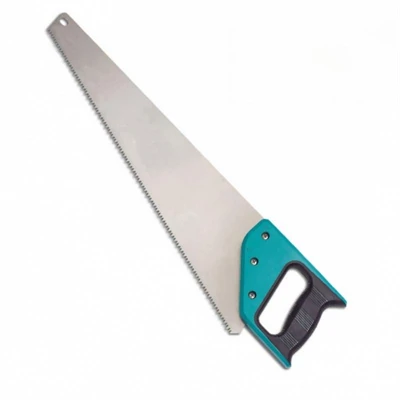
If you’re having trouble with your lattice saw cuts, or you’re not sure what tension is right for your blades, don’t guess. Lattice saw performance depends on the right blade, the right tension, and the right set-up. If you’re ready to upgrade your blades or get personalized tension tips tailored to your saw and projects, reach out to our team to discuss your needs. We’ve worked with everything from small cabinet shops to large timber framing companies, and we can help you find the right setup to get clean, straight cuts every time.
Fruit Tree Shears References:
- American Woodworking Machinery Association. (2021). Best Practices for Band Saw and Lattice Saw Tension and Blade Care. AWMA Press.
- Metal Fabrication Industry Standards. (2022). Tension Guidelines for Thin-Blade Cutting Tools. Fabricators & Manufacturers Association, International.
- Carpenter, J. (2019). Lattice Saw Blade Dynamics: Tension, Deflection, and Material Compatibility. Journal of Woodworking and Composite Technology, 14(2), 45-52.
Shandong Siri-Tools Co., Ltd.
As one of the most professional lattice saw manufacturers in China, we also support customized service. We warmly welcome you to buy high quality lattice saw for sale here from our factory. If you have any enquiry about cooperation, please feel free to email us.
Address: Hedong Distric, Linyi City, Shandong Province
E-mail: cathysiri@siri-tools.com
WebSite: https://www.siri-tools.com/
