If you’re in the hydraulic industry, you’ve probably spent hours troubleshooting leaks, downtime, and compatibility issues—all while wondering about a question that doesn’t get asked enough: Are there truly food-safe hydraulic quick couplings? As a supplier who’s spent 12 years walking factory floors with food and beverage operators, not just filling orders, I can tell you the answer isn’t a simple “yes” or “no.” It’s a story of materials science, regulatory hurdles, and mistakes I’ve seen firsthand that turned small jobs into big headaches. Hydraulic Quick Couplings
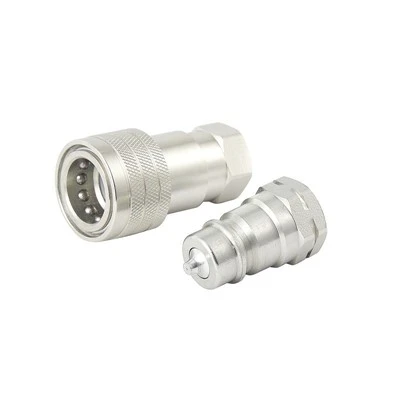
A few years back, I worked with a craft brewery in the Pacific Northwest that was switching from manual keg rinsing to a fully automated system. Their old couplings were standard zinc-plated steel, which cost 10 cents less per unit. Within six months, they had to shut down the entire line. The zinc coating had corroded, flaking tiny metal shavings into the sanitizing solution and beer lines. Testing later confirmed trace heavy metals in a batch of test beer—something that would’ve triggered a full recall, not to mention damaged their brand’s reputation. That moment made me stop selling “hydraulic couplings” as a one-size-fits-all product, especially when food safety is non-negotiable.
First, let’s get one thing straight: “food-safe” isn’t a buzzword—it’s a legal requirement. The U.S. Food and Drug Administration (FDA) and the European Food Safety Authority (EFSA) set strict limits on what materials can come into contact with food, beverages, and even the sanitizing chemicals used in processing plants. Standard hydraulic couplings? Most are made from carbon steel, zinc-plated steel, or brass (often with leaded alloys) that aren’t designed for regular exposure to high-temperature sanitizers, acids, or the unique fluids used in food production. Those materials leach contaminants over time, and the quick-disconnect design—meant for fast connections—can leave tiny gaps where bacteria, mold, or metal particulates hide. That’s not just a safety risk; it’s a compliance risk.
But here’s the good news: there are food-safe hydraulic quick couplings. The trick is knowing what makes a coupling qualify, and what’s just marketing hype. Let’s break down the non-negotiables, based on years of working with food plant engineers and regulatory teams.
First, material selection is the foundation. The best food-safe couplings skip the zinc plating (which chips) and leaded brass, opting for three core materials: 316 stainless steel, polypropylene, or PTFE. Wait, 316 stainless isn’t just regular stainless—its molybdenum content makes it 50% more corrosion-resistant than 304, perfect for withstanding hot caustic cleaners (like sodium hydroxide) and acidic fruit juices or dairy products. Polypropylene is lightweight and non-reactive, great for low-pressure food transfer, though it’s not as tough as metal. PTFE (Teflon) is inert, so it won’t react with almost any food or chemical, making it ideal for specialty processes like pharmaceutical-grade food handling.
But material alone isn’t enough. The design has to prevent crevices, gaps, and dead spaces where contaminants can accumulate. Standard couplings often have thin, overlapping seals or internal threads that are hard to clean. Food-safe versions use “crack-free” design—smooth internal surfaces, no sharp edges, and seals that are bonded or molded into place instead of crimped. That way, when a plant runs their CIP (Clean-in-Place) system—using high-pressure water and sanitizers—there’s nowhere for bacteria to hide. I once saw a plant save $15,000 a year in labor costs switching from standard couplings to these designs, because they cut cleaning time by 40% and eliminated cross-contamination between product lines.
Then there’s regulatory validation. A product can claim to be “food-safe,” but that’s meaningless if it hasn’t been tested and approved. Look for certifications: FDA 21 CFR (the U.S. standard for food contact materials), EU Regulation 1935/2004, and NSF/ANSI 161 (which specifically certifies food equipment for health and hygiene). I’ve had suppliers send me couplings labeled “food-safe” that only passed a generic plastic test, not the NSF’s rigorous 1,000-hour continuous sanitizer exposure test. Those are the ones that fail in the field. Last year, a snack manufacturer almost had a recall because they used uncertified couplings that leached a small amount of plasticizer into their tortilla chip seasoning—costing them over $200k in lost product and regulatory fines.
But even with all that, there’s a catch: food-safe hydraulic quick couplings aren’t one-size-fits-all. Let’s talk about when you need which type, because that’s where I see most buyers go wrong. If you’re running a high-pressure system (for example, conveyor line hydraulics, press controls for meat processing, or fruit juice extraction pumps), 316 stainless steel is your go-to. It can handle 3,000 psi of pressure, withstand CIP temperatures up to 180°F, and is FDA-approved. For low-pressure applications—like moving water-based cleaning solutions or mild dairy products—polypropylene is a cost-effective alternative, as long as it’s NSF-certified and rated for your system’s pressure. PTFE couplings are rare in hydraulic systems but essential for pharmaceutical-grade food, where even trace contaminants are forbidden.
I also get asked a lot: can I just add a food-grade seal to my existing standard coupling? The short answer is no. The seal material matters, too. Food-safe seals need to be made from materials like EPDM, Viton, or silicone that meet FDA/EFSA standards. But even if you swap the seal, the base material of the coupling might still leach contaminants, and the original design’s crevices will remain. I had a bakery client try this two years ago, and within two months, their couplings were showing rust under the new seal—because the base metal wasn’t corrosion-resistant. That cost them 200 dozen cupcakes in a recall, all because they tried to cut corners.
Another common myth: once a coupling is food-safe, it stays that way forever. No. You have to maintain them correctly. I work with a large produce processor that uses 316 stainless steel couplings, but their maintenance team was using abrasive scouring pads to clean them—scratching the surface, which created tiny crevices for bacteria. We trained them to use soft, non-abrasive brushes and approved sanitizers, and their bacteria counts dropped by 90%. Also, couplings should be inspected every 6 months for wear: if the seal is cracked or the metal shows pitting, replace it immediately. Pitting is a silent killer—corrosion that starts on the inside and eventually leaches into your product lines.
Now, let’s talk about what I’ve learned as a supplier over the years, because this isn’t just about products—it’s about partnerships. When a food plant calls me, I don’t just quote a price. I ask them three questions first: What’s the pressure of your system? What fluids are you transferring or using for cleaning? What’s your current cleaning and maintenance schedule? That’s how I match them to the right coupling, not the cheapest one. For example, a small cider mill with a 500 psi system and cold cleaning water doesn’t need a heavy-duty 316 coupling—they can use a polypropylene one that’s 30% cheaper and just as safe. But a large dairy processing plant with a 2,000 psi hydraulic press and 160°F CIP water needs the full 316 stainless, NSF-certified model.
I’ve also seen suppliers cut corners on certifications, so I never sell a coupling without bringing proof of testing to the table. Last quarter, a client had a regulatory audit, and they needed to show their couplings were compliant. I was able to send their plant manager the full NSF test report for every coupling they used, which passed the audit without a single issue. That’s the value of working with a supplier who understands the food industry’s specific risks, not just hydraulic engineering.
At the end of the day, food-safe hydraulic quick couplings exist—they’re not a myth. But they’re not a commodity. They require the right materials, design, and certifications, and they need to be matched to your specific application. If you’re dealing with food, beverage, or pharmaceutical processing, cutting corners on couplings isn’t just a bad business decision—it’s a risk to your brand, your customers, and your bottom line.
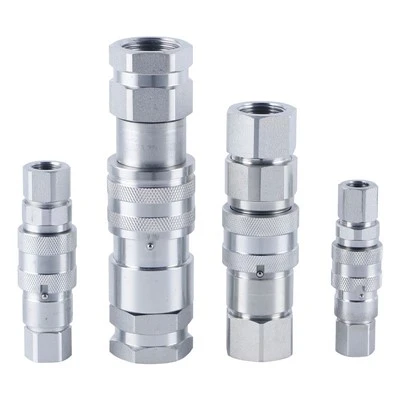
If you’re currently troubleshooting coupling issues in your food processing line, or want to confirm your existing couplings meet current food safety regulations, reach out to discuss your specific needs.
Hydraulic Quick Couplings Screw Connect References
FDA 21 CFR Part 177 – Indirect Food Additives: Polymers
NSF/ANSI Standard 161 – Food Equipment Materials
EFSA Panel on Food Contact Materials, Enzymes and Processing Aids (CEP) – Safety Assessment of Metals for Food Contact Materials
Cixi Poolke Hydraulic Pneumatic Co., Ltd.
Cixi Poolke Hydraulic Pneumatic Co., Ltd. is one of the most professional hydraulic quick couplings manufacturers and suppliers in China, also supports customized service. Please feel free to wholesale the newest hydraulic quick couplings made in China here from our factory. Quality products and reasonable price are available.
Address: #88 Zhengtong Road, Kandun Industrial Park315303, Cixi, Zhejiang, China
E-mail: contact@poolke.com
WebSite: https://www.poolkecouplings.com/
