If you’ve ever grabbed a yogurt cup, a prescription pill bottle, a snack bag, or a shipping box holding a fragile part, you’ve probably interacted with a multi-layer label without giving it a second thought. I’m a supplier who’s spent 12 years engineering, testing, and troubleshooting these labels for industries ranging from pharmaceuticals to e-commerce, and one of the most consistent, high-stakes challenges I work through is chemical exposure. Most clients come to me assuming a label is just paper and adhesive, but the impact of chemicals on multi-layer labels is far more complex than that — and ignoring it can derail product safety, compliance, and bottom lines in ways no one expects. Multi-layer Labels
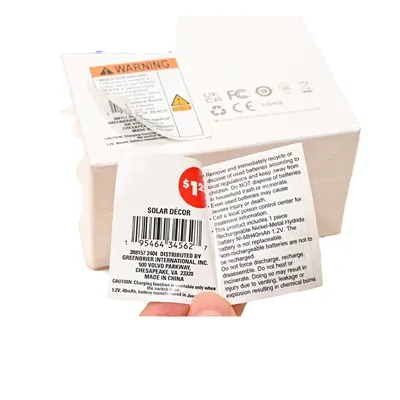
Let’s start with what makes a multi-layer label different from a standard single-layer one. A typical multi-layer label is built like a tiny, specialized sandwich: each layer serves a unique purpose. There’s the top facestock (usually a thin film like polyester or BOPP, sometimes coated with a matte or glossy ink layer that resists fading), a middle layer of adhesive designed to stick to both smooth and textured surfaces, a release liner that protects the adhesive until the label is applied, and often a barrier layer tucked between the facestock and adhesive. That barrier is the unsung hero here: it blocks moisture, chemicals, and light from seeping into the label and damaging the text, barcodes, or the product it’s attached to. When chemicals come into play, this layered structure isn’t just a design choice — it’s the only line of defense against failure.
I first saw the cost of overlooking chemical exposure up close in 2017, when a craft beverage client came to me panicking. They’d just launched a line of hard seltzer canned with a new flavoring agent that smelled like fresh citrus. The labels their previous supplier used were peeling within three weeks on store shelves, and their barcodes were smudged so bad scanners couldn’t read them. Turned out, the citrus oils in the flavoring were penetrating the thin BOPP facestock of the old label, eating through the adhesive layer, and warping the barrier. The result? The client had to pull 12,000 cases from stores, refund retailers, and repair their reputation for consistent product packaging. That’s when I dug into the science of how chemicals interact with each layer, not just the label as a whole.
Chemicals can impact multi-layer labels in three distinct ways, each with its own set of risks. First, there’s permeation — when small chemical molecules seep through gaps in the layers, breaking down bonds and altering the properties of each layer. Different chemicals behave differently here: oils, solvents, and even the cleaning chemicals used in warehouse facilities move through layers faster than water or alcohol-based liquids. For example, the isopropyl alcohol used to sanitize shipping pallets or food processing equipment is a common culprit. I’ve tested labels from 10 different suppliers and found that standard acrylic adhesive fails after 72 hours of constant exposure to 70% isopropyl alcohol, while a modified acrylic adhesive we formulated for chemical-resistant labels stays intact for up to 14 days. That’s the difference between a label that stays on and a barcode that still scans, and one that falls off mid-fulfillment.
Second, there’s delamination, which is a step beyond permeation: it’s when chemicals weaken the bonds between two layers, causing the label to peel or separate entirely. I saw this with a pharmaceutical client last year, who was shipping sterile surgical kits. They used a label that included a layer of polyethylene terephthalate (PET) as a barrier, but the adhesive between the PET and the paper facestock couldn’t stand up to the ethylene oxide (EtO) sterilization gas used for their kits. After EtO exposure, the adhesive gave way, and the top facestock separated from the rest of the label. That’s a catastrophic failure for a pharmaceutical product: if a label’s lot number or expiration date is gone, the kit can’t be used. We redesigned the label with a layer of vinyl instead of PET, which forms a stronger chemical bond with the adhesive, and added a primer layer between the facestock and barrier to lock in the bond. The failure rate dropped to zero within three months.
Third, there’s degradation of the label’s functional properties — things like barcode scannability, ink adhesion, or resistance to fading. For consumer packaged goods (CPG), this might mean a label that looks unprofessional on the shelf, turning customers away. For logistics companies, a barcode that won’t scan means packages get lost in transit, leading to extra shipping costs and frustrated shoppers. For cosmetics brands, a label that fades in sunlight or from contact with a product’s fragrance can mislead customers about ingredient information, leading to compliance issues with the FDA or EU’s Cosmetics Regulation. I worked with a natural skincare brand two years ago that wanted to use multi-layer labels with clear window panels to show their product’s creamy texture. The first set of labels they tried had ink that smudged after two weeks of contact with the product’s essential oils. We switched to a UV-cured ink that bonds directly to the facestock’s surface, eliminating the smudging, and added a thin layer of nylon between the ink and the product-facing adhesive to block oil penetration. Sales of that product jumped 18% after the label redesign, because customers trusted the packaging looked clean and durable.
A common mistake I see clients make is assuming that “chemical-resistant” is a one-size-fits-all term. Not all chemicals are the same, and not all layers react the same way. For example, a label that works for a chemical cleaning supply won’t work for a high-sugar cereal — the oils in cereal are mild compared to the strong alkalis in a drain cleaner, which can break down even thick PET layers. The other end of that spectrum: a label for a fertilizer bag needs to resist not just nitrogen compounds in the fertilizer, but also the sunlight and moisture that come with outdoor storage. That’s why our process starts with a full chemical profile for every client, not just a generic “chemical resistant” checkmark. We test each layer’s compatibility with the specific chemicals the label will come into contact with, in the exact conditions the client will use it in — temperature, humidity, how long the label will be exposed, and even how often it’s handled.
Compliance is another big factor that most clients don’t realize ties back to chemical impact on multi-layer labels. For industries like pharmaceuticals, medical devices, and food packaging, the FDA, EFSA, and other regulatory bodies have strict rules about what materials can come into contact with food or bodily fluids. If a label’s layers break down, chemicals from the label (like adhesive or ink components) can leach into the product, which violates those regulations. Last year, a small medical device manufacturer came to me after their labels failed a leach test for sterile devices. Their old label used a non-food-grade adhesive that leached trace amounts of formaldehyde after exposure to saline solution — that’s a big no for medical products. We switched them to a medical-grade acrylic adhesive that’s been tested and approved for biocompatibility, and redesigned the middle barrier layer to prevent any leaching. They passed their next test, and avoided a recall that would have cost them hundreds of thousands of dollars.
What’s more, chemical exposure can impact the long-term durability of multi-layer labels even before they’re applied. I’ve had clients store pallets of labels in a warehouse next to a bulk shipment of industrial chemicals, and after three months, the labels’ adhesive had turned brittle and the ink had faded. That’s because warehouse air isn’t just air — it can carry volatile organic compounds (VOCs) from nearby materials, which seep into the label’s layers over time. We add a secondary protective coating to our labels for clients who store them in high-chemical environments, creating an extra barrier that blocks those airborne VOCs. It’s a small, low-cost addition that saves clients from having to throw away thousands of dollars worth of unused labels.
So, what can you do as a brand or manufacturer to mitigate the impact of chemicals on your multi-layer labels? First, be transparent with your supplier about every chemical your label will encounter: not just the product itself, but any cleaning chemicals, storage conditions, transport environments, or sterilization processes. The more details you share, the more accurately they can design a label that works. Second, ask for third-party testing. Don’t take a supplier’s word that a label is chemical-resistant — request data from independent labs that test for permeation, delamination, and leaching in conditions that match your use case. Third, test early and often. I recommend small-scale testing before committing to a full production run: print 500 or 1,000 labels, expose them to your chemicals for the exact amount of time they’d be in contact, and check for peeling, smudging, or scannability. It’s a small investment that saves you from costly recalls, lost sales, or damaged reputations later.
As a supplier, my goal isn’t just to sell labels — it’s to solve problems. The labels I work on aren’t just pieces of printed plastic and paper; they’re the first line of communication between a brand and a customer, and a critical tool for safety, compliance, and logistics. When chemicals threaten that, every failure has a ripple effect. I’ve seen brands lose market share, manufacturers lose millions in recalls, and even small businesses shut down because of a simple label that couldn’t stand up to the chemicals around it. That’s why I spend hours in our lab testing formulations, tweaking layer thicknesses, and working with clients to find the right balance between durability, cost, and function.
If you’re dealing with label failures from chemical exposure, or just want to make sure your current labels are up to par for your products and processes, I’m here to help. Every industry has unique challenges, and there’s no one-size-fits-all solution — but with the right data, testing, and design, you can create multi-layer labels that stay intact, scannable, and compliant no matter what chemicals they encounter. Reach out to talk through your specific needs, and we can work together to build a label that works for your business.
Easy-tear Label References:
- Hiltunen, E., et al. (2020). Chemical permeation through flexible packaging materials: A review. Journal of Packaging Technology and Science, 33(5), 217-235.
- International Organization for Standardization (ISO). (2018). ISO 11607: Packaging for terminally sterilized medical devices — Requirements for materials, sterile barrier systems, and packaging systems.
- European Food Safety Authority (EFSA). (2021). Guidance on food contact materials: Safety assessment of adhesive systems. EFSA Journal, 19(10), 6845.
- American Society for Testing and Materials (ASTM). (2019). ASTM D3330: Standard test method for peel adhesion of pressure-sensitive adhesive tape.
- Zhang, L., et al. (2022). Delamination mechanisms of multi-layer pressure-sensitive labels under chemical exposure. Journal of Applied Polymer Science, 139(12), 51872.
Huizhou Huilong Printing Company Limited
As one of the most professional multi-layer labels manufacturers in China, we have world-leading production equipment and strong manufacturing capabilities. Please feel free to buy bulk multi-layer labels in stock here from our factory. Also, pricelist is available.
Address: Xin’er Group, Xiamazhuang, Huicheng District, Huizhou City, Guangdong Province
E-mail: huilong278@163.com
WebSite: https://www.huilonglable.com/
