If you’re a lab manager, researcher, or facilities lead, you’ve probably spent hours troubleshooting erratic temperature controls for sensitive equipment—from PCR machines and analytical balances to HPLC systems and cell culture incubators. The go-to fix many people reach for? A basic portable fan or window AC unit to nudge a lab’s ambient temperature. But here’s a question I get asked at least a dozen times a week by lab teams: Can a chiller be used in a laboratory? As a chiller supplier with 12 years serving research and industrial lab clients, the short answer is yes—but it’s not a one-size-fits-all yes. The right chiller for a lab isn’t the same unit you’d use to cool a warehouse or a commercial office, and skipping the right model can lead to ruined samples, downtime, or even safety hazards that cost labs thousands of dollars in lost work. Chiller
Let’s start with why lab cooling needs are so different. Most standard building HVAC systems are designed to keep spaces at a comfortable 68–72°F, but labs have a unique mix of heat loads that can’t be ignored. First, analytical and processing equipment in labs generate consistent, high levels of heat: an HPLC system can put out 1,500 to 3,000 BTU per hour, a fermentation bioreactor can generate even more, and mass spectrometers can add another 2,000 BTU. If you cram 10 pieces of this gear into a small lab room, you’re looking at a combined heat load that basic AC can’t handle—AC units dehumidify air but don’t actively remove heat at a high enough rate for concentrated lab equipment. Second, many lab processes require precise, stable temperature, not just a general cool environment. Cell culture works best at ±0.5°F of a set point; PCR thermal cyclers need temperature swings accurate to 0.2°C, and even small fluctuations can skew assay results, ruin cell lines, or invalidate months of experiment data. Third, lab spaces often have strict contamination control requirements: you can’t have a cooling system that blows dust, lint, or other particulates into a cleanroom or a BSL-2 lab with sensitive samples.
That’s where a properly selected chiller steps in. Unlike standard HVAC, a chiller is a closed-loop cooling system that uses a refrigerant to absorb heat from a source (usually lab equipment) and reject it outside the space, rather than blowing cooled air directly into the lab. This makes it ideal for lab setups because it addresses the three main pain points most labs face: consistent, precise temperature control, the ability to handle high equipment heat loads, and compliance with lab safety and cleanliness standards. But let’s get specific about the types of lab chillers we supply, because not all are made equal.
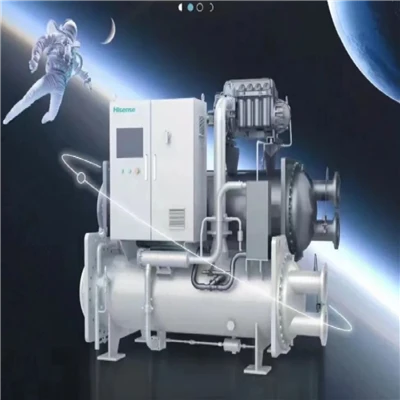
First, recirculating chillers are the workhorse for most small to medium labs. These are compact, often portable units that circulate a coolant (usually distilled water or a water-glycol mix) through a loop connected to the back of lab equipment. Unlike a fan that blows air around a heat-generating device, recirculating chillers pull heat directly from the equipment’s heat exchanger, keeping it at a constant set point. For labs running HPLCs, gas chromatographs, or rotary evaporators, this is non-negotiable—we’ve had a customer at a biotech startup tell us that switching from a window AC to a 1-ton recirculating chiller cut their equipment downtime by 40% in the first three months, because the AC would cycle on and off, causing 2–3°F spikes that would make their HPLC baselines drift and force them to re-run samples. That’s a huge cost: re-running a single assay for their COVID diagnostic panels cost them $1,200 in reagents and researcher time, so the chiller paid for itself in less than two months.
For larger labs or facilities with multiple high-heat pieces of equipment, modular process chillers are the way to go. These are scalable units that can be connected in parallel, so if you add a new 3,000 BTU bioreactor next year, you don’t have to replace your entire chiller system—you just add another module. Modular chillers also have built-in redundancy features, which are critical for labs that can’t afford downtime. If one module goes down for routine maintenance, the others keep running, so your cell culture incubators or NMR spectrometers never stop cooling. A university research lab we work with in a major Midwest city recently installed a 5-module modular chiller to serve their entire molecular biology wing, which has 22 pieces of heat-generating equipment. Before the chiller, they’d had three instances of equipment overheating over two years, costing them $80,000 in ruined research samples and delayed grant reporting deadlines. Now, they run the chiller on a predictive maintenance schedule, and have had zero downtime-related sample loss in 18 months.
But here’s the catch: not all chillers are safe or appropriate for labs. A common mistake we see is a lab team buying a standard industrial chiller meant for factories or warehouses, which can introduce risks. First, industrial chillers often use harsh refrigerants that aren’t compatible with lab safety protocols, especially in BSL labs or cleanrooms. Many labs require low-VOC, non-flammable refrigerants that won’t off-gas into the space or pose a fire hazard if a line leaks. Second, standard chillers can have open loops that circulate tap water, which can have minerals or bacteria that clog small heat exchangers on lab equipment—this leads to inefficient cooling and costly repairs. Lab-specific chillers use closed loops with distilled or deionized water, or compatible coolant mixes, that prevent mineral buildup and contamination. Third, industrial chillers often don’t have filtration systems to catch particulates, which is a problem in cleanrooms where even 0.3 micron particles can compromise experiments. Our lab chillers include HEPA filtration options as standard for cleanroom applications, which removes 99.97% of airborne particulates, keeping your equipment and samples contamination-free.
Another key consideration for lab chillers is temperature stability. Many standard chillers have a temperature accuracy of ±2°F, which is way too imprecise for most lab work. A PCR machine, for example, requires temperature control to ±0.2°C during denaturation and annealing steps—even a 1°F difference can prevent primers from binding, leading to no visible PCR product and hours of rework. Our lab-specific recirculating chillers offer temperature accuracy as tight as ±0.1°C, which is calibrated to meet ISO 17025 standards, the international standard for testing and calibration laboratories. That’s a non-negotiable for labs that need to publish peer-reviewed research or meet regulatory requirements for clinical testing.
We also work with labs on custom chiller setups for unique applications. For example, a pharmaceutical lab we partnered with needed to cool 12 freeze dryers for a vaccine trial, each requiring a consistent -50°F temperature. A standard chiller couldn’t reach that low temperature, so we installed a glycol-based custom chiller with a cascade refrigeration system, which can maintain temperatures as low as -80°F. For a materials science lab working with high-power lasers, we supplied a chiller that can handle heat loads up to 50,000 BTU per hour, with flow rate controls that adjust in real time to match the laser’s power output, preventing overheating during long-run experiments.
Wait, but what about the energy cost? I know what some lab managers are thinking: “Adding another cooling system will just increase my utility bill.” That’s a fair concern, but data shows lab chillers are often more energy-efficient than basic AC setups in the long run. For example, a 2-ton recirculating chiller uses about 2,500 kWh per month to cool a single HPLC, while a window AC used to cool the same machine runs almost non-stop, using 3,200 kWh per month. Plus, the downtime and sample loss you avoid far outweigh the small difference in utility costs. The university lab I mentioned earlier calculated that their chiller’s monthly utility cost was $120, compared to $180 for the old AC setup, plus they saved an average of $4,500 a month in reworked samples. That’s a clear win.
Of course, installing a chiller in a lab isn’t just unboxing and plugging it in. There are a few steps to make sure it’s set up correctly. First, you need to calculate your total heat load accurately. A lot of labs guess at this, but we always recommend a load calculation that adds up the heat output of every piece of equipment, plus the heat gain from the lab’s exterior walls, windows, and people. For a standard lab, we usually recommend adding a 10% buffer to the calculated load to account for future equipment additions, which prevents you from needing to upgrade your chiller a year later. Second, you need to install the chiller in a space that’s well-ventilated, because it rejects heat outside the lab. We usually suggest placing it in a utility closet, outside storage area, or even on a roof, as long as the exhaust lines are routed correctly to avoid blowing hot air back into the lab. Third, regular maintenance is key. Lab chillers don’t require as much upkeep as other equipment, but changing the coolant every 12 months, cleaning the filters, and checking the refrigerant levels will keep it running efficiently for 10–15 years, which is double the lifespan of most standard HVAC units.
I’ve seen first-hand the difference a correctly chosen lab chiller can make. Last year, a small environmental testing lab contacted us in a panic after their main HPLC broke down, and they were days away from missing a deadline for state water quality testing. Their previous AC setup couldn’t keep the HPLC cool, and the machine had overheated, ruining a week of samples. We rushed a 1.5-ton recirculating chiller to their lab that same day, and installed it in 2 hours. Within an hour, their HPLC was back to running, and they met their deadline without having to re-run a single sample. That’s the kind of impact we’re in the business of making.
So to circle back to the original question: Can a chiller be used in a laboratory? Absolutely. But it’s not about any chiller—it’s about the right chiller, designed for lab-specific needs: precise temperature control, closed-loop contamination prevention, compatibility with lab equipment, and compliance with safety standards. Whether you’re a small startup with one HPLC, a mid-sized lab running bioreactors, or a large research facility with a wing of analytical equipment, there’s a chiller that’s tailored to your needs.

If you’re tired of sample loss, equipment downtime, or imprecise temperature controls skewing your results, we can help. Our team works with labs to conduct free load calculations, recommend the right chiller model, and provide installation and maintenance support to keep your lab running smoothly. Reach out to our team to discuss your lab’s specific cooling needs, and we’ll build a solution that fits your budget and requirements.
Precision Air Conditioner References
- International Organization for Standardization. (2017). ISO 17025:2017 General requirements for the competence of testing and calibration laboratories.
- American Society of Heating, Refrigerating and Air-Conditioning Engineers. (2021). ASHRAE Standard 15: Safety Standard for Refrigeration Systems.
- National Science Foundation. (2022). Laboratory Facilities Guidelines: Cooling and Environmental Control for Research Spaces.
- Lab Safety Supply. (2023). Contamination Control in Laboratory Cooling Systems: Best Practices for Cleanrooms and Biosafety Labs.
- U.S. Department of Energy. (2021). Energy Efficiency Guidelines for Commercial Laboratory HVAC Systems.
Hangzhou Dayu HVAC Engineering Co., Ltd.
As one of the most professional chiller manufacturers and suppliers in China, we have world-leading production equipment and strong manufacturing capabilities. If you’re going to buy customized chiller made in China, welcome to get quotation from our factory. For price consultation, contact us.
Address: Room 1004, Building 1, Xicheng Business Tower, Xihu District, Hangzhou City, Zhejiang Province, China
E-mail: info@hi-hvac.com
WebSite: https://www.hi-hvac.com/
