If you’ve ever walked a sheet metal fabrication floor, you know that hole-punching isn’t just a mechanical step—it’s one of the make-or-break processes that determines whether a part fits its assembly correctly, meets industry tolerances, and even holds up under the end-use load. Over 12 years as a sheet metal fabrication equipment supplier, I’ve seen more projects derailed by inaccurate hole punching than by any other single factor. A misplaced hole can turn a custom enclosure into a $500 scrap heap, or cause a prototype part to fail a crash test before it even leaves the lab. That’s why today, I’m pulling back the curtain on the exact, tested steps we train our customers on to ensure hole-punching accuracy, no matter the material, part size, or production volume. Sheet Metal Fabrication Equipment
Start with the Basics: Machine Calibration That Doesn’t Just Happen at Installation
Most fabricators know to calibrate their machine when it’s first set up, but what they miss is that calibration isn’t a one-and-done task. It’s a weekly (or even daily) habit that keeps your hole punches on target. When a customer first buys one of our punch press lines, we don’t just hand them the manual and go—we walk them through a calibration routine that’s designed to catch small shifts before they turn into big errors. The core of this is aligning the machine’s coordinate system, the G-code coordinates that tell the punch where to go, to the physical work area of the machine. A 0.005-inch shift in that alignment might not seem like much, but on a part with 20 holes spaced 2 inches apart, that adds up to a 0.1-inch total misalignment at the far end—enough to make the part unassembled.
We also stress tool alignment, a step many fabricators skip. Each punch and die set has to be perfectly concentric, meaning the center of the punch lines up exactly with the center of the die it’s punching into. Even a tiny tilt in the punch (from dull tools or improper mounting) can cause off-center holes, or even tool breakage. Our field service team checks this during every routine maintenance visit, but for in-house checks, we recommend punching a series of test holes in scrap material, measuring their center-to-center distance with a digital caliper, and adjusting tool alignment if any measurement is off by more than 0.003 inches. Another quick check: inspect the edge of each punched hole. A clean, consistent sheared edge means the punch and die are aligned; a ragged or uneven edge is a red flag for misalignment.
Material Handling: The Overlooked Variable That Ruins Hole Accuracy
You could have a perfectly calibrated machine, but if your material isn’t held correctly, you’ll get bad holes. This is a mistake I see all the time with new fabricators, especially when working with thin-gauge materials like 16-gauge aluminum or 20-gauge steel. Material shift during punching is a silent culprit—when the punch slams into the metal, even a small amount of movement can throw the hole off by 0.01 inches or more.
The fix isn’t just clamping harder. Over-tightening clamps can distort thin sheet metal, bending it enough to make holes punch at an angle or shift. Instead, we teach our customers to use a combination of hold-down clamps, vacuum hold-downs (for flat, consistent sheets), and locator pins. Locator pins are especially critical for repetitive parts: they slide into pre-punched pilot holes in the sheet, ensuring the material stays perfectly positioned for each successive punch. For longer runs, we also recommend using sheet supports that span the length of the sheet under the area being punched—this eliminates deflection, the tiny bend in the metal that happens when the punch force pushes down on unsupported material. Deflection is a big one for 10-foot-long sheets; without proper supports, the middle of the sheet will sag, and holes punched there will be skewed.
Material type also matters for accuracy. Ductile materials like annealed copper can stretch slightly during punching, so we adjust punch force and die clearance to compensate. For brittle materials like cold-rolled steel, we use slightly wider die clearances to avoid cracking, which can lead to material shifting mid-process. We always provide material-specific calibration guidelines with every machine we sell, and our customer training team walks operators through adjusting settings for different stock, so there’s no guesswork.
Tooling: Don’t Wait for Breakage to Replace Punch and Die Sets
Your punch and die are the interface between the machine and the material, and worn tools are the number one cause of inconsistent hole accuracy over time. A punch with a chipped edge or a die with a cracked cavity won’t just punch a bad hole—it will cause the next dozen holes to be off, too. Last year, we had a customer who was seeing 10% scrap rate on their HVAC enclosures, all from misaligned mounting holes. When our team arrived, we found their punch set had over 5,000 hits, and the punch’s leading edge was rounded from dulling. Replacing that set cut their scrap rate to 0.5% overnight.
The rule of thumb we share is: track punch hits, not just operating hours. A punch can dull after 10,000 hits on thin material, but only 2,000 hits on thick, hard stainless steel. We also recommend using the right die clearance for each material: too tight, and the punch will bind and wear out faster; too loose, and you’ll get burrs and shifted holes. For example, 16-gauge steel needs a die clearance of 10-12% of the material thickness, while 10-gauge steel needs 8-10%. This isn’t arbitrary—too tight a clearance causes more force on the punch, leading to deflection, while too loose lets the material shift as it’s being punched.
Another tooling best practice: use precision-ground punches and dies, not generic off-the-shelf parts. Many fabricators save money by buying cheap tooling, but it’s made to looser tolerances (often ±0.005 inches, compared to ±0.001 inches for premium tooling) which directly hurts hole accuracy. The premium tooling we supply for our machines comes with a serial number and tolerance certificate, so customers can verify its accuracy instead of guessing.
CNC Programming: The Hidden Accuracy Driver Most Operators Ignore
Even if your machine is perfect, bad G-code will give you bad holes. I’ve seen customers run a program that was written for a 4-foot sheet on a 5-foot machine, and wonder why holes were 6 inches off. Or they use an old, un-updated program that had a coordinate shift from a previous job, leading to repeated errors.
The key here is consistent programming practices. First, always use the machine’s native coordinate system, not a custom offset, for programming. If you need to adjust for material thickness or sheet size, use the machine’s built-in offset settings, not manual G-code changes, which can introduce human error. We also recommend validating every new program with a dry run, where you punch holes in scrap material (not production parts) to check their position before running the job. For high-volume jobs, we suggest using probe tools on the punch press—these small sensors run a quick scan of the sheet’s surface, adjusting the machine’s coordinates to account for any slight bow or warp in the material, which can throw holes off even if the sheet was clamped correctly.
Programming also comes down to hole design. For holes that need to be within ±0.003 inches of their target position, we avoid programming holes too close to the edge of the sheet (less than 1x the material thickness, measured from the hole center to the sheet edge). When a hole is too close, the material around it can deform during punching, shifting the hole’s position. We also avoid nesting holes too tightly on a part, as this can cause adjacent punches to interfere with each other, leading to alignment errors.
Operator Training: The Human Element That Makes All the Difference
No machine runs itself—even the most advanced CNC punch press needs an operator who knows how to spot small issues before they turn into big problems. I’ve seen top-of-the-line machines produce bad parts because an operator skipped a quick quality check, or ignored a slight wear mark on a punch. When we sell a machine to a fabricator, training is non-negotiable. We don’t just teach operators to load sheets and start the machine—we teach them the "accuracy check habit" that takes just 2 minutes per job: after the first 5 parts are punched, pull one off the machine, measure the center-to-center distance of key holes with a digital micrometer, and compare it to the design spec. If the measurement is off, pause the job and troubleshoot before running 100 bad parts.
We also emphasize regular communication between operators and maintenance teams. If an operator notices that a hole is slightly ragged, or the machine sounds different than usual, they need to report it immediately, not keep running to meet a deadline. Last quarter, a customer’s operator reported a strange vibration from the punch press; our service team found a worn ball screw that was causing a 0.008-inch shift in the X-axis, which would have resulted in 200 bad parts if the operator hadn’t spoken up. We also train operators on basic adjustments: how to tighten a loose clamp, adjust die clearance, or re-align a punch, so small issues don’t require waiting for a service call.
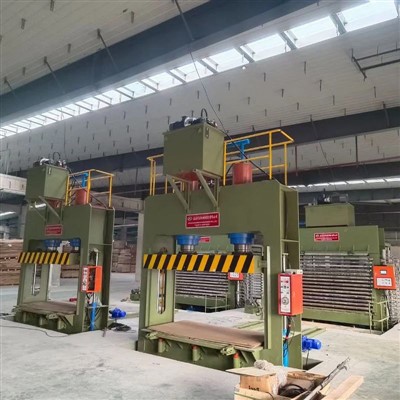
Cold Pressing Machine Wrapping this up, hole-punching accuracy isn’t a single fix—it’s a combination of calibrated machines, proper tooling, careful material handling, smart programming, and trained operators. Every step builds on the last: a calibrated machine works best with correctly aligned tools, which work best with secure material, which works best with validated programming, and all of that works best with an operator who knows what to look for. If you’re struggling with hole accuracy, or looking to upgrade your equipment to reduce scrap and improve consistency, we’re here to help. Reach out to our team to discuss your specific needs, and we’ll walk you through the right solutions for your production volume, materials, and part requirements.
References
- Sheet Metal Fabrication: Principles and Practices, 2nd Edition, Society of Manufacturing Engineers
- CNC Punch Press Accuracy Guidelines, Fabricators & Manufacturers Association International, 2022
- Tooling and Material Handling Best Practices for Precision Sheet Metal Punching, Journal of Manufacturing Processes, Vol. 45, 2020
Jiashan Changle Machinery Manufacturing Co., Ltd.
We’re well-known as one of the leading sheet metal fabrication equipment manufacturers and suppliers in China, also support customized service. Please feel free to buy advanced sheet metal fabrication equipment for sale here from our factory. Quality products and punctual delivery are available.
Address: Building 12, Zone A, Wanyang Innovation City, No. 23 Yucao South Road, Ganyao Town, Jiashan County, Jiaxing City, Zhejiang Province
E-mail: Changle84615620@163.com
WebSite: https://www.changlejx.com/
