As a supplier of transmitter and receiver lipo batteries, I often get asked about the C rating of a receiver lipo battery. It’s a crucial specification that can significantly impact the performance of your radio control (RC) equipment. In this blog post, I’ll explain what the C rating means, why it’s important, and how to choose the right C rating for your needs. Transmitter and Receiver Lipo Battery
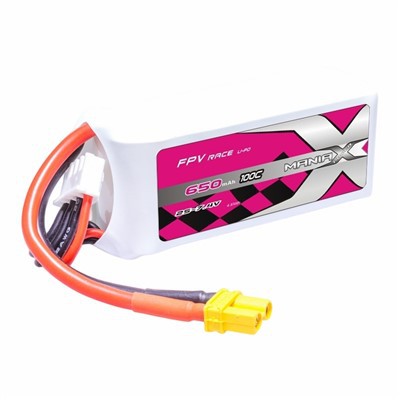
What is the C Rating?
The C rating of a lipo battery is a measure of its discharge rate. It indicates how many times the battery’s capacity can be safely discharged in one hour. For example, a battery with a 1C rating can be discharged at a rate equal to its capacity in one hour. So, a 1000mAh battery with a 1C rating can be discharged at a rate of 1000mA (or 1A) for one hour.
A battery with a 2C rating can be discharged at twice its capacity in one hour. Using the same 1000mAh battery as an example, a 2C rating means it can be discharged at a rate of 2000mA (or 2A) for one hour. Similarly, a 5C rating means the battery can be discharged at five times its capacity in one hour, or 5000mA (or 5A) for a 1000mAh battery.
Why is the C Rating Important?
The C rating is important because it determines how much current the battery can deliver to your RC equipment. Different RC devices have different power requirements, and the C rating of the battery needs to be high enough to meet those requirements. If the C rating is too low, the battery may not be able to provide enough power, which can lead to poor performance, reduced flight time, or even damage to the equipment.
For example, high-performance RC airplanes, helicopters, and cars often require batteries with high C ratings to provide the necessary power for quick acceleration, high speeds, and agile maneuvers. On the other hand, less demanding RC devices, such as small indoor drones or radio-controlled boats, may be able to operate with batteries with lower C ratings.
How to Choose the Right C Rating
When choosing a receiver lipo battery, you need to consider the power requirements of your RC equipment. Here are some steps to help you select the right C rating:
- Determine the power requirements of your RC device: Check the manufacturer’s specifications for your RC equipment to find out how much current it draws. This information is usually provided in milliamperes (mA) or amperes (A).
- Calculate the required C rating: Divide the maximum current draw of your RC device by the battery’s capacity in ampere-hours (Ah). For example, if your RC device draws a maximum of 2A and you have a 1000mAh (or 1Ah) battery, the required C rating would be 2A / 1Ah = 2C.
- Consider a higher C rating for safety and performance: It’s a good idea to choose a battery with a C rating that is slightly higher than the calculated value. This provides a safety margin and ensures that the battery can handle sudden spikes in current draw without overheating or losing performance.
Other Factors to Consider
In addition to the C rating, there are other factors to consider when choosing a receiver lipo battery:
- Battery capacity: The capacity of the battery, measured in milliampere-hours (mAh), determines how long the battery can power your RC device. A higher capacity battery will generally provide longer flight times, but it may also be heavier and more expensive.
- Voltage: The voltage of the battery is another important factor. Different RC devices require different voltages, so make sure to choose a battery with the correct voltage for your equipment.
- Number of cells: Lipo batteries are available in different cell configurations, such as 2S (two cells), 3S (three cells), and so on. The number of cells determines the voltage of the battery. For example, a 2S battery has a nominal voltage of 7.4V, while a 3S battery has a nominal voltage of 11.1V.
- Quality and brand: It’s important to choose a high-quality battery from a reputable brand. A good quality battery will be more reliable, have a longer lifespan, and provide better performance.
Conclusion
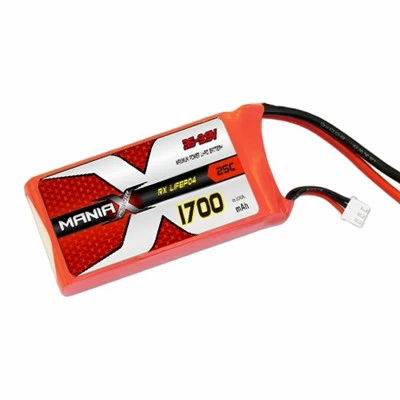
The C rating of a receiver lipo battery is an important specification that determines how much current the battery can deliver to your RC equipment. By understanding the C rating and how to choose the right one for your needs, you can ensure that your RC device performs at its best.
RC Heli & Airplane Battery As a supplier of transmitter and receiver lipo batteries, we offer a wide range of batteries with different C ratings, capacities, and voltages to meet the needs of various RC applications. If you have any questions or need help choosing the right battery for your RC equipment, please don’t hesitate to contact us. We’re here to help you find the perfect battery for your needs and ensure that you have a great RC experience.
References
- HobbyKing. (n.d.). Understanding Lipo Batteries. Retrieved from [HobbyKing website]
- Horizon Hobby. (n.d.). Lipo Battery Basics. Retrieved from [Horizon Hobby website]
- RC Groups. (n.d.). Lipo Battery C Rating Explained. Retrieved from [RC Groups website]
ManiaX Power Technology Co., Ltd.
ManiaX Power Technology Co., Ltd. is one of the most reliable transmitter and receiver lipo battery manufacturers and suppliers in China, also supports customized service. Please feel free to wholesale bulk durable transmitter and receiver lipo battery made in China here from our factory.
Address: Room 1508, 15/F, Two Grand tower, 625 Nathan Road, Kowloon, HongKong. P.R. China
E-mail: info@maniax-power.com
WebSite: https://www.maniaxpower.com/
